

Blog
Common Embroidery Problems and How to Solve Them

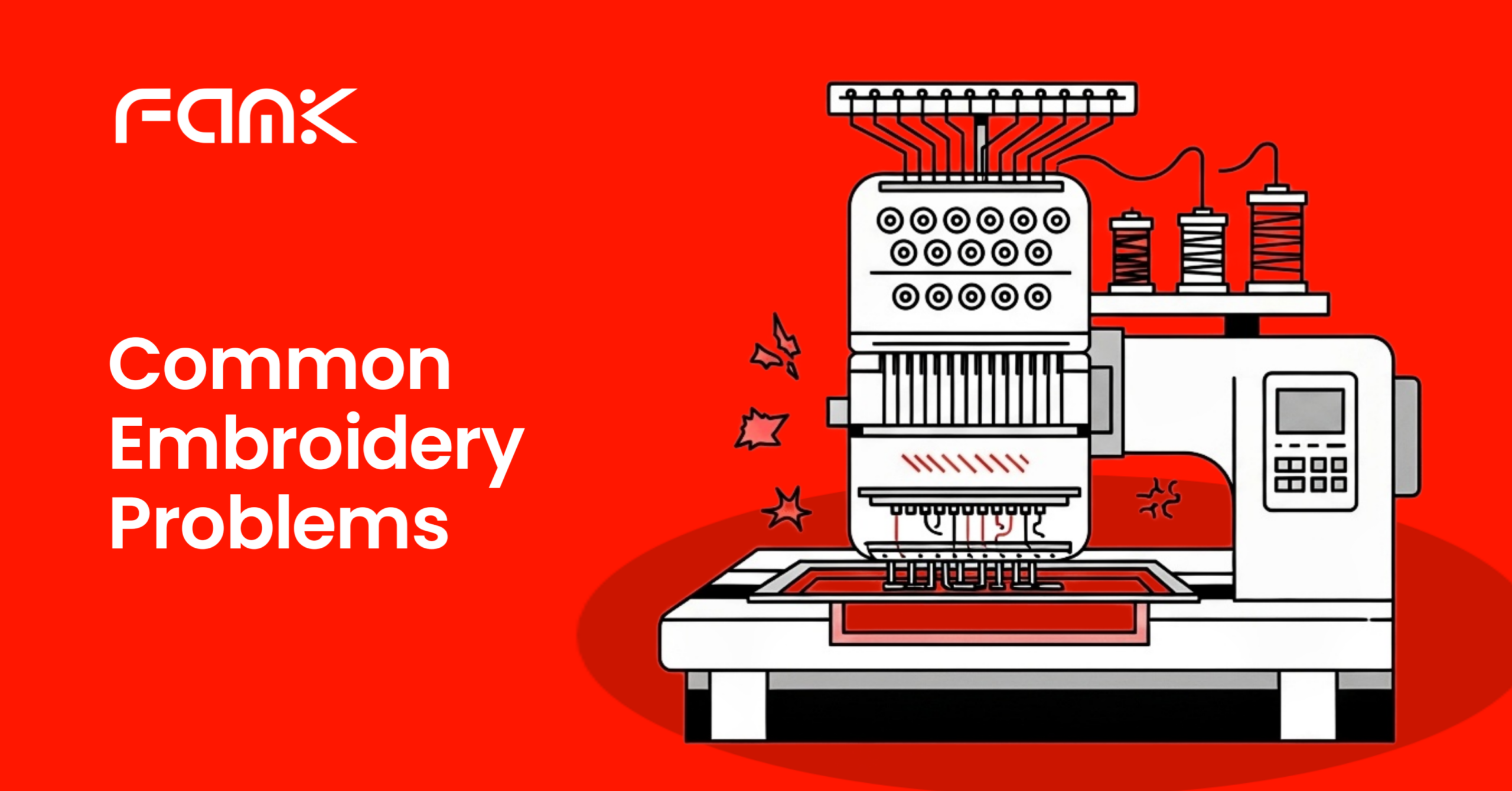
Even the most seasoned embroiderers face issues that require some troubleshooting. This includes the following: unexpected breaks in the thread, the fabric gathering in ways that are unexpected, and for seemingly unknown reasons, needles break and designs do not come out as intended. You might seem to have spent time setting up; however, some of these common embroidery problems are avoidable.
Why Does the Thread Keep Breaking During Embroidery?
Thread breakage can happen for a number of reasons: check your upper tension, poor-quality thread, a mismatch between the thread and needle, and obstructions along the thread path. The first thing to check is the tension. If the thread breaks often, the tension is too high. Adjust the tension until breakage stops. If the quality of your thread is poor, it may break due to random thickness. Threads of higher quality break less, so invest in good thread.
Obstructions in the thread path may also break threads. If you notice a rough thread path, this can also cause threads to break. Using fine sandpaper to smooth rough areas can solve this.
What Causes Fabric Puckering Around Embroidery Designs?
Puckering of fabric occurs when an embroidered design pulls the fabric beyond the stabilizer’s holding capacity. This is one common embroidery problem that shows a lack of experience. The answer is better stabilization – use a heavier stabilizer, double layers, or a cutaway stabilizer that will be left in the garment.
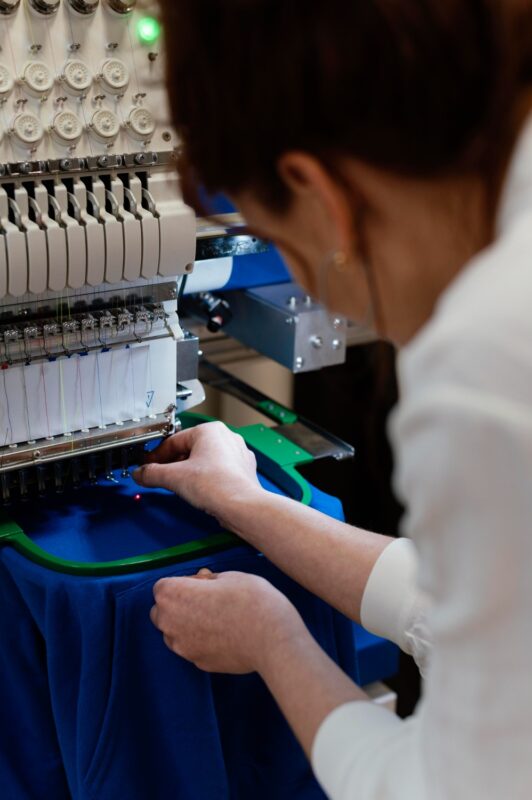
Loosely hooping the fabric can also cause puckering. The fabric needs to be extremely tight in the hoop before you start stitching. If you have a dense design to embroider on a lightweight fabric, puckering will occur.
To fix this, you can either lower the stitch density on your fabric or use a more durable fabric. Once the embroidery is complete, using steam and pressing can help fix puckering. However, proper stabilization is much better than trying to correct puckering after it has been done.
How Do You Fix Embroidery Design Registration Issues?
Design registration issues, particularly misalignment in multi-color designs, are caused by shifting fabric during color changes or imprecise hooping.
To avoid this problem, make sure the fabric is hooped perfectly flat, with no wrinkles or fabric distortion. When dealing with multiple pieces, ensure identical positioning. Use a washable marker to create a crosshair mark where the hoop is placed.
If the design is misaligned, ensure the stabilizer is adequate for fabric stretch; lightweight stabilizers allow fabric movement, which can cause registration issues. For knit or stretchy fabrics, always use cutaway stabilizer regardless of design size.
Why Do Needles Break Frequently During Stitching?
Needles can snap due to bending, dullness, improper size, or excessive machine speed relative to the fabric density. Always change needles regularly, because dull needles cannot penetrate, they force through the fabric.
With this, be careful not to use ballpoint needles on woven fabrics, and avoid sharp needles on knit fabrics, as they create extra resistance and are more likely to cause the needle to break.
When working on dense fabrics or those that will take a lot of embroidery, it is necessary to use larger needles, as they are less likely to bend than smaller ones. Machine embroidery on thick or detailed fabrics can cause the needle to break, so it is important to reduce the machine speed to prevent this. Most problems related to broken needles can be traced to poor needle choices and the speed at which the machine is operated.
What Causes Embroidery to Look Loose or Gappy?
Loose gaps in embroidery can be caused by poor thread tension, an incorrect thread weight for the design, or design mistakes that result in insufficient stitch density.
Gradually increase the upper tension until the stitches are adequately tightened without puckering the fabric. Check that you are using the thread weight that corresponds with your design. Using finer threads on patterns that are digitized for thicker threads will yield sparser coverage.
If gaps remain, the issue lies with the design file’s digitization; you will need to increase the stitch density or use different stitch types to fill the design area. This is more of an embroidery issue that will require altering the file rather than altering the machine settings.
Wrap Up
Mastering these common embroidery problems sets professionals who maintain consistent production apart from those who constantly troubleshoot. FAMK Apparel built our reputation on technical excellence—understanding not just how to embroider, but how to prevent and solve embroidery issues before they compromise garment quality. Our digitization expertise, quality materials, and rigorous testing eliminate most problems before they reach the client fabric. Browse our collection of proven designs or consult our technical team when facing persistent embroidery challenges.