
Blog
Best Industrial Sewing Machines in Nigeria: 2026 Guide

If you are a professional tailor, fashion designer, or garment business owner, choosing the best industrial sewing machine in Nigeria can make a major difference to your speed, stitch quality, and daily production.
Unlike domestic sewing machines, industrial machines are designed for continuous work and higher production demands. The right machine can help you sew faster, maintain consistent stitches, and handle the workload of a busy tailoring shop.
But which industrial sewing machine should you buy in Nigeria?
This guide compares popular options, explains industrial sewing machine prices in Nigeria in 2026, and shows you which machine may be best for beginners, professional tailors, fashion brands, and high-volume production.
What Is an Industrial Sewing Machine?
An industrial sewing machine is a heavy-duty sewing machine designed for frequent and continuous garment production. It generally offers higher speed, stronger construction, and greater durability than a domestic sewing machine. Industrial machines are commonly used by professional tailors, fashion houses, uniform manufacturers, garment factories, and businesses producing clothing in large quantities.
The exact machine you need depends on the type of work you do. A straight-stitch machine, for example, is suitable for general garment construction, while an overlock machine is designed mainly for finishing fabric edges.
Why Should Professional Tailors Use an Industrial Sewing Machine?
Professional tailors should consider an industrial sewing machine because it is built for higher workloads and consistent production.
Some of the main advantages include:
- Faster sewing
- More consistent stitches
- Better durability for daily production
- Stronger motors and internal components
- Improved handling of repeated workloads
- Greater productivity for commercial tailoring
- Better suitability for fashion businesses producing multiple garments
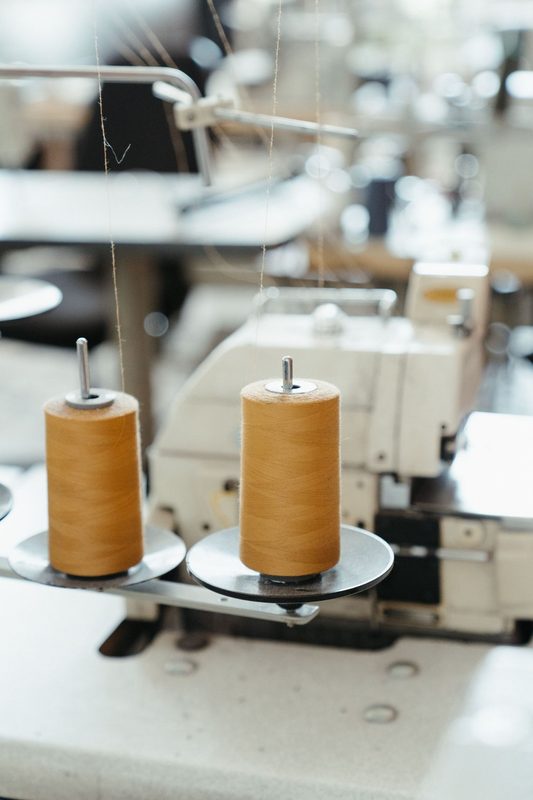
For someone sewing occasionally at home, a domestic machine may be enough. However, if you are sewing garments for customers every day, an industrial tailoring machine can be a more practical long-term investment.
What Is the Best Industrial Sewing Machine in Nigeria?
The best industrial sewing machine in Nigeria depends on your budget, workload, fabric type, and the kind of garments you produce. For general professional tailoring, popular choices include Juki, Jack, Brother, Typical, and other established industrial brands.
Best Overall: Juki Industrial Sewing Machine
Juki is a strong choice for professional tailors who prioritise durability, reliable stitching, and long-term use. The Juki DDL series, including models such as the DDL-8700, is widely associated with high-speed industrial lockstitch sewing. Current Nigerian listings show Juki industrial machines at different prices depending on the model and condition.
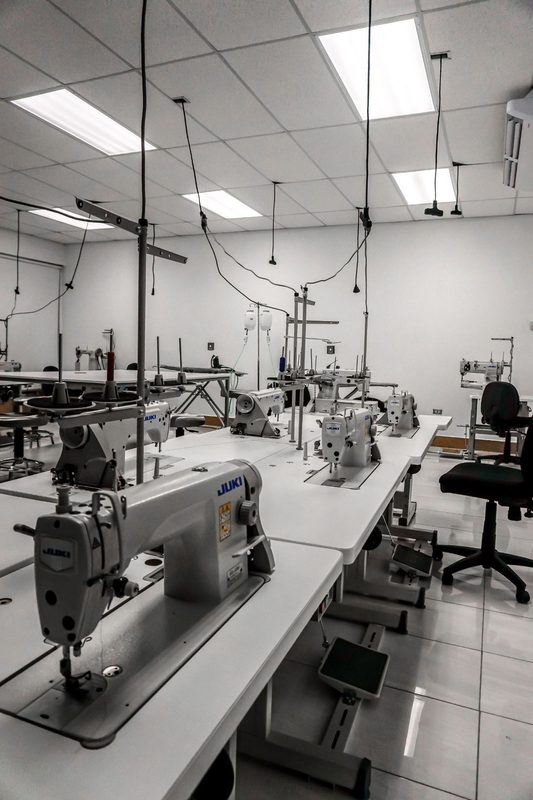
Juki industrial sewing machine hub
Best for:
- Professional tailoring
- Fashion businesses
- Garment production
- Tailors who prioritise durability
Main advantage: Reliability and consistent performance.
Best Value: Jack Industrial Sewing Machine
Jack is a good option for tailors looking for modern features without moving into the highest price range. Models such as the Jack F4 and F5 are commonly sold in Nigeria, with direct-drive versions offering features designed for efficient commercial sewing.
Best for:
- Small and medium tailoring businesses
- Professional tailors
- Fashion schools
- Tailors upgrading from domestic machines
Main advantage: Good balance between price, performance, and modern features.
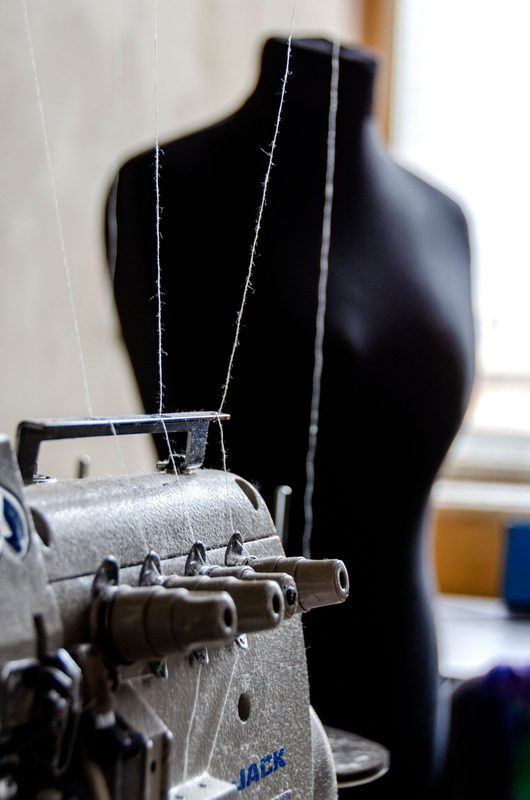
Jack Industrial Sewing Machine
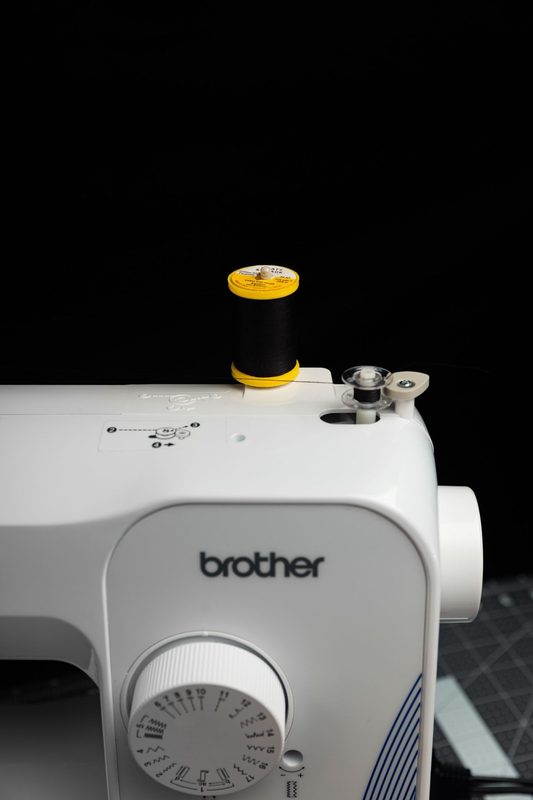
Best for Advanced Production: Brother Industrial Sewing Machine
Brother offers industrial sewing equipment aimed at professional garment production, including models with electronic controls and automation features. These machines can be particularly useful for established fashion businesses that want to improve production efficiency.
Best for:
- Garment businesses
- Fashion brands
- High-volume production
- Professional workshops
Main advantage: Precision and advanced production features.
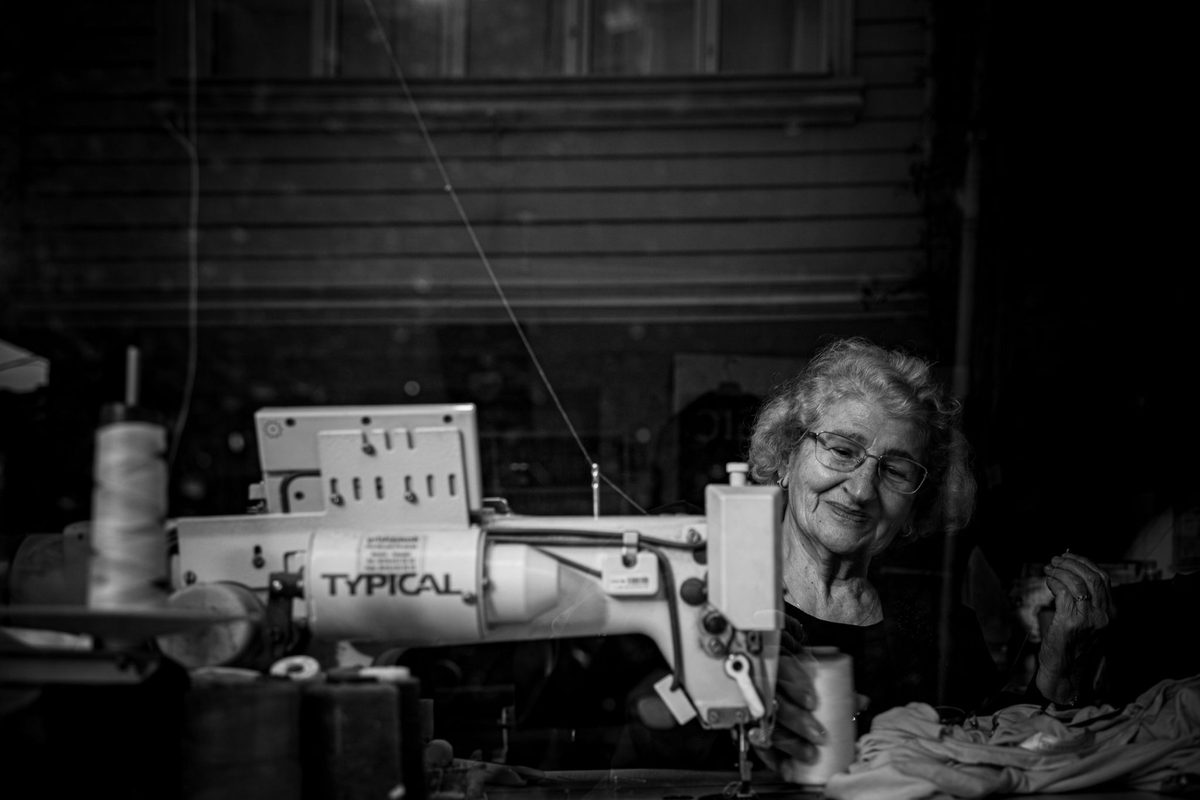
Best Budget-Friendly Option: Typical Industrial Sewing Machine
Typical is worth considering if you want an industrial machine while keeping your initial equipment cost under control. Typical machines are available in different configurations, so buyers should check the exact model rather than judging the brand by price alone.
Best for:
- Small tailoring businesses
- Startups
- Apprentices
- General garment production
Main advantage: Competitive pricing and practical functionality.
Best Industrial Sewing Machines in Nigeria: Comparison Table
The table below compares popular industrial machine options based on their typical use rather than simply ranking them by brand.
| Machine/Brand | Best For | Machine Type | Key Advantage | Indicative 2026 Price Range |
| Juki DDL Series | Professional tailors | Straight-stitch/lockstitch | Durability and precision | ₦300,000–₦500,000+ |
| Jack F4/F5 | Small & medium businesses | Straight-stitch/lockstitch | Value and energy-efficient direct drive | ₦350,000–₦700,000 |
| Brother Industrial | Garment production | Straight-stitch/automated models | Precision and advanced controls | ₦350,000–₦1,400,000+ |
| Typical GC Series | Startups & general tailoring | Straight-stitch/lockstitch | Affordable industrial performance | ₦300,000–₦650,000 |
| Siruba Industrial | Heavy daily production | Industrial sewing/overlock | Durability and production use | ₦500,000–₦900,000+ |
| Overlock Machine | Seam finishing | Overlock | Clean professional edges | ₦175,000–₦780,000+ |
| Walking Foot Machine | Leather/heavy materials | Heavy-duty | Better handling of thick materials | ₦250,000+ |
Prices are indicative 2026 Nigerian market ranges and can change based on model, new or used condition, seller, location, accessories, motor type and exchange-rate movements. Current Nigerian listings show significant variation between machines and sellers.
How Much Is an Industrial Sewing Machine in Nigeria in 2026?
An industrial sewing machine in Nigeria can cost roughly ₦280,000 to over ₦1.5 million in 2026, depending on the brand, model, machine type, automation, and whether it is new or used. Basic industrial straight-stitch machines can be considerably cheaper than specialised machines such as buttonhole, bartacking, overlock, or automated production machines.
For example, current Nigerian market listings show Juki machines around the ₦300,000–₦480,000 range for several industrial models, while specialised machines can cost considerably more.
That means you should not search for only the cheapest industrial sewing machine price in Nigeria. Instead, compare the machine’s specifications and intended use with your actual workload.
Industrial Sewing Machine Price in Nigeria: 2026 Guide
The industrial sewing machine price in Nigeria in 2026 varies considerably because industrial machines are not one single category.
A general breakdown looks like this:
| Machine Type | Approximate 2026 Price |
| Basic industrial straight stitch | ₦280,000–₦500,000 |
| Premium straight-stitch machines | ₦450,000–₦900,000+ |
| Industrial overlock | ₦175,000–₦780,000+ |
| Walking-foot/heavy-duty machine | ₦250,000+ |
| Industrial button attaching machine | ₦350,000+ |
| Industrial buttonhole machine | ₦700,000–₦2,500,000+ |
| Automated/specialised machines | ₦1,000,000+ |
These figures are market estimates rather than official manufacturer prices. Nigerian sellers currently list industrial machines at very different prices, so always confirm the exact model, condition, motor, warranty and included accessories before paying.
What Is the Best Industrial Sewing Machine for Tailors?
The best industrial sewing machine for tailors is usually a reliable single-needle straight-stitch machine if most of your work involves general garment construction. For many Nigerian tailoring businesses, a Juki, Jack, Brother, or Typical straight-stitch machine can serve as the main production machine.
Your choice should depend on:
- The type of clothes you make
- How many garments you sew daily
- Your budget
- Availability of spare parts
- Availability of technicians
- Electricity consumption
- Whether you need additional machines for finishing
A tailor making agbada, senator wear, kaftans and shirts may need a different setup from a factory producing hundreds of T-shirts every week.
Is a Direct-Drive Industrial Machine Better?
Yes, a direct-drive industrial machine can be a better option if you want quieter operation, efficient power use, and modern motor control. Traditional industrial machines may use separate clutch motors, while many newer machines integrate the motor directly into the machine head.
Direct-drive systems are particularly attractive to small businesses because energy efficiency and operating costs matter when a machine is used for long periods.
However, do not choose a machine based on the motor alone. Stitch quality, spare parts, servicing, machine type and your production needs are equally important.
What Should You Look for When Buying an Industrial Tailoring Machine?
Before buying a tailor industrial machine, look at the machine’s intended fabric type, speed, motor, stitch quality, spare parts, service support, and overall build quality.
Here are the most important factors to consider.
1. Machine Type
First decide what the machine needs to do.
A straight-stitch machine is useful for general garment construction, while an overlock machine is better for finishing raw fabric edges.
If you work with leather, upholstery, canvas or other thick materials, you may need a heavy-duty or walking-foot machine instead.
2. Motor Type
Check whether the machine uses a clutch motor or direct-drive motor.
Direct-drive machines are increasingly popular because they can provide quieter operation and more controlled performance.
3. Spare Parts
Always check spare-part availability before buying.
A machine may be excellent, but it becomes difficult to operate if basic parts are unavailable locally.
Popular industrial brands can have an advantage here because technicians and replacement parts may be easier to find.
4. Technician Support
Ask whether technicians in your area can service the exact machine model.
This is particularly important when buying an expensive machine with electronic controls.
5. Fabric Compatibility
Think about the fabrics you sew most often.
For example:
- Cotton and lightweight fabrics: standard straight-stitch machines may be suitable.
- Senator and native wear: a reliable straight-stitch machine is usually useful.
- Heavy fabrics: consider a machine designed for heavier materials.
- Stretch fabrics: consider machines designed for knit or stretch applications.
- Seam finishing: consider an overlock machine.
6. New vs Used
A used industrial machine can reduce your initial cost, but inspect it carefully before buying.
Check:
- Motor performance
- Noise and vibration
- Stitch consistency
- Needle movement
- Oil leakage
- Feed mechanism
- Electrical components
- Availability of replacement parts
Do not assume that a used machine is automatically a bargain.
Which Industrial Sewing Machine Is Best for a Small Tailoring Business?
For a small tailoring business, a reliable straight-stitch machine such as a Jack, Juki, Typical, or similar established industrial model can be a practical starting point.
You do not necessarily need several specialised machines when starting.
A better approach is to buy one reliable primary machine and add equipment as your workload grows.
For example, you could start with a straight-stitch machine and later add an overlock machine if seam finishing becomes a major part of your production.
Which Industrial Sewing Machine Is Best for Professional Tailors?
Juki, Jack, Brother, Typical and Siruba are among the brands worth comparing, but the exact model matters more than the logo on the machine. For professional tailors, the best machine is one that can handle the shop’s daily workload reliably without frequent breakdowns.
A professional tailor should prioritise:
- Stitch consistency
- Durability
- Serviceability
- Spare parts
- Motor efficiency
- Production speed
- Fabric compatibility
If your business handles large customer orders, spending more on a dependable machine can be more economical than repeatedly replacing cheaper equipment.
What Is the Difference Between an Industrial Sewing Machine and a Domestic Machine?
An industrial machine typically has a stronger construction, faster production capability and components designed for frequent use. A domestic machine can still be useful for beginners, home sewing and occasional projects. However, a professional tailor producing garments every day may benefit from moving to an industrial setup.
The main difference is that an industrial machine is designed for sustained commercial production, while a domestic machine is generally designed for household or lighter sewing tasks.
Do You Need More Than One Industrial Sewing Machine?
Yes, you may need more than one machine if your production involves different sewing and finishing processes.
A basic professional setup could eventually include:
- Straight-stitch machine
- Overlock machine
- Buttonhole machine
- Button-attaching machine
- Coverstitch machine
- Heavy-duty machine, depending on the fabrics
You do not have to buy everything at once.
Start with the machine that solves your biggest production problem and expand your equipment as your business grows.
Where Should You Buy an Industrial Sewing Machine in Nigeria?
Buy from a reputable sewing-machine dealer or supplier that can provide the correct machine model, spare parts and after-sales support.
Before payment, ask for:
- The exact model number
- Warranty information
- Motor details
- Included accessories
- Spare-part availability
- Servicing options
- Proof of machine condition if buying used
If possible, test the machine before completing the purchase.
Online marketplaces can also show useful price comparisons, but listings can vary significantly. For example, current Nigerian listings show Juki machines at several different price points depending on the model and seller.
Final Thoughts
The best industrial sewing machine in Nigeria is not necessarily the most expensive machine. It is the machine that matches your workload, fabric types, budget, production goals and access to maintenance.
For general professional tailoring, Juki and Jack are strong options to compare. Brother is worth considering for businesses looking for more advanced production features, while Typical and other value-focused brands may suit smaller workshops.
Before buying, compare the industrial sewing machine price in Nigeria, but do not make price your only deciding factor. A reliable machine with accessible spare parts and good technician support can save you more money in the long run.
If you are building a professional tailoring business, start with the machine you need most, maintain it properly, and upgrade your equipment as your production increases.
Frequently Asked Questions
What is the best industrial sewing machine in Nigeria?
The best industrial sewing machine in Nigeria depends on your production needs, but Juki, Jack, Brother, Typical and Siruba are strong brands to compare. For general professional tailoring, a reliable single-needle straight-stitch machine is usually the most useful starting point because it can handle many everyday garment-construction tasks.
How much is an industrial sewing machine in Nigeria in 2026?
An industrial sewing machine in Nigeria can cost from roughly ₦280,000 to more than ₦1.5 million in 2026, depending on the brand, model and machine type. Basic straight-stitch machines are generally cheaper, while automated, specialised and heavy-duty machines can cost considerably more.
Is Juki better than Jack?
Neither brand is automatically better for every tailor. Juki is well known for industrial durability and reliability, while Jack offers several machines with modern features and competitive pricing. Compare the specific models rather than only the brands, especially for motor type, stitch quality, servicing, spare parts and your intended workload.