
Blog
Embroidery 101: Everything Beginners Need to Know About Custom Apparel

Custom embroidery is the process of embellishing fabrics with needle and thread patterns – by hand or machine – to personalise clothing, brand apparel or add cultural and artistic detail to apparel. Embroidery can seem really technical, really quickly to newcomers. We will be explaining all of these facets, from types of embroidery to how embroidery designs are made and what to expect when ordering custom embroidery.
Understanding Custom Embroidery
Custom embroidery is created when a design (logo / monogram / pattern / motif) is embroidered onto a fabric using thread. An embroidery machine reads a digital file that has instructions on type of stitch, direction, density of stitch and order of colours. An experienced artisan will replicate the artwork by hand with needle and thread.
| Type | Speed | Consistency | Best Use Case |
| Machine Embroidery | Fast | Very consistent | Bulk orders |
| Hand embroidery | Slow | Variable | Artisan pieces |
For custom apparel—agbadas, caps, uniforms, and patches—the professional standard is machine embroidery because it offers precision at scale.
Machine embroidery vs. Hand embroidery: What is the difference?
Machine embroidery is done by machine and scales well when producing hundreds of identical pieces but it has no human craft value. Consistency and speed are where machine embroidery wins. Hand embroidery is slower to produce and varies slightly from piece to piece.
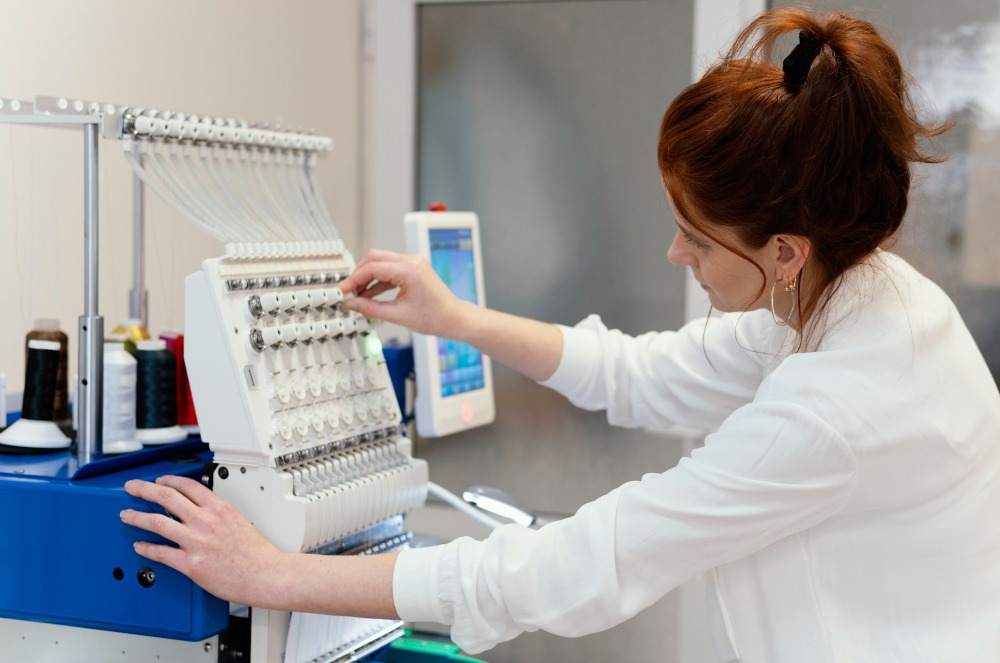
For people new to custom embroidery, here’s the important part: machine embroidery can be replicated accurately again and again, but hand embroidery cannot. If you’re looking to embroider the same pattern on multiple items, choose machine embroidery.
When hand embroidery still makes sense:
- One-off heritage garments with artisanal value
- Cultural pieces that incorporate the craft process into the product story.
- Decorative wall pieces and textile art not meant to be worn
What Are the Most Common Types of Embroidery Stitches?
The most common types of embroidery stitches are satin stitch, fill stitch, running stitch and 3D puff. Each has a different visual and tactile effect on fabric.
Types of stitches explained:
Satin stitch embroidery: Flat smooth coverage with parallel rows of thread. Great for lettering, borders and logo outlines. Gives a high gloss finish.
Tatami (fill stitch): Dense coverage for large areas. Used as solid design blocks for chest panels or backs of jackets.
Running stitch: A simple single-line stitch used for fine outlines, detail work and underlay beneath other stitches.
The 3-D puff stitch creates a raised, sculptural look with a foam underlay underneath the fill or satin stitch. It is popular on caps and agbada chest panels. Based on your type of fabric, complexity of design and finishing requirements, an experienced embroidery designer will choose the right combination of stitches.

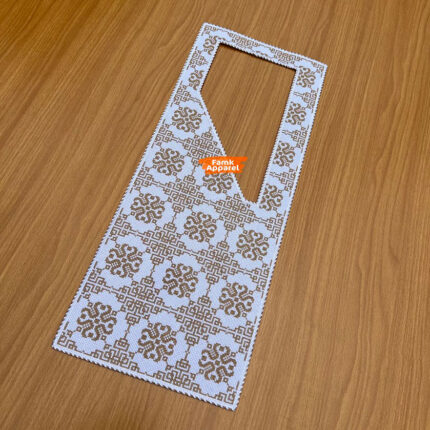
What Is an Embroidery Design File and Why Does It Matter?
An embroidery design file is the digital instruction set that tells an embroidery machine how to stitch a design — including stitch type, path, density, colour stops, and trim commands. It’s not like a normal image file (PNG, JPG). Digitising is the process of turning a normal picture into something a machine can read.
Here are the common embroidery file types:
- .DST — Tajima format; most widely compatible
- .PES — Brother machines
- .JEF — Janome machines
- .EMB — Wilcom native format
- .EXP, .XXX, .HUS — Manufacturer-specific formats
Once you upload your artwork to FAMK, we’ll digitize it into a stitch file that is compatible with your machine. When your work is complete, we’ll email you a PDF preview of what we made so you can view the stitch layout, colour placement and dimensions before it goes to production.
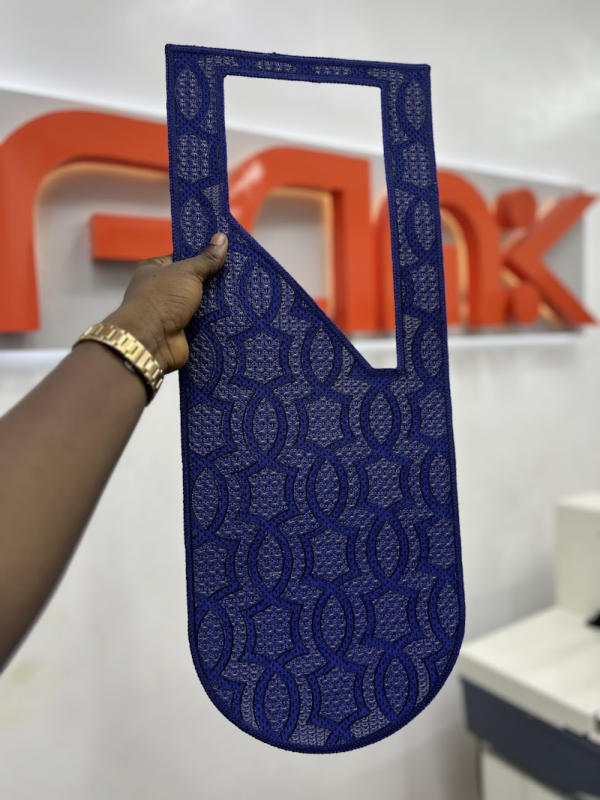
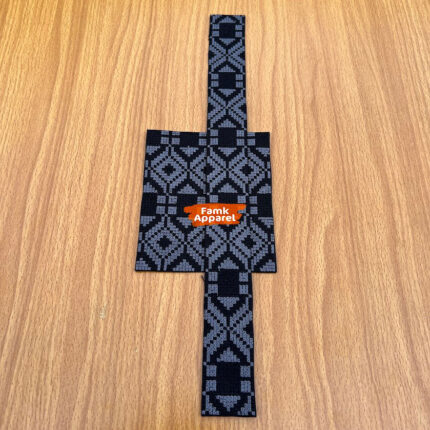
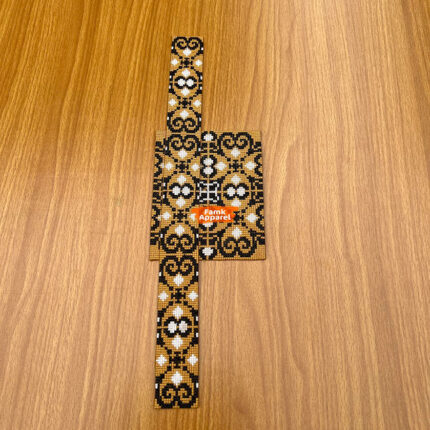
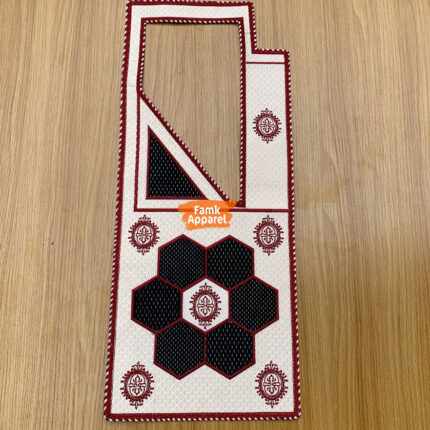
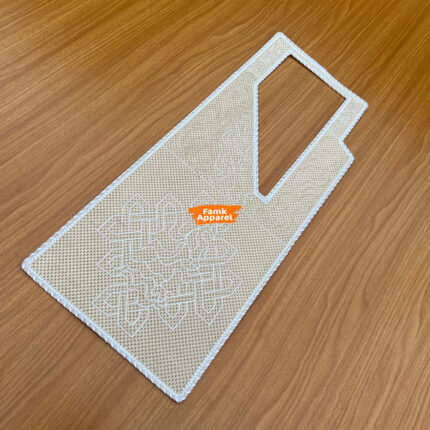
Digitally made agbada embroidery cape
How Custom Designs Are Made by Embroidery Designers
Digitising software is used by embroidery designers to turn your logo, sketch, cultural motif, monogram or other artwork into a stitch file. Good quality digitised embroidery requires an understanding of fabric flow, thread tension, stitch order and density mapping. Bad digitising results in designs that pucker, gape or lose definition when small.
Here’s a step-by-step guide on the custom digitising process:
- Client provides artwork (logo, sketch or written brief)
- Designer evaluates fabric type and placement
- Artwork is digitised in software (Wilcom, Hatch, etc).
- Stitch types, paths and colour stops are set.
- A PDF proof is sent to the client for review
- Adjustments are made and the final file is delivered
At FAMK Apparel, we also provide professional consultation and project services for fashion designers, clothing brands and tailors who need custom work built from scratch.
Cost of Custom Embroidery Designs
The cost of a custom embroidery design is determined by the number of stitches, complexity of the design and if your design is purchased pre-made or digitized from scratch.
In general, stitch count is the most important price variable for machine embroidery production.
General cost factors:
Complexity of Design: Digitising text is cheaper than digitising a detailed cultural motif
Stitch count: The more stitches, the longer the machine time and the higher the unit cost
Format requirements: There may be a small additional charge for multi-format delivery
Volume: Large orders lower the per-unit production cost significantly
Avoid companies that are converting for a flat low price without testing your design – quality digitising is done by hand, not an automated conversion.
Frequently Asked Questions (FAQs)
What’s the difference between printing on fabric and embroidery?
Embroidery stitches are actually stitched into your fabric. They are dimensional and have a finished, luxurious appearance. They won’t crack, fade or scratch off like print because they are stitched into the foundation material.
Can any picture be made into an embroidered design?
Yes! That picture can become an embroidery file. Any photograph can be converted into an embroidery design. When determining how your image will translate into stitches, there are two main variables to look at: the complexity of the image and the stitch size. Very small text or highly detailed images with very small gradations will be difficult to interpret in very small stitch sizes. Just because we can stitch it at any needle size doesn’t mean it will look great same thing goes for any other medium of art. Our team of professional embroidery designers will work with you to help identify areas of the design that can be simplified.
What is my minimum order quantity for custom embroidery?
Minimum order quantities vary between providers. Most providers work on a per-design basis with no minimum number of units for the digitising. Some providers have a minimum of 6-12 pieces per design for production stitching. At FAMK Apparel, we work on a per-project basis — reach out to discuss your specific needs and we’ll advise from there.