
Blog
Top Embroidery Machine Techniques for Custom Agbada & African Apparel

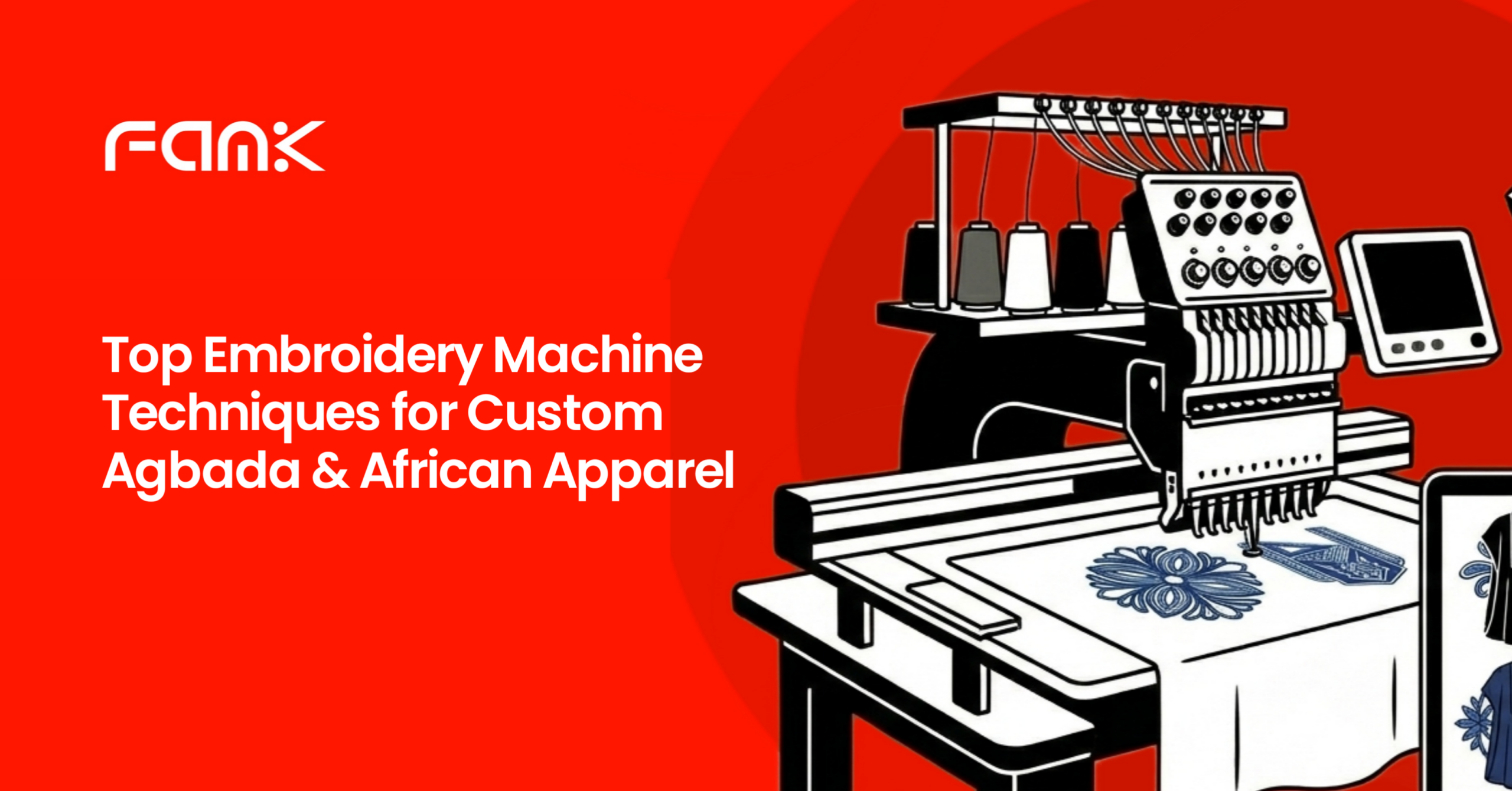
The difference between an agbada to forget and one that attracts attention is rarely the fabric. It is the embroidery, more particularly the way it is executed. An embroidery machine can create dozens of different stitch effects but not all are suitable for African garments. Some techniques are applicable to the wide chest panels of an agbada for men. Others feel more comfortable in a kaftan, a boubou, or a designer shirt. Understanding which technique works for which garment is what differentiates a skilled digitizing partner from someone who just runs a machine.
In this guide, we cover the best embroidery machine techniques for making bespoke African clothing, what each looks like in practice, and when to use them.
What Is the Difference Between Hand and Embroidery Machine Techniques?
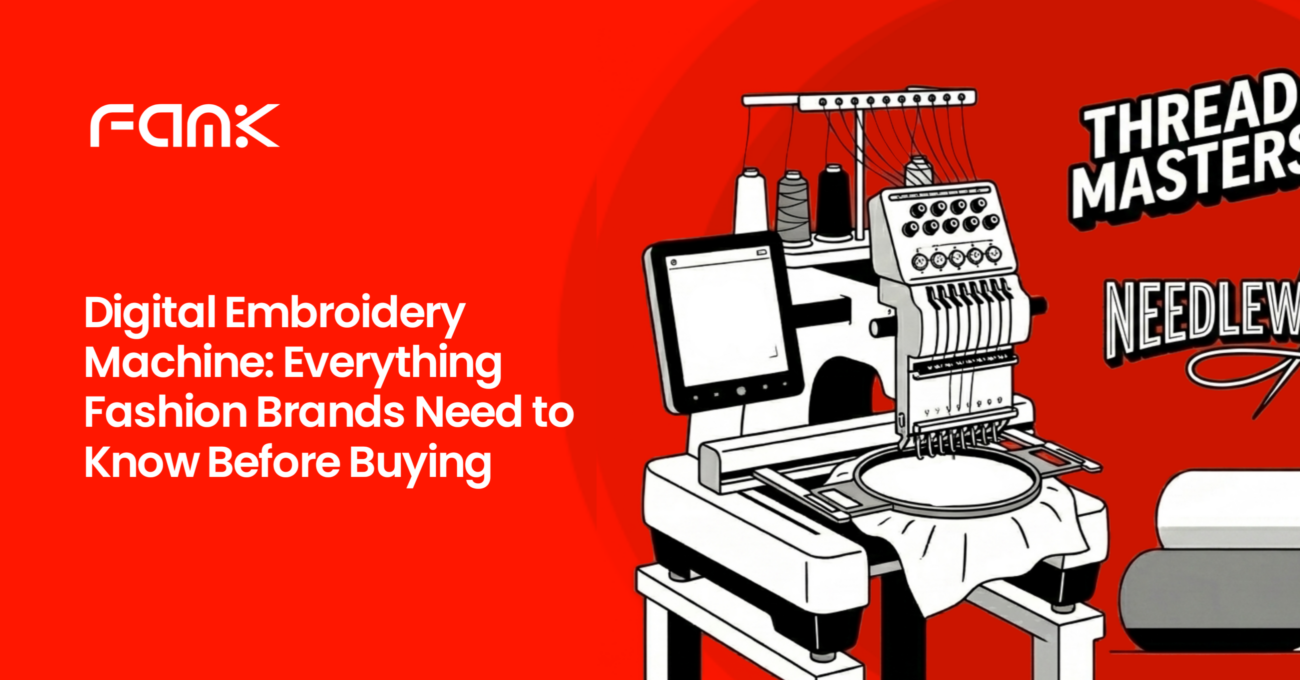
A hand embroidery machine (or hand-guided or freehand embroidery machine) is one in which the operator manually guides the needle path, producing something closer to traditional embroidery, but without full automation. It sits in-between pure hand stitching and fully programmed machine embroidery.
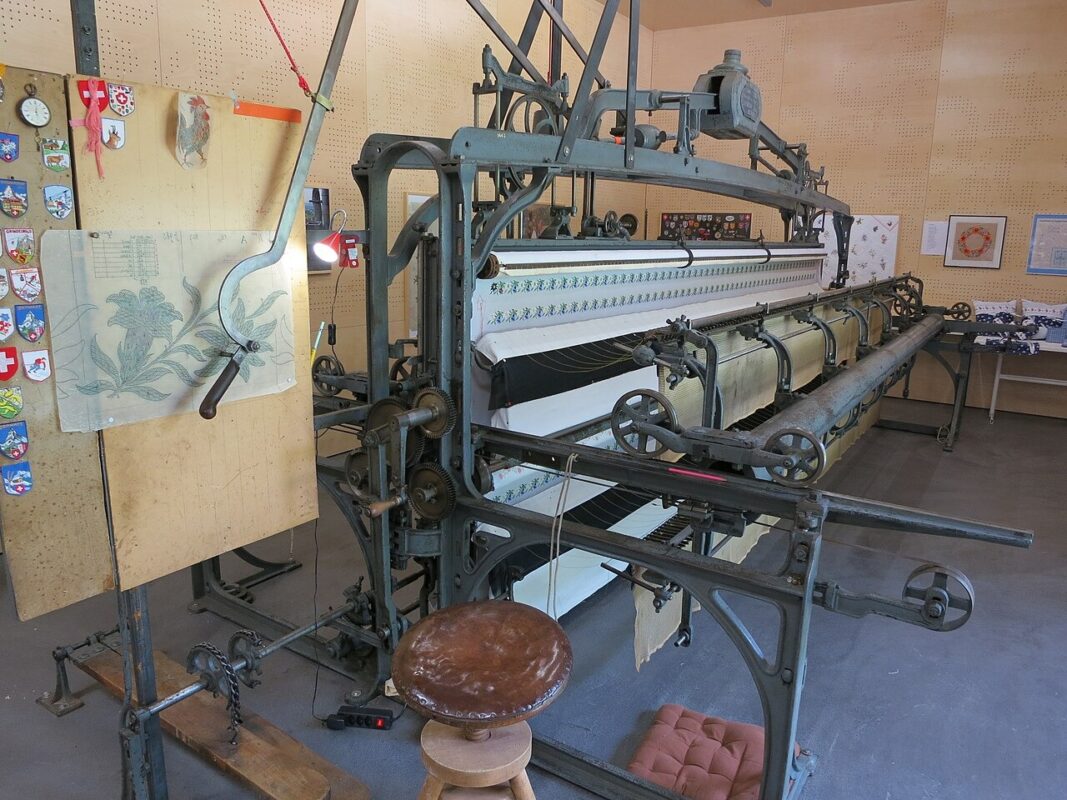
A hand embroidery machine (By Paebi – Own work, CC BY-SA 4.0)
On the other hand, a fully automated embroidery machine production reads a digitized stitch file and executes it without manual intervention. The output is accurate, repeatable and scalable. For African fashion brands producing at volume—aso-ebi orders, branded agbadas and uniform kaftans—machine embroidery is the production standard.
Both approaches have their merits. The choice of method will depend on the type of garment, the volume of orders, and the level of design complexity you are working with.
Satin Stitch: The Foundation of Agbada Embroidery
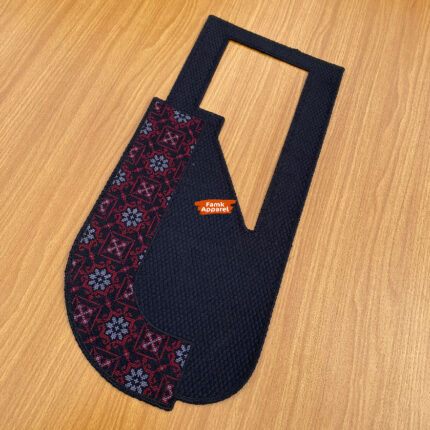
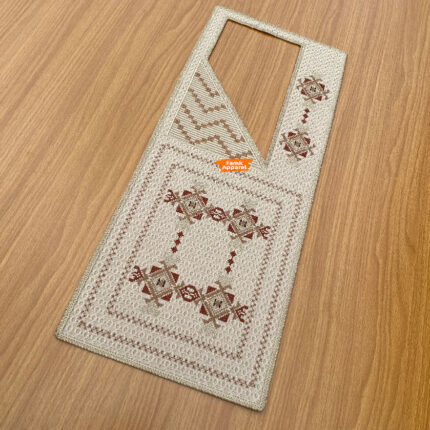
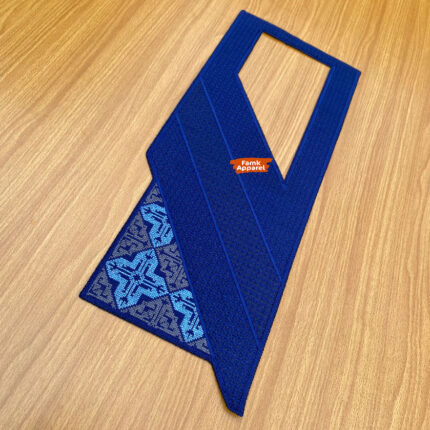
Satin stitch is the most common embroidery machine technique used for producing African apparel. It deposits parallel thread lines very close together to create a smooth, flat, high-sheen surface. The result is clean and sharp and visually striking, just what agbada chest panels and collar borders demand.
For men’s agbada, satin stitch is the standard for monograms, lettering and geometric borders. It is well suited to curves and angles and is a good choice for the arabesque and medallion patterns typical of the embroidery traditions of the Hausa and Yoruba peoples.
Best suited for:
- Agbada chest panel monogram lettering
- Collar and sleeve border work.
- Clothing, namely, logo outline and brand mark
- Kaftans and boubous with fine detail work
The only disadvantage of satin stitch is the width of coverage. Very wide design areas stitched entirely in satin can pucker or lose tension on heavier fabrics. For large solid fill areas, a fill stitch is the better choice.
Fill Stitch: Bulk Coverage
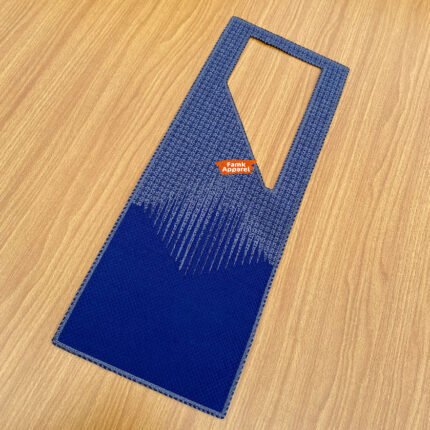
Fill stitch (also known as tatami stitch) is used for designs that require dense, solid coverage over a large area. Fill stitch is different from a satin stitch because it runs in rows of different angles, slanting slightly to each other. It gives the embroidery a woven texture and lies flat and stays well on heavy fabric.
Fill stitch is used to fill in the solid background blocks behind monogram designs on men’s agbadas and to fill in large motif fills on chest panels and any design element that is too wide for satin stitch to cover cleanly.
Best suited for:
- Large solid design blocks on agbada panels
- Backgrounds with fills behind detailed motifs
- Large area coverage on kaftans and boubous
- Any element wider than 10mm where satin stitch would cause tension problems
3D puff embroidery: A Premium Finish
3D puff is the method that allows embroidery to actually stand up off the fabric. A layer of foam is added to the garment before sewing. Then the embroidery machine stitches over the foam, holding it down under the thread to create a raised, sculptural effect.
It is the most dominant visual technique in African apparel embroidery. A 3D puff monogram on a white or cream agbada chest panel reflects light differently at each angle. It reads across the room at an owambe.
The method requires precise digitization. If the foam density and stitch coverage are not properly calibrated, the foam collapses, the edges fray and the raised effect is lost. This is one of the areas where the quality of the digitization has the most immediate impact on the end result.
Who it’s best for:
- Monogrammed plain-weave fabrics on chest panels of Agbada
- Branded headwear, cap embroidery
- High-profile event wear where visual impact is paramount
- Any design where the celebrant or host wants to make a maximum presence
Running Stitch and Underlay: The Work You Don’t See
A running stitch is a single-line stitch used for outlines, fine detail and, most importantly, underlay. Underlay is the bottom layer of stitching that is laid before the actual design. It stabilizes the fabric, increases stitch density and prevents the top layer from dropping into the weave.
Most people don’t think about underlayment. But this is why a well-digitized embroidery machine design looks crisp after washing and a poorly digitized design loses definition and develops loose threads in a matter of weeks.
Underlaying is critical, especially for African garments, where the weave density of fabrics such as Guinea brocade, Damask and lace varies. A digitizer who skips or underestimates underlay is taking a shortcut that will show up in your finished garment.
Traditional Embroidery Techniques Shape Machine Production
Traditional embroidery is not irrelevant to machine production; it informs it. The arabesque border patterns of Hausa agbadas, the geometric motifs of Yoruba textile tradition, and the medallion designs used in royal ceremonial dress all started out as hand-stitched work. A good embroidery machine digitizes those patterns and accurately translates them into stitch files without losing the cultural logic.
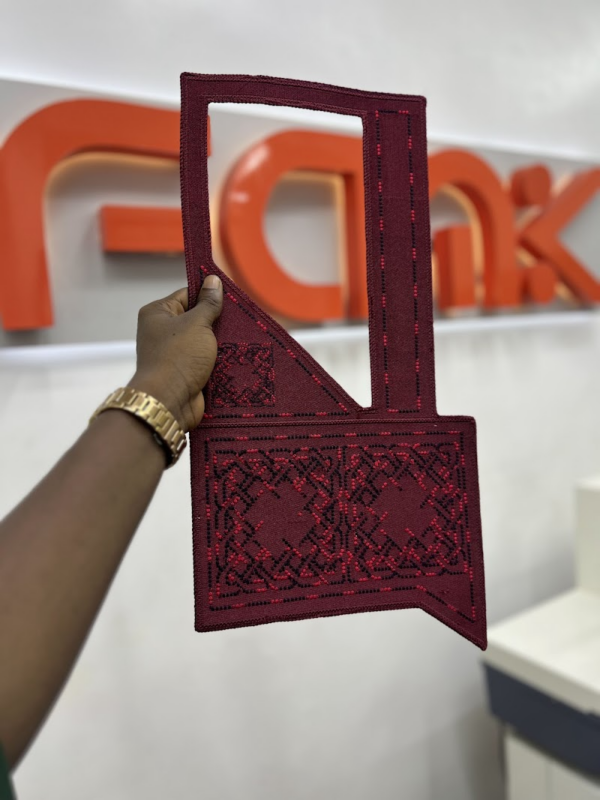
At FAMK Apparel, we are working specifically in African fashion. The techniques we use are chosen according to the garment, the fabric and the cultural context of the design. We digitize your artwork, select the right combination of techniques, and provide a PDF proof before production begins so you can see exactly what was built.
Frequently Asked Questions (FAQs)
What are the techniques of machine embroidery stitch?
Machine embroidery uses four primary stitch types. Satin stitch creates smooth, flat lines ideal for lettering and borders. Fill stitch, also known as tatami stitch, covers large solid areas with a woven texture. Running stitch is used for outlines and underlay. And 3D puff embroidery uses foam underlay beneath the stitching to create a raised, sculptural effect. Agbadas and caps are among the most common garments where 3D puff is applied.
Can an embroidery machine do custom designs?
Yes. Custom embroidery designs can be done using embroidery machines by reading digitized embroidery files that are converted from an artwork, logo, monogram or embroidery pattern. This enables fashion brands and clothing designers to easily embroider personalized designs on agbadas, kaftans, boubous, uniforms and garments while still producing consistent embroidery outcomes in bulk.
What are the different types of machine embroidery techniques?
There are four major machine embroidery stitches. These embroidery stitches include satin stitch, used for lettering and most bordering in machine embroidery designs. Fill stitch—used for filling up embroidery designs that have large areas. Running stitch—used to create outlines in machine embroidery and to stabilize fabric beneath embroidery. 3D puff embroidery—used to create 3D embroidery puffs.