

Blog
Traditional vs Modern Embroidery: What’s Best for African Fashion in 2026?

Embroidery is not new in African fashion. West African tailors were hand-stitching elaborate designs into agbadas, kaftans and boubous long before machines came into play, passing techniques down generations the way some families pass down names. But the industry has shifted. Machine digitising is now the norm in production, and brands in the fashion industry are asking a question that would have sounded bizarre thirty years ago: is traditional embroidery still the best option, or has the modern technique earned a place at the heart of African dress?
This is not an article declaring a winner. It gives a fair representation of both sides so you can choose what suits your garment, your brand and your budget.
What is African Traditional Fashion Embroidery?
Traditional embroidery is hand-stitched needlework applied by a skilled artisan directly on to fabric. No machines. No digital files. The design is done by someone experienced, who is shaped by cultural memory and craft mastery achieved over years.
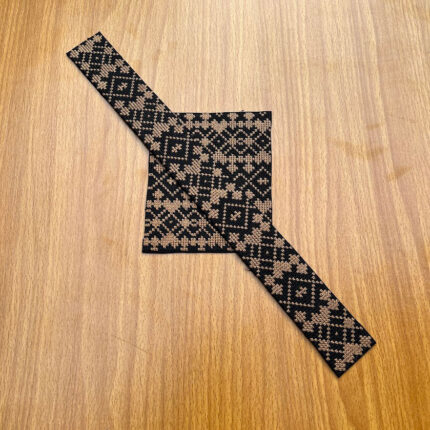
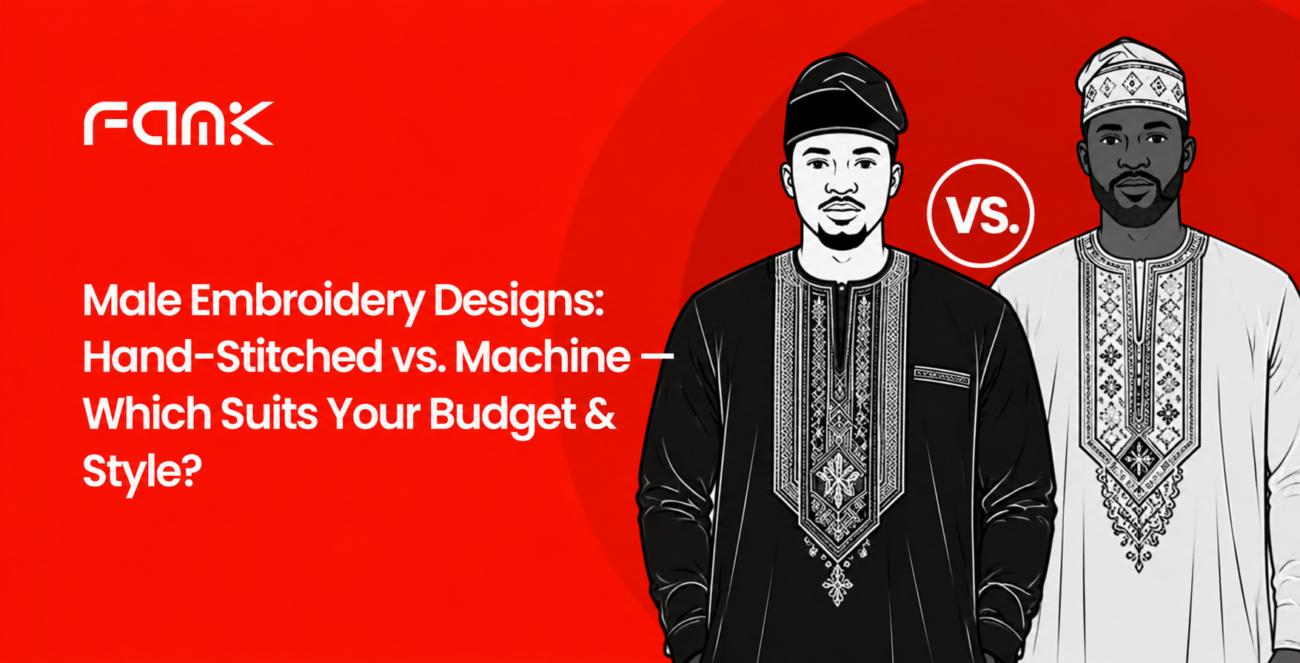
Traditional and Modern Embroidery
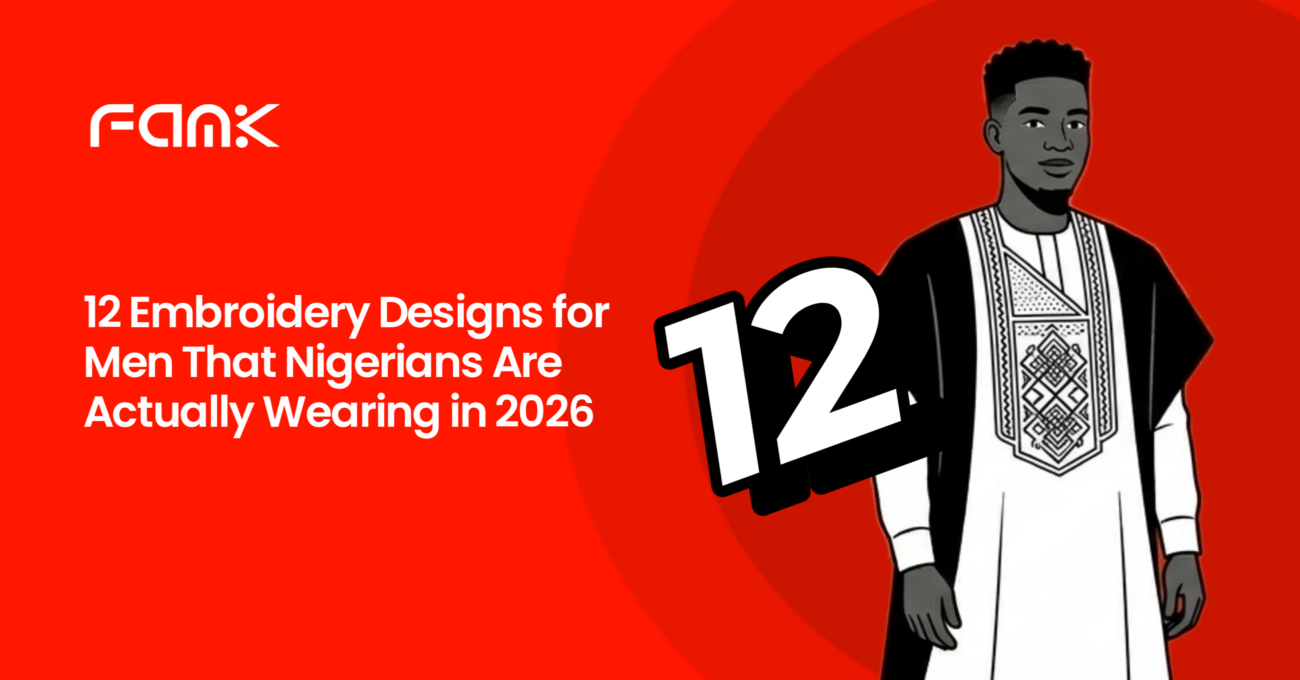
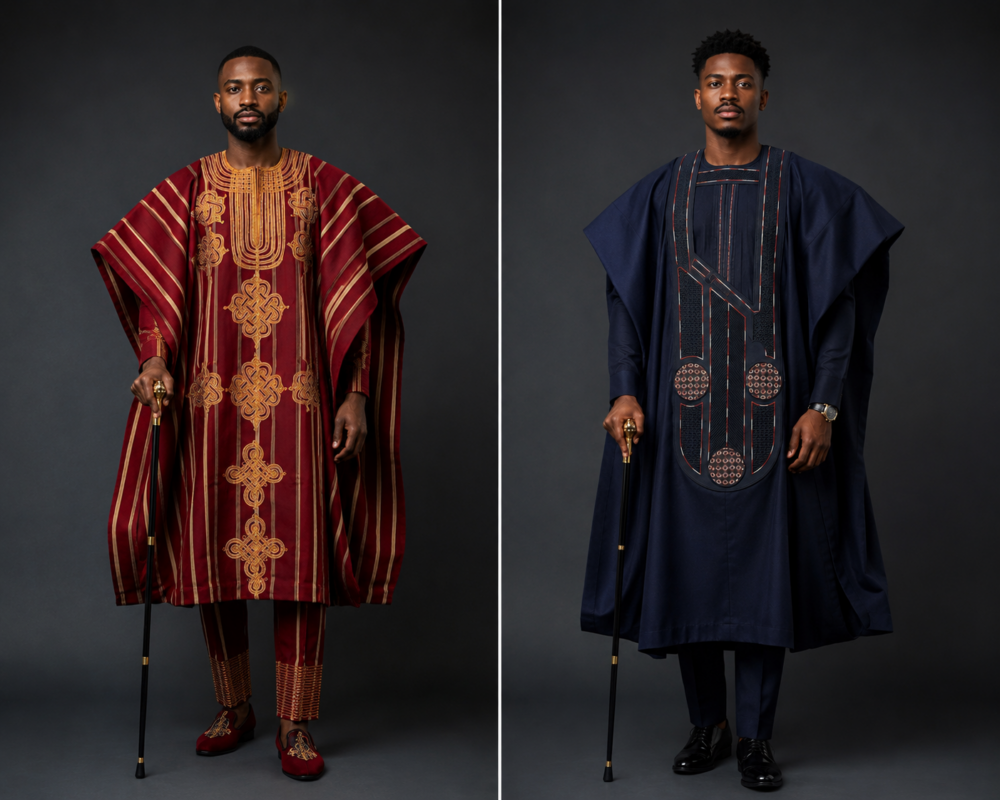
In particular, hand embroidery in African fashion has deep roots in the textile traditions of the Hausa, Yoruba and North African cultures. Traditionally, the heavily embroidered front panels on a classic Hausa agbada were entirely hand-done. The stitches were dense and complex, with artisans spending days on a single garment and the complexity of the stitching signals the social rank of the wearer.
What traditional embroidery is good for:
- Protects cultural identity and craft heritage
- Creates unique products with true craftsmanship
- Has that weight of storytelling that a machine can’t replicate
Where it falls short:
- Slow – a single complex piece can take days to produce
- Not the same across different items
- Hard to scale for brands requiring volume
- With a dwindling pool of talented craftsmen to draw upon
What is Modern Embroidery? What Makes It Different?
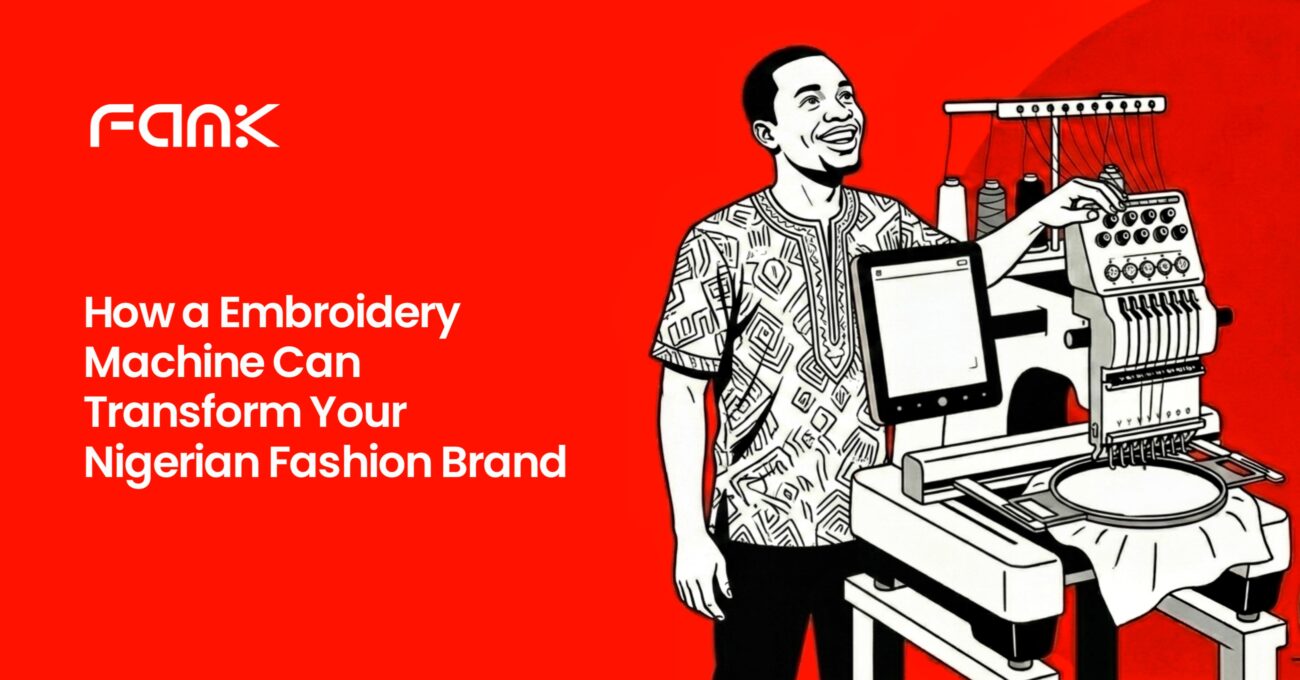
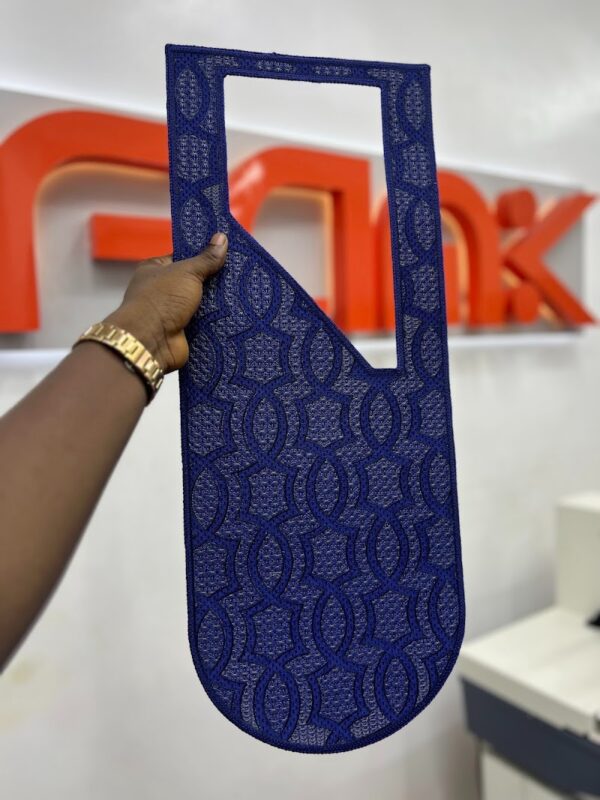
Modern embroidery uses digital machines guided by stitch files created through a process called digitizing. An embroidery designer translates your artwork — a logo, monogram, cultural pattern or custom motif — into a machine-readable file. The machine then reproduces that design with consistent stitch density, colour accuracy and speed across as many pieces as needed.
This is the method used by FAMK Apparel. We will digitize your design, create the stitch file and send you a PDF proof of exactly what was created before we go into production. You see the layout, the colour placement, the dimensions—and nothing moves forward until you approve it.
What modern embroidery does well:
- Consistent results across 1 piece or 500
- Quicker turnaround for time-sensitive orders
- More cross-brand machine format compatibility
- Replication of detailed designs such as monograms and logos
- More affordable price for large-scale production
Where it doesn’t:
- Does not have the hand-crafted uniqueness of artisan work
- The quality of the file is everything; poor digitizing produces poor results
- Requires a knowledgeable digitising partner, not just a machine operator
How Do They Compare for African Fashion Specifically?
African fashion is in a very interesting space. It is both a cultural institution and an emerging global industry. It is in this tension that the traditional vs. modern debate is most clearly played out.
Traditional embroidery scores high on cultural authenticity and artisan value. There is no machine equivalent. The garment was made in four days by a master craftsman.
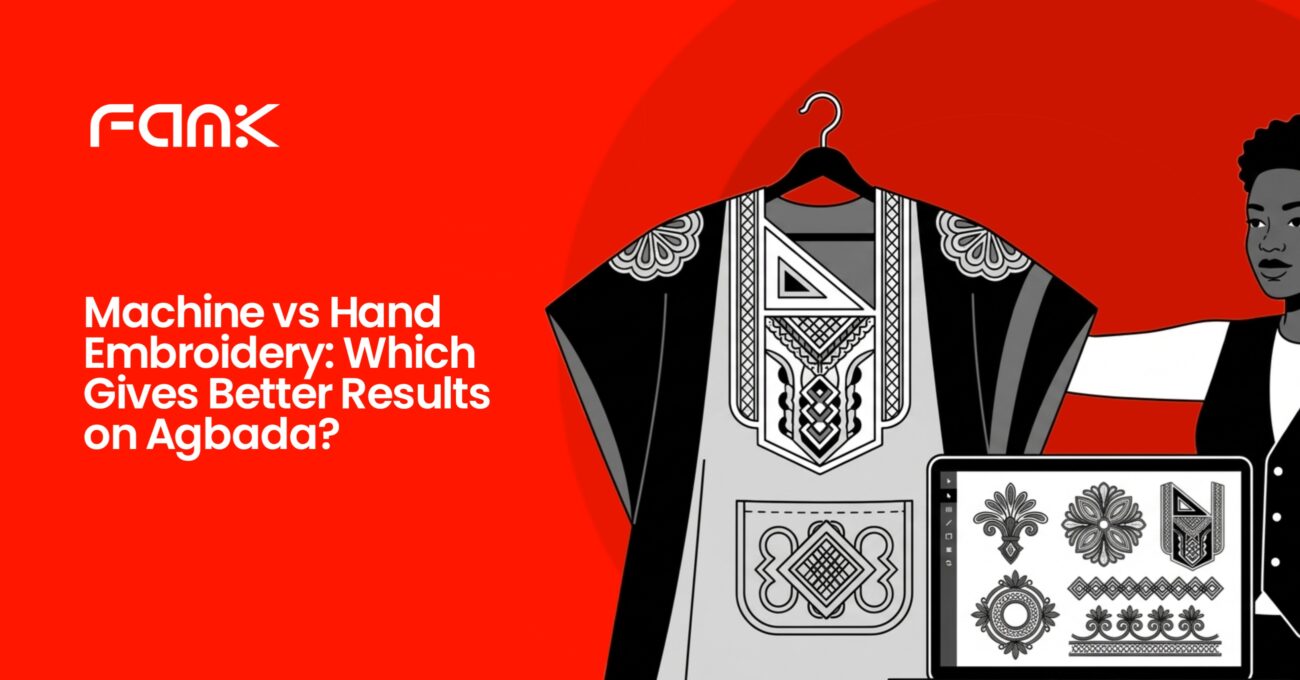
Modern embroidery wins when it comes to everything involved in production. On every commercial metric, speed, consistency, scalability and price per unit at volume, machine digitizing beats hand work. For brands making ready-to-wear African fashion, agbadas for owambe season, branded kaftans or bulk aso-ebi orders, just the consistency alone makes it worth it. Each piece in a 200-unit order looks the same, ships on time and retains its detail wash after wash.
The honest answer is, they aren’t really competing. They serve different markets, different price points, and different buyers. The conflict only exists when brands try to use one method for a problem that is of the other.
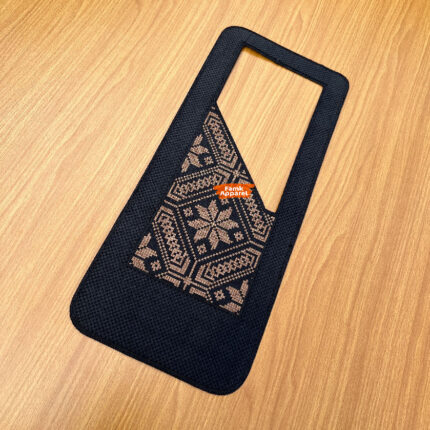


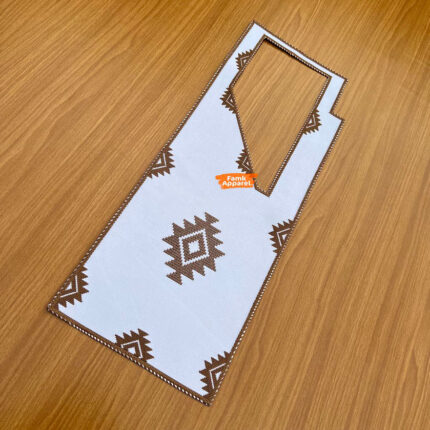
Does Contemporary Embroidery Respect African Culture?
And behind the comparison is the question that deserves a straight answer.
Modern embroidery is respectful of African culture when the designs it stitches are based on African culture. A machine that replicates a Yoruba adire geometric pattern with precision is not wiping out tradition: it is extending it to more people at a price more people can afford. The machine isn’t the problem. The problem is when designs are decontextualized, generalized or stripped of cultural meaning.
At FAMK we specifically focus on African fashion. We digitize agbada monograms, kaftan chest panels, and heritage motifs – these designs are not decorative afterthoughts. They are rooted in the same visual language that hand embroidery artisans have used for generations. The method is modern. The intention is not.
Which Should You Choose in 2026?
Depends on what you are creating and who you are creating it for.
Select traditional embroidery if you are creating a one-off heritage piece or a luxury bespoke garment or if you work in a segment where artisan provenance is part of what you are selling.
If you need to produce at volume, are working to a deadline, need consistency across multiple pieces or want to offer customers a detailed custom design at an accessible price then modern embroidery is the way to go.
If you are somewhere in the middle, a designer who appreciates cultural craft but also needs production efficiency, the answer could be both. Use hand embroidery on signature pieces. While you use machine digitising for your production line.
Frequently Asked Questions (FAQs)
Is embroidery in fashion in 2026?
Yes. Embroidery remains a major part of fashion in 2026, especially in African wear. While traditional hand embroidery continues to be valued for its craftsmanship and cultural significance, modern machine embroidery is helping brands produce detailed designs faster, more consistently, and at larger scales.
What is the fashion design style for 2026?
Fashion design in 2026 blends heritage with innovation. Designers are embracing cultural influences, personalized details, and sustainable production methods while using modern technologies such as digital embroidery and customization to create distinctive, commercially viable collections.
What is the African style for 2026?
African fashion in 2026 combines traditional aesthetics with contemporary production techniques. Agbadas, kaftans, boubous, heritage motifs, and culturally inspired embroidery remain popular, while designers increasingly use modern embroidery technology to deliver quality, consistency, and accessibility.