

Blog
Embroidery for Men: Why Nigerian Men Are Embracing This Style in 2026

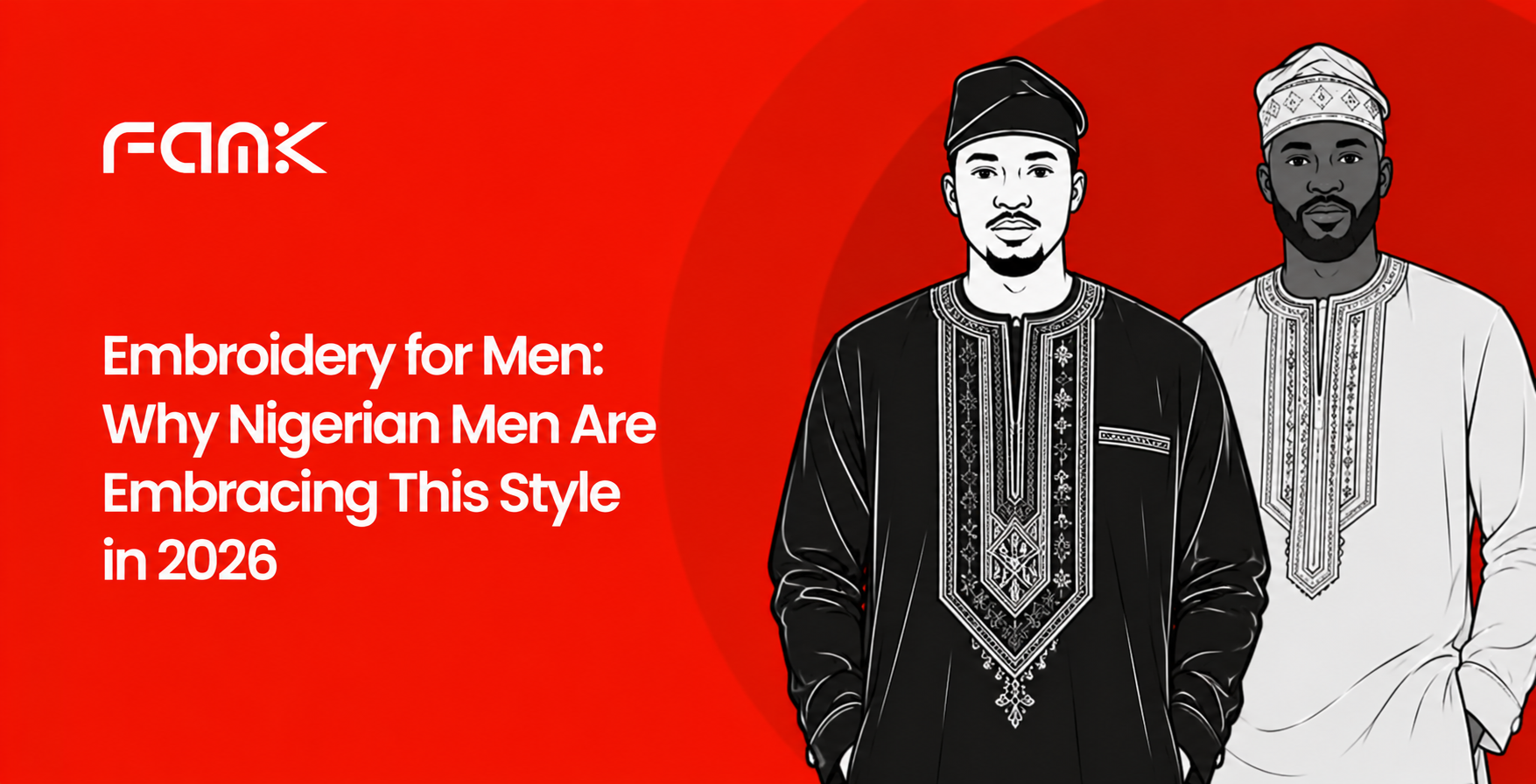
Something’s shifting in Nigerian menswear, and honestly, it snuck up on a lot of us. Search interest in embroidery for men has climbed over 900% in the past year; this is not a typo, not a fluke of one viral post. That’s the kind of number that makes you stop scrolling and ask what’s actually going on.
A decade ago, embroidery on a man’s cloth might’ve gotten a raised eyebrow outside of traditional agbada or senator wear. Now? Walk through Lekki Phase 1 on a Sunday afternoon and you’ll spot it everywhere: collars, cuffs, breast pockets and even full panel work across a kaftan chest. Men embroidery isn’t a niche anymore. It’s becoming a wardrobe expectation.
So why now, and why Nigeria specifically? A few threads are worth pulling apart here.
What’s Driving the Surge in Embroidery for Men?
Short version: cultural pride met global fashion cycles at exactly the right moment, and social media did the rest.
Male embroidery designs are having a moment because they sit at an unusual intersection. They read as heritage-forward without feeling costume-y, and they photograph beautifully, which matters a lot when half of fashion discovery now happens through a phone screen. Younger Nigerian men, in particular, are gravitating toward pieces that say something about identity without shouting it.
There’s also a diaspora effect worth mentioning. Nigerians abroad—in London, Houston, and Toronto—have been driving demand for embroidery designs for men that feel authentically Nigerian but wearable outside a strictly “traditional occasion” context. Weddings, sure, but also dinners, work events, casual Fridays if your office allows it. That’s a genuinely new use case, and it’s part of why the search curve looks the way it does.
Add to that a handful of Nollywood actors and Afrobeats artists who’ve been photographed in heavily embroidered pieces like Wizkid, Burna Boy, even some of the newer Amapiano-adjacent crossover artists and you get a trend with real cultural momentum behind it, not just marketing push.
How Is Male Embroidery Different From Women’s Embroidery?
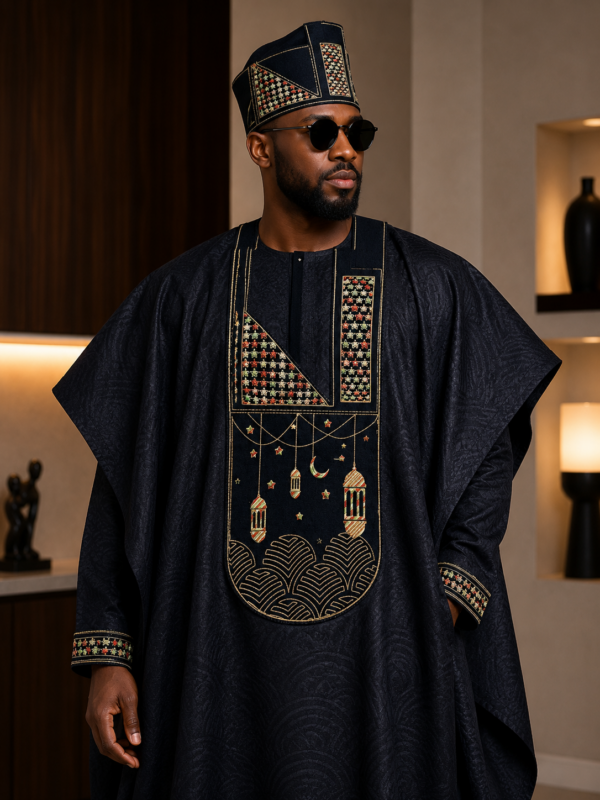
Where embroidery designs for male garments tend to lean heavily on geometric patterns, bold single-color thread work, and structured placement, think collar, chest panel and cuff women’s embroidery in the same market tends toward more elaborate, multi-color floral or abstract motifs across larger surface areas. The restraint is deliberate.
Menswear embroidery in Nigeria right now is chasing an understated but unmistakable look, not maximalism. Thread weight matters too. A lot of the pieces trending on Instagram right now use slightly raised, textured stitching and sometimes metallic thread on darker fabric because it catches light in photos and video in a way flat embroidery doesn’t. That’s partly an aesthetic choice and partly, frankly, an algorithm-driven one.
Ready to see this in person rather than just read about it? Browse FAMK’s embroidered kaftan collection; every piece is made with the raised-stitch technique described above.
What Occasions Call for Embroidered Menswear?
Increasingly, the honest answer is “more than you’d think.”
Traditional wear for weddings and naming ceremonies is still the anchor use case for embroidery for men, and that’s not going anywhere. But the newer growth is happening in semi-formal territory — dinner events, church on a Sunday that isn’t a “big” Sunday, and even some corporate settings where a well-cut embroidered kaftan reads as sharp rather than casual. FAMK has been seeing this shift directly in what customers are asking for: pieces they can wear more than twice a year.
Where Should Nigerian Men Start If They’re New to This?
Start small, honestly. You don’t need a full embroidered agbada as your first purchase.
A single embroidered detail—a stitched collar, a pocket square panel, or cuffs on an otherwise plain shirt — is the easiest entry point into male embroidery designs without it feeling like a costume. Once that feels comfortable, scaling up to a full front-panel piece or a two-piece set becomes a much smaller leap. Most style guides recommend building from subtle to statement, and this trend is no exception.
If you want a longer breakdown of how to actually style these pieces day to day, FAMK’s guide to styling Nigerian traditional wear for modern occasions goes deeper into pairing, fabric choice, and seasonal considerations.
Is This Trend Likely to Last, or Is It a Passing Moment?
Trend cycles built purely on celebrity styling tend to peak and crash within a season. What’s different here is that embroidery designs for men are being pulled by search demand and by a broader global reappraisal of craftsmanship. The same instinct driving interest in hand-finished tailoring, artisanal leather goods, and slow fashion generally. A popular overview of embroidery as a textile art traces this craft back thousands of years across cultures, which is part of the appeal. It’s not a manufactured trend; it’s a rediscovery of something that was always there.
Don’t wait for every menswear brand in Lagos to catch on. Shop FAMK’s men’s embroidered collection now while pricing and selection are still ahead of the curve.
Is embroidery for men only for traditional or formal occasions?
No. Embroidery for men started in traditional and formal wear, but that’s no longer where it stops. Subtle embroidered collars, cuffs, or pocket panels are now worn to dinners, casual Sundays, and even some corporate settings. The shift is toward understated detail rather than full statement pieces, which makes it far easier to wear regularly, not just for weddings or naming ceremonies.
What fabrics work best for male embroidery designs?
Cotton, linen, and lightweight cashmere blends work best for male embroidery designs because they hold stitching firmly without puckering or warping. They also breathe well, which matters in Nigeria’s climate. Heavier fabrics like brocade can support denser embroidery for statement pieces, but for everyday wear, lighter natural fibers give the cleanest, most durable finish.
How much does custom embroidery for men typically cost in Nigeria?
Cost depends on thread type, design complexity, and how much of the garment is covered. A single embroidered collar or cuff detail is the most affordable entry point, while full front-panel or two-piece embroidered sets cost significantly more. Hand embroidery generally runs higher than machine work, but many customers start small and scale up over time.
Is hand embroidery better than machine embroidery for menswear?
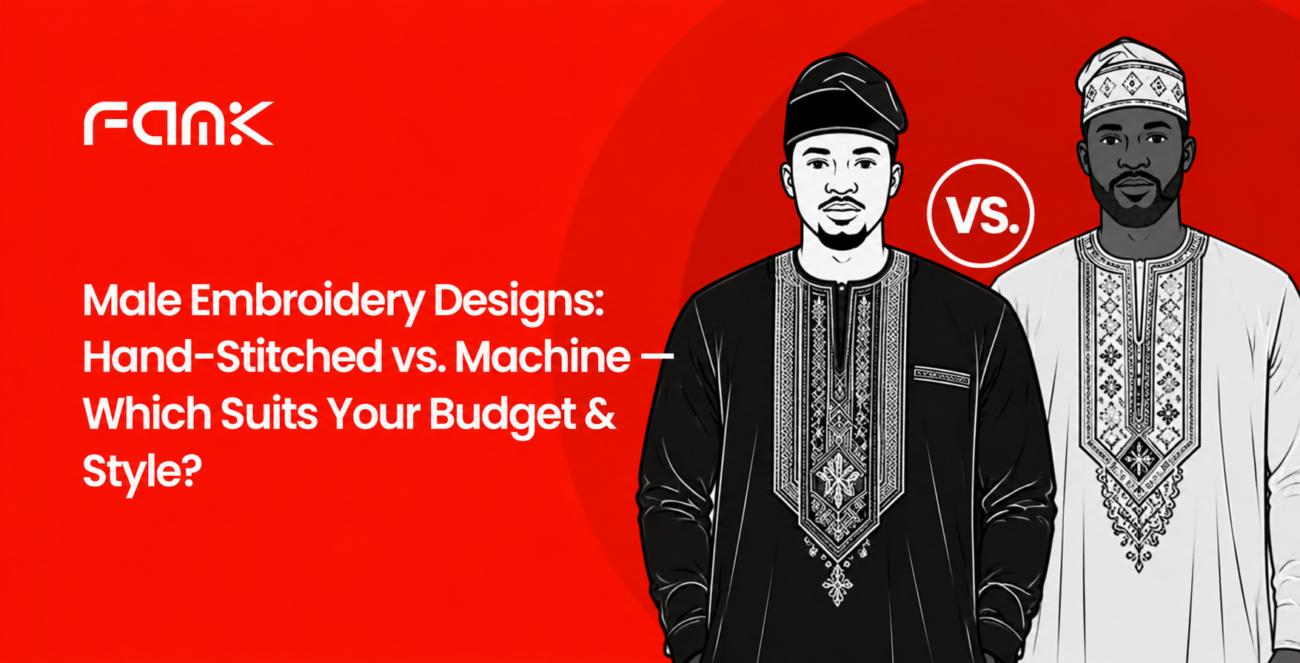
Neither is strictly “better” they suit different needs. Hand embroidery offers richer texture, durability, and a one-of-a-kind finish but takes longer and costs more. Machine embroidery is faster, more affordable, and more consistent for repeated patterns. For embroidery designs for male wardrobes on a budget, machine work is often the practical starting point.
“better”;