
Blog
Agbada Embroidery Designs: Your Complete Guide to Choosing, Ordering & Getting It Right

The event is set. The fabric is chosen. And now comes the part that most people underestimate, deciding on the agbada embroidery design and finding someone who can execute it to the standard the occasion demands. This is where things go right or wrong. Not at the tailor, not on the day. Here, at the design and digitising stage.
This guide walks through every decision in that process, what to choose, why it matters, what to watch out for, and how to order with enough confidence that the garment that arrives is the one you actually envisioned.
Where Do You Start When Choosing an Agbada Embroidery Design?
Start with the occasion. Not the design.
Every other variable like motif, thread colour, placement, and scale flows from what the event is and what your role in it is. A 60th birthday celebrant commissioning embroidery designs on agbada needs to make completely different choices from a wedding guest ordering the same garment in the same fabric. Same agbada. Entirely different brief.
Once the occasion and role are clear, three decisions follow in sequence:
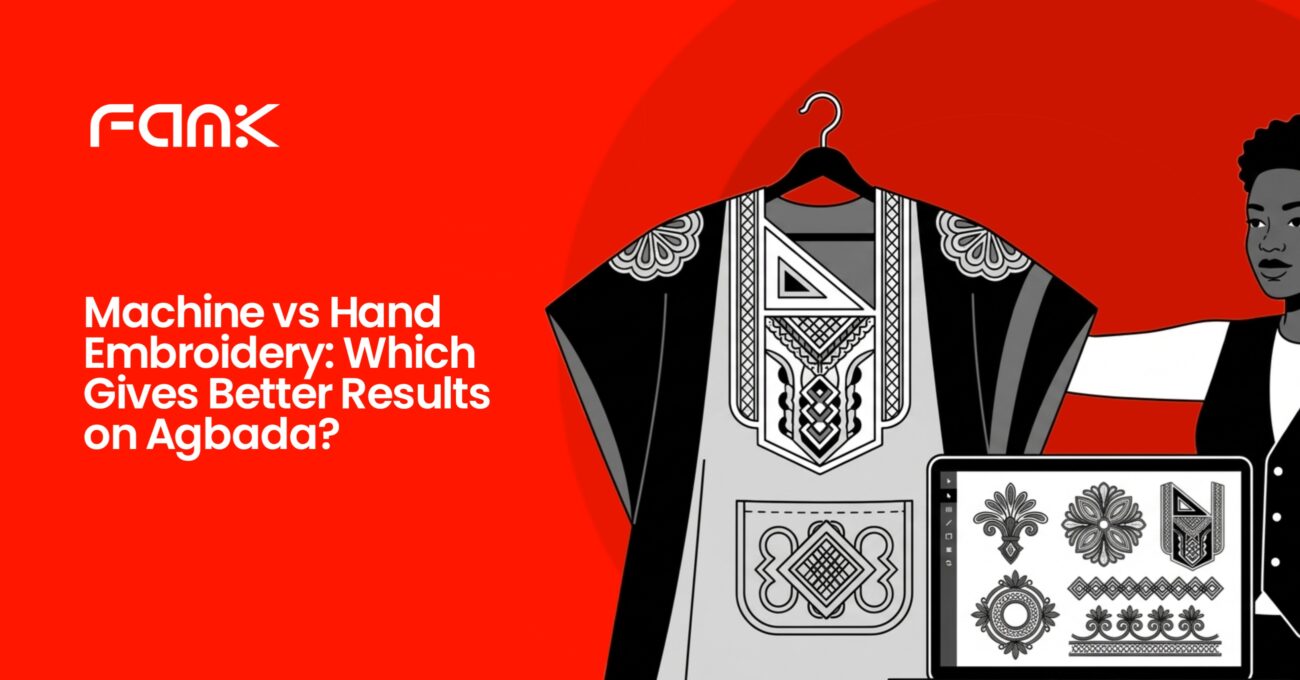
Design type: monogram, cultural motif, heritage pattern, or a combination. Each communicates something different and suits different occasions and roles. A personal monogram signals identity. A heritage pattern signals cultural belonging. A royal medallion signals authority. These are not interchangeable.
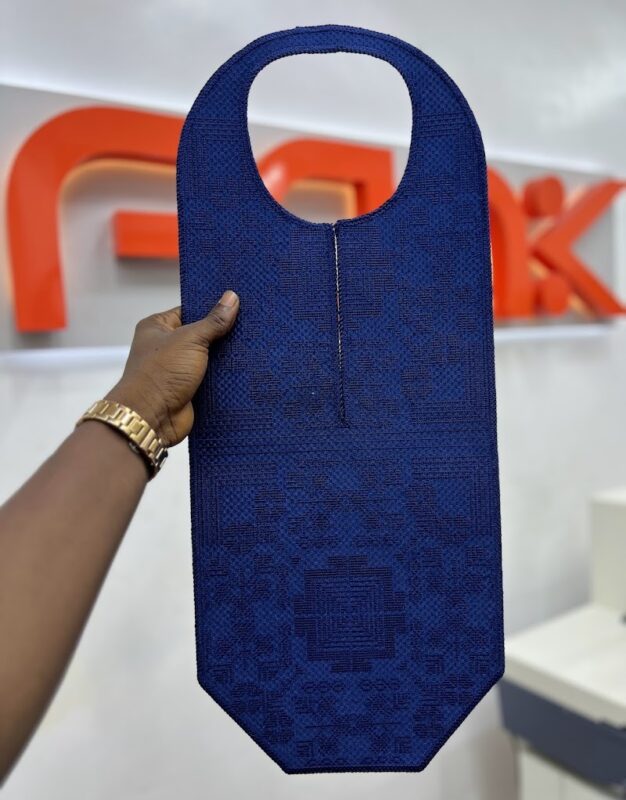
Placement: where on the garment the design sits. Centre-chest is the position of authority and formality. Collar and sleeve border work reads more contemporary and guest-appropriate. Full-garment coverage of the chest, sleeve and cuff working as a connected system communicates investment and suits celebrants and hosts.
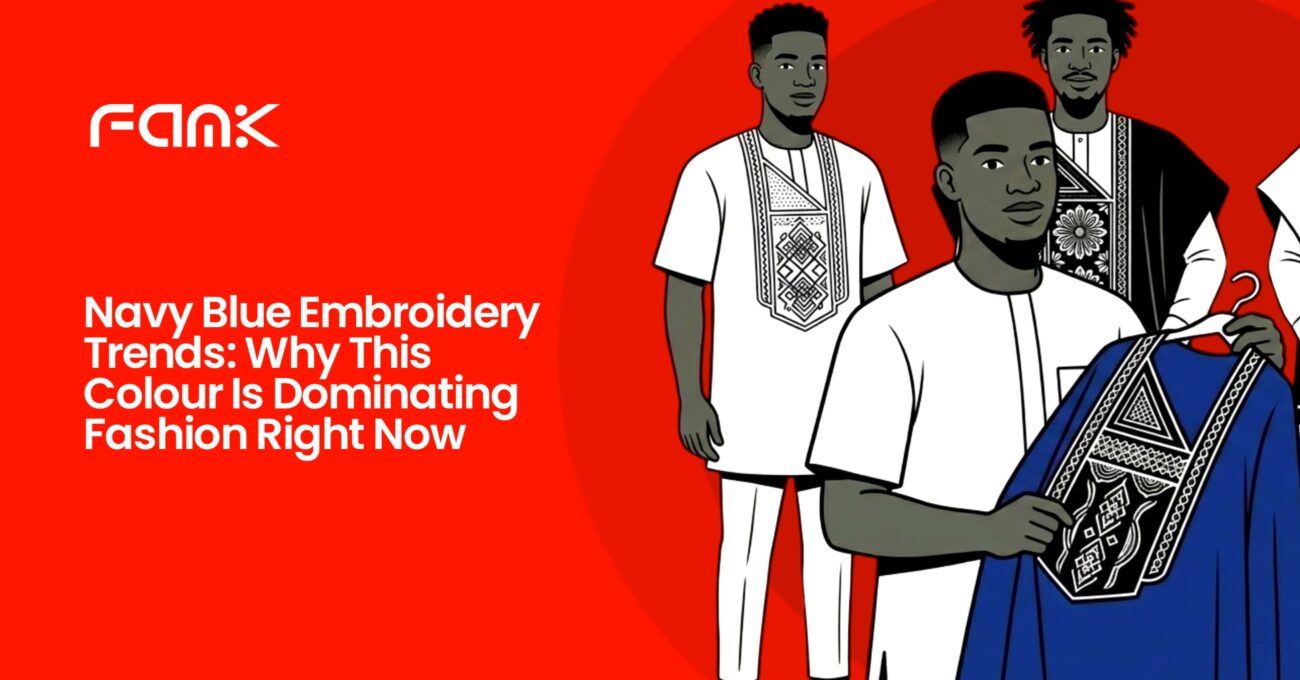
Thread colour: gold for status and formality, silver for a cooler contemporary read, tonal for quiet confidence, multicolour for Pan-African cultural identity. The colour is not decoration. It is part of the signal.
What Are the Most Requested Agbada Embroidery Designs in Nigeria?
Not every design suits every man or every moment. But some categories dominate Nigerian occasion wear for good reason.
Monogram machine embroidery designs remain the single most requested category. Initials, full names rendered in custom letterforms, date combinations for milestone events — all of it falls here. The monogram works because it is both personal and universally legible. Anyone in the room understands what it means without needing to know the specific design language behind it.
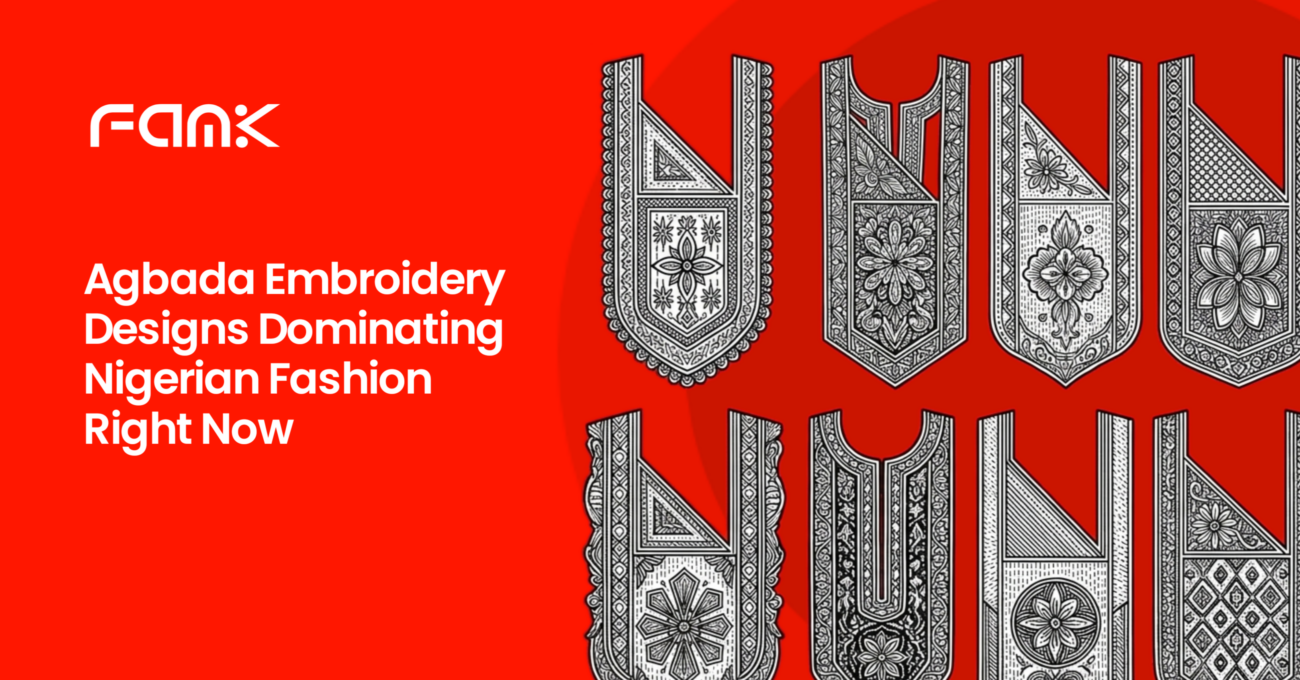
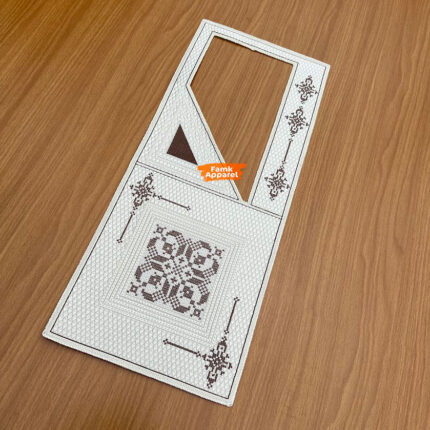
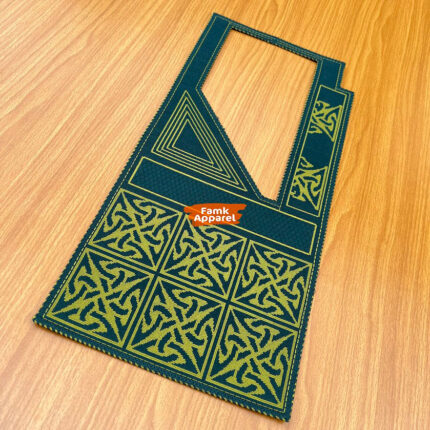
Embroidery designs on agbada built around cultural motifs such as Hausa arabesque borders, Yoruba adire geometry, and royal medallion patterns are growing faster than any other category in 2026. Men who want their garments to communicate something beyond personal identity are reaching for heritage design, and digitising technology has made it possible to execute those patterns at a precision level that was genuinely difficult a decade ago.
3D puff monograms, tonal chest panel designs, and family crest commissions complete the most requested list. Each requires different digitising decisions. None of them should be treated as a generic off-the-shelf order.
The Digitising Question Nobody Asks Until It Is Too Late
Here is the part of the buyer’s guide that most buyers skip because it feels technical. It is also the part that determines whether the finished garment looks the way it should.
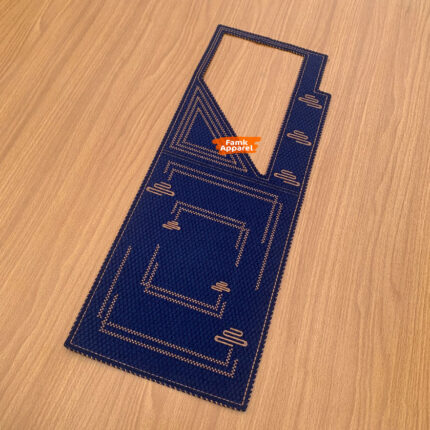
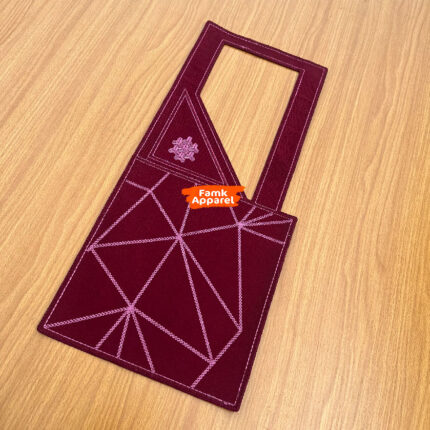
Digitising converts your chosen design into a stitch file — the instruction set that tells the embroidery machine exactly what to do. Stitch type, path, density, underlay, colour stops. Every variable that governs whether the agbada embroidery design sits flat, holds its edges under wear and washing, and reads at the correct scale on your specific fabric.
The fabric variable alone is worth slowing down on. Guinea brocade, damask, lightweight lace, and cotton blends all behave differently under a needle. A stitch density that sits perfectly on brocade will pucker on lace. An underlay setting calibrated for cotton will cause a brocade design to sink. Poor digitising is invisible until the machine runs — and by then, the garment is already compromised.
According to the Textile Institute’s published standards on embroidered textile quality, the three most common causes of embroidery failure on prestige garments are inadequate underlay, incorrect stitch density for fabric weight, and insufficient test evaluation before full production. All three are digitising decisions, not machine decisions.
At FAMK Apparel, every agbada embroidery design commission goes through fabric assessment before the file is built. The stitch file is then proofed as a PDF, showing the exact layout, colour placement, and dimensions on your garment before anything goes to production.
A Practical Ordering Guide
Before you commission anything, get these decisions clear.
| Decision | What to Determine | Why It Matters |
| Occasion and role | Celebrant, host, or guest | Determines appropriate design scale and coverage |
| Design type | Monogram, cultural motif, crest, pattern | Each communicates differently and suits different occasions |
| Fabric | Name, weight, weave density | Governs stitch density, underlay, and technique selection |
| Placement | Chest panel, collar, sleeve, full garment | Placement carries as much meaning as the design itself |
| Thread colour | Gold, silver, tonal, multicolour | Colour choice is part of the signal the garment sends |
| Machine format | .DST, .PES, .JEF, and so on | Must match your embroidery machine brand |
| Proof requirement | PDF proof before production | Non-negotiable — confirms what was built before stitching begins |
Bring as much of this to your digitising partner as possible at the brief stage. The more context provided upfront, the fewer revision rounds, and the faster the final file reaches production.
What Separates a Good Digitising Partner From a Bad One
Three things. Not price. Not turnaround speed. Not the size of their design library.
First, they assess your fabric before building the file. A partner who asks for your fabric name and weight before starting is a partner who understands that embroidery designs on agbada are not fabric-agnostic. One who does not ask is cutting a corner that will show in the result.
Second, they send a proof. A PDF showing the exact stitch layout, colour placement, and dimensions on your garment before production begins. This is not optional. It is the only point in the process where you can catch problems without cost.
Third, they understand African garment proportions. An agbada chest panel is not a shirt front. The dimensions, the fabric behaviour, and the visual logic of the design are specific to the garment. A digitising partner who works primarily on Western apparel will apply Western assumptions to an African garment and the result will show.
Final Thoughts
Agbada embroidery designs at their best are not just stitching on fabric. They are the most visible personal statement a Nigerian man makes at an occasion — and the decisions behind them deserve the same consideration as the fabric, the tailor, and the event.
Choose the design for the occasion. Brief the digitising partner with enough context to build it correctly. Demand a proof before production. And work with someone who understands that monogram machine embroidery designs on a Nigerian agbada are not the same category as logo embroidery on a corporate polo shirt — even when the technique overlaps.
At FAMK Apparel, this is all we do. African garments, African proportions, African design language. Every commission is assessed against your specific fabric and occasion before the stitch file is built.
How do I choose the right agbada embroidery design for my occasion?
Start with your role at the event. Celebrants and hosts suit bold chest panel designs — full monograms, heritage motifs, or 3D puff — that read from across a room. Guests are better served by cleaner, lighter embroidery designs on agbada that complement rather than compete. Thread colour and placement should follow from that role determination, not precede it.
What is trending in embroidery in 2026?
Layered cultural motif systems are leading, men are moving away from a single chest panel design toward embroidery that connects across collar, sleeve, and cuff as one visual system. Tonal thread work, text-based designs using full words or phrases, and heritage patterns rooted in specific ethnic identity are also gaining significant ground.
How do I know if my agbada embroidery was digitised correctly?
Clean edges, consistent stitch density, no puckering, and sharp detail at the correct scale are all indicators of good digitising. The most reliable protection is a PDF proof reviewed before production. At FAMK, every agbada embroidery design commission includes this proof stage — you see exactly what was built before any stitching begins.
Which material is best for agbada?
Guinea brocade and damask are the strongest choices. Both hold stitch density well, support heavier embroidery coverage without puckering, and carry thread — particularly gold — with the kind of visual depth that agbada embroidery demands. For premium ceremonial pieces, Italian lace and heavyweight Aso-Oke are increasingly favoured where drape and texture matter as much as embroidery.