

Blog
Agbada Embroidery Designs Dominating Nigerian Fashion Right Now

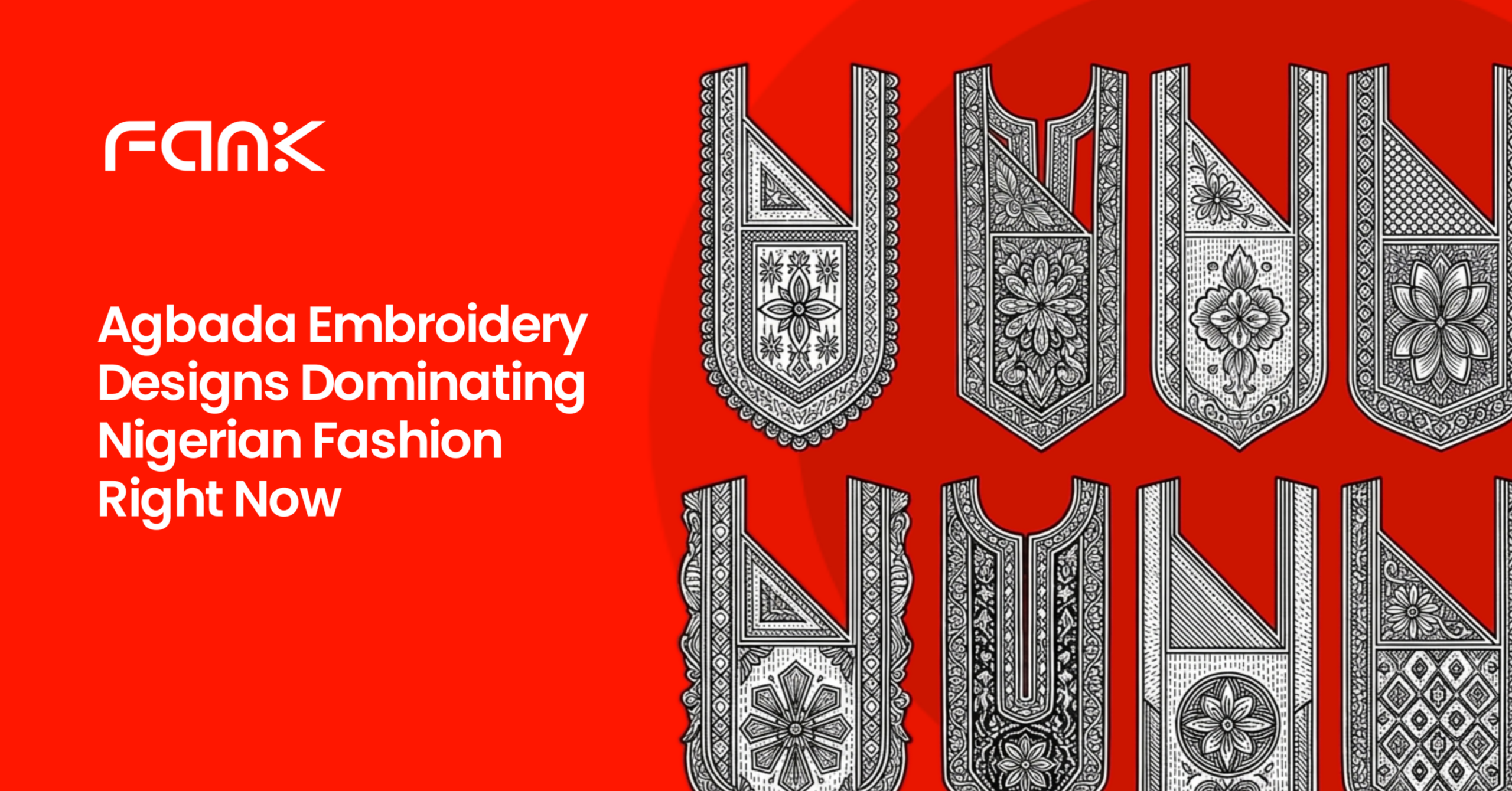
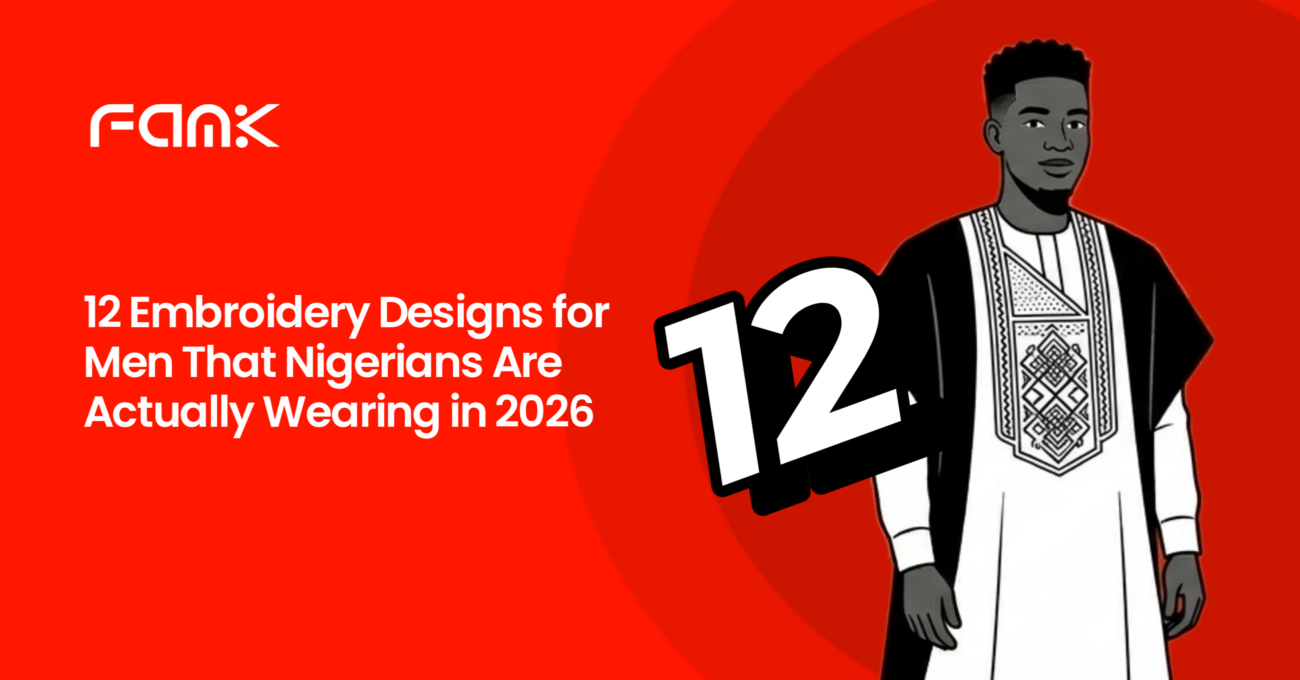
Something has changed in how Nigerian men think about agbada embroidery designs. The conversation used to be simple: gold thread, chest panel, done. Today, men are briefing embroidery designers the way they brief tailors who have spent thirty years doing bespoke work with references, cultural context, and very specific ideas about what they want the garment to communicate before anyone says a word to them.
The shift is documented. According to the Victoria and Albert Museum’s research on West African textile traditions, embroidery on prestige garments has historically functioned as a social signal system, encoding rank, lineage, and occasion into fabric. What is new in 2026 is that this logic has moved from royal courts to everyday owambe culture and the latest embroidery designs in Nigeria reflect exactly that democratisation.
What Is Actually Driving Agbada Embroidery Trends in 2026?
Three forces are shaping agbada embroidery designs right now: the rise of personalisation culture, the growing influence of diaspora taste, and the technical leap that better digitising has made possible.
Personalisation culture means men are no longer satisfied with a generic monogram. They want their initials rendered in a specific font, at a specific size, combined with a family symbol or a date that means something. Generic is no longer good enough when the person next to you at an owambe is wearing something built specifically for them.
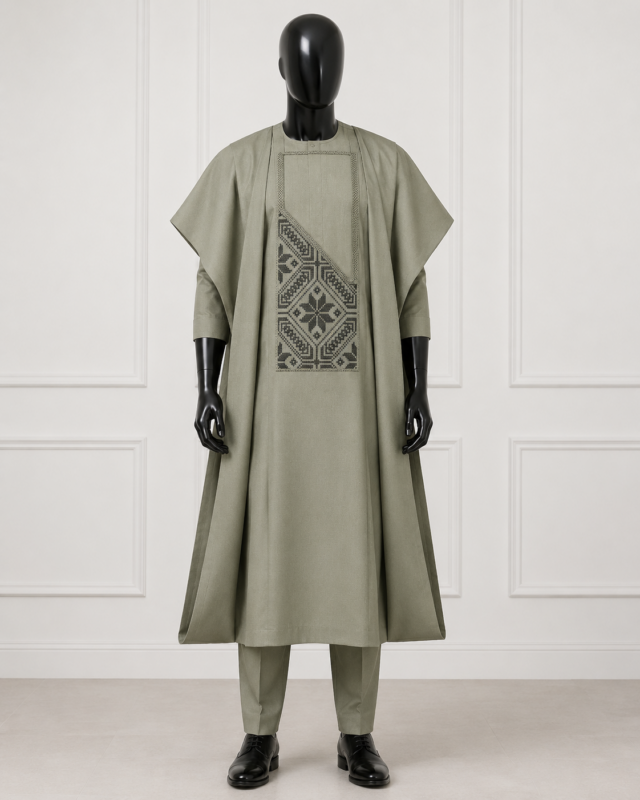
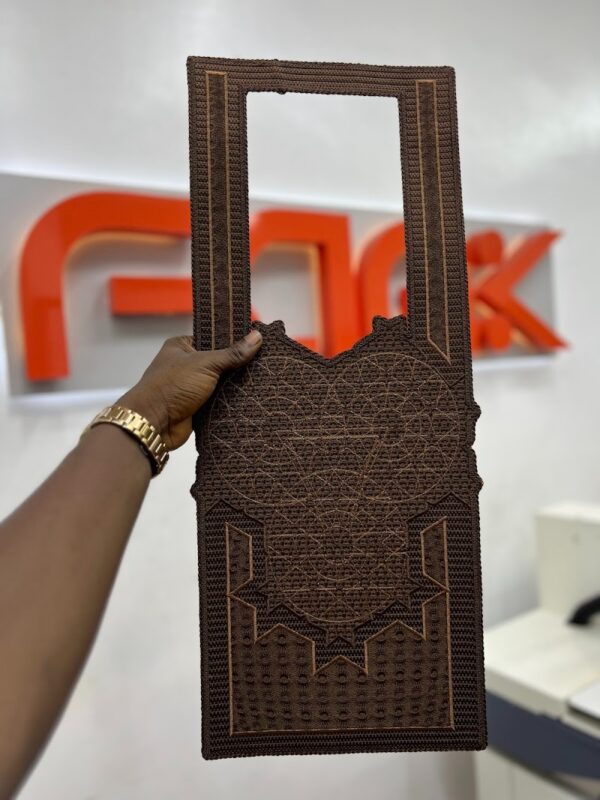
An agbada with embroidery
Diaspora influence is reshaping what counts as appropriate for formal African dress. Nigerian men in the UK, US, and Canada are attending cultural events in environments where their agbada is often the only one in the room. That visibility has pushed demand for embroidery designs that are culturally legible to a global audience—heritage motifs that tell a story rather than simply decorate a surface.
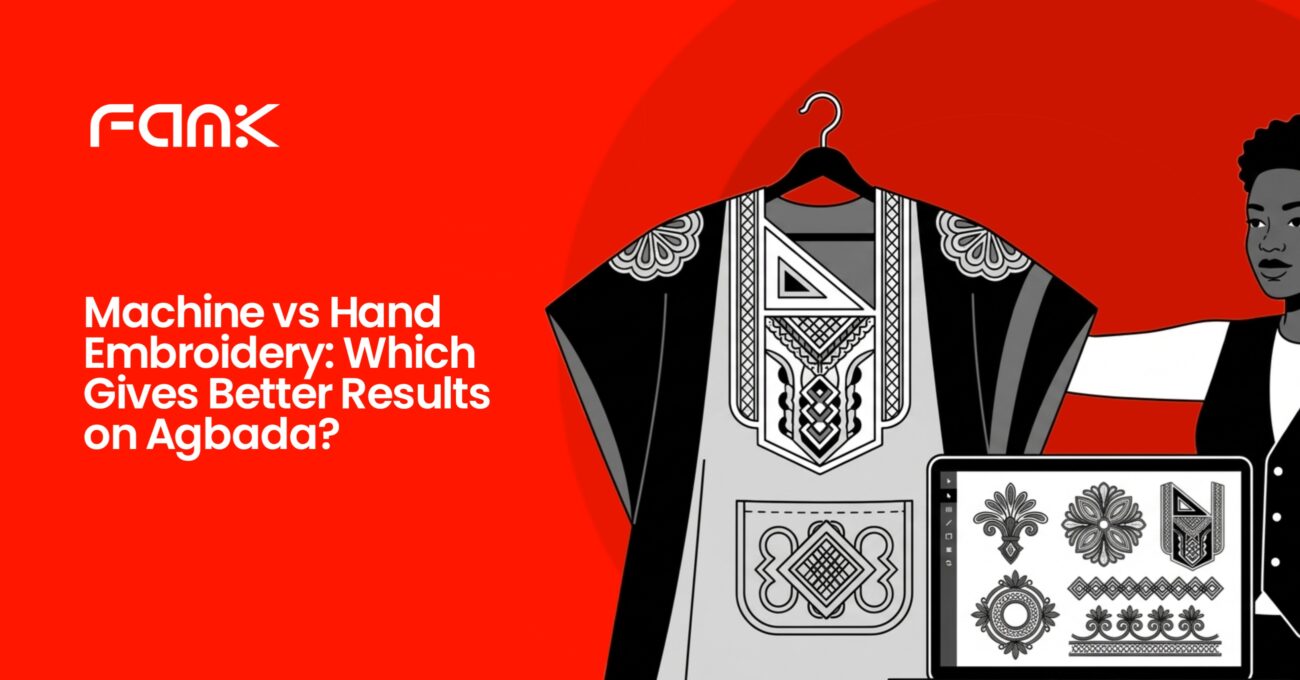
Better digitising has made complex designs viable at scale. Patterns that would have taken a hand embroidery artisan four days to complete can now be digitised once and reproduced accurately across an entire Aso-Ebi order. The design ambition of buyers has risen to meet what the technology can now deliver.
The Designs Gaining the Most Ground Right Now
The latest embroidery designs in Nigeria are not replacing tradition — they are extending it. The patterns gaining traction in 2026 sit at the intersection of cultural authenticity and modern execution.
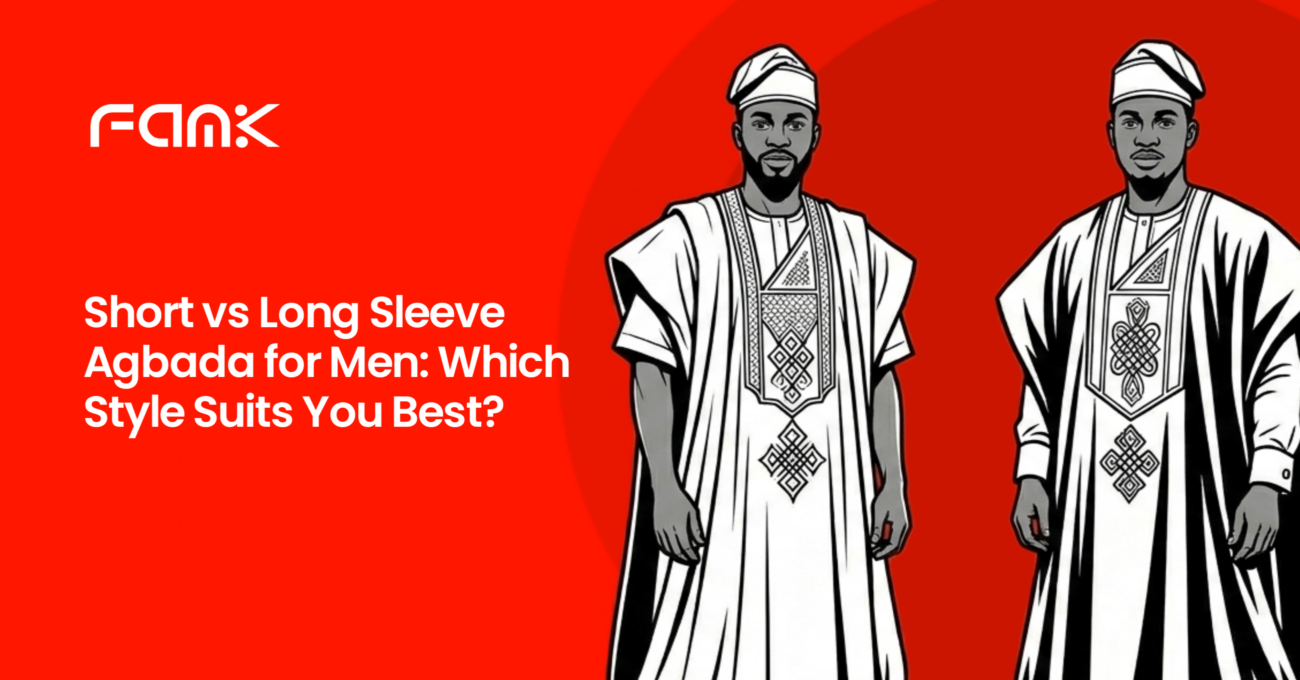
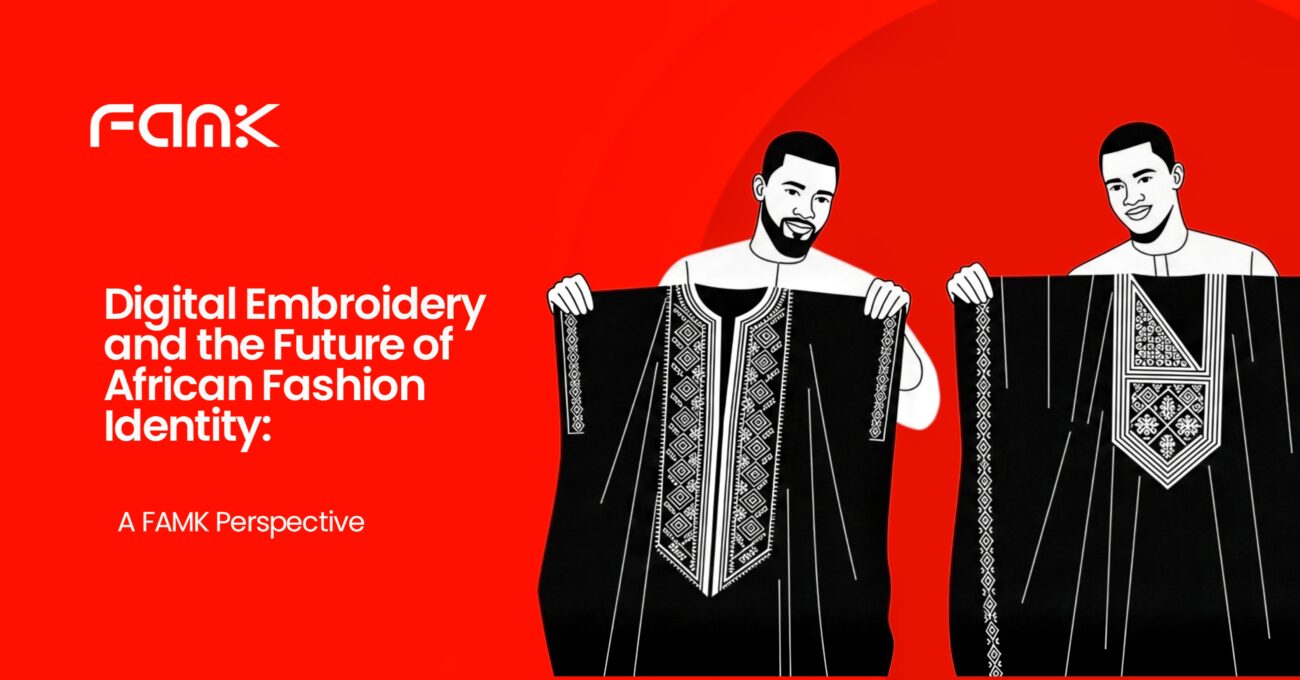
Layered cultural motifs are one of the clearest trends. Rather than a single design element on the chest panel, men are requesting designs that build across the garment, an arabesque border at the collar, a medallion at the chest, and a repeat geometric at the cuff, creating a connected visual system rather than isolated decoration.
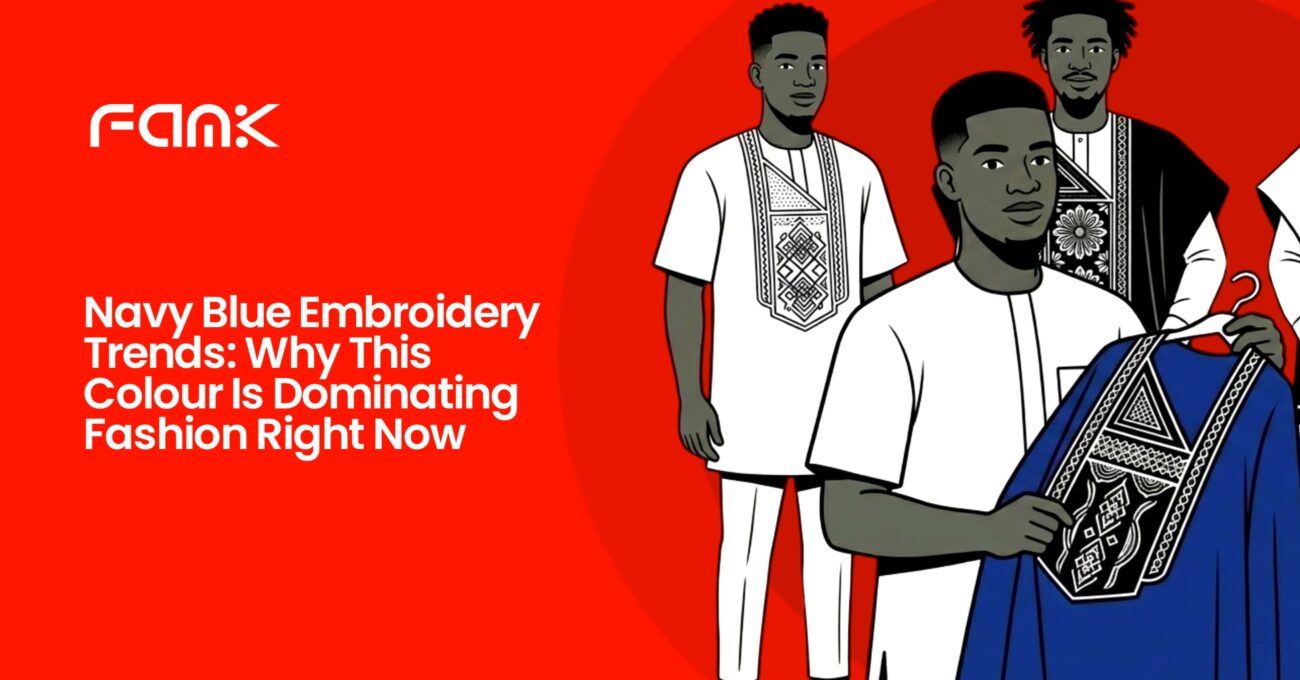
Tonal embroidery is growing among men who want texture over colour contrast. White thread on white agbada fabric, or navy on navy, produces a subtle raised effect visible only up close or under direct light. It is the opposite of the traditional gold-on-navy maximalism, and it is gaining real ground in professional and diaspora markets.
Text as design is another shift. Beyond initials, men are stitching full words — family names in Yoruba, Arabic honorifics, and Igbo proverbs rendered phonetically across chest panels. The garment becomes a statement rather than just an outfit.
The table below maps these emerging directions against traditional agbada embroidery designs for context.
| Design Direction | Traditional Approach | 2026 Shift |
| Chest panel | Single monogram or arabesque | Layered motif system across garment |
| Thread colour | Gold or silver on contrast fabric | Tonal thread matching fabric colour |
| Text use | Initials only | Full words, names, phrases in script |
| Cultural reference | Generic geometric borders | Specific lineage, regional, or ethnic motifs |
| Coverage | Chest panel focused | Chest, collar, sleeve, cuff as one system |
What This Means for How You Commission Embroidery
Understanding where embroidery designs for men are heading matters most at the commissioning stage. A digitising partner who only knows how to execute standard monograms cannot deliver layered motif systems or tonal work on complex African fabrics. The technical bar has risen alongside the design ambition.
At FAMK Apparel, we work specifically within African fashion and understand the cultural context behind what men are requesting in 2026. Whether you are bringing a Nigerian male embroidery design concept rooted in your lineage or a contemporary tonal brief, we digitise it to your garment dimensions and send a PDF proof before production begins.
Final Thoughts
Agbada embroidery designs in Nigeria are in the middle of a genuine creative evolution. The men leading it are not just buying a garment; they are commissioning a statement. The latest embroidery designs in Nigeria reflect deeper thinking about identity, visibility, and what it means to show up fully dressed in 2026.
The technology to execute that thinking at a high level exists. The question for every Nigerian man investing in occasion wear this year is whether his digitising partner is keeping up.
What agbada embroidery designs are trending in Nigeria in 2026? Layered cultural motif systems, tonal embroidery, and text-based designs using full words or phrases are the strongest emerging trends among latest embroidery designs in Nigeria. Traditional arabesque borders and gold monograms remain popular but are increasingly being combined with more culturally specific elements rather than used in isolation.
How are Nigerian male embroidery designs different from generic embroidery? Nigerian male embroidery designs are shaped by specific cultural traditions — Hausa arabesque, Yoruba geometric, royal medallion conventions — and applied to garment types with distinct proportions, particularly the wide chest panels and full sleeve fields of the agbada. Generic embroidery marketplaces rarely account for either the cultural context or the garment-specific sizing that good agbada embroidery designs require.
How do I brief an embroidery designer for a custom agbada design? Start with your occasion, your role at the event, and any cultural references that matter to you — family lineage, regional identity, a specific phrase or symbol. Then specify fabric colour, thread colour preference, and garment dimensions. A skilled digitising partner will translate that brief into a stitch file and show you a PDF proof before anything goes to production.