
Blog
Industrial Sewing Machine: How Nigerian Tailors Are Unlocking Its Full Potential With Digital Embroidery

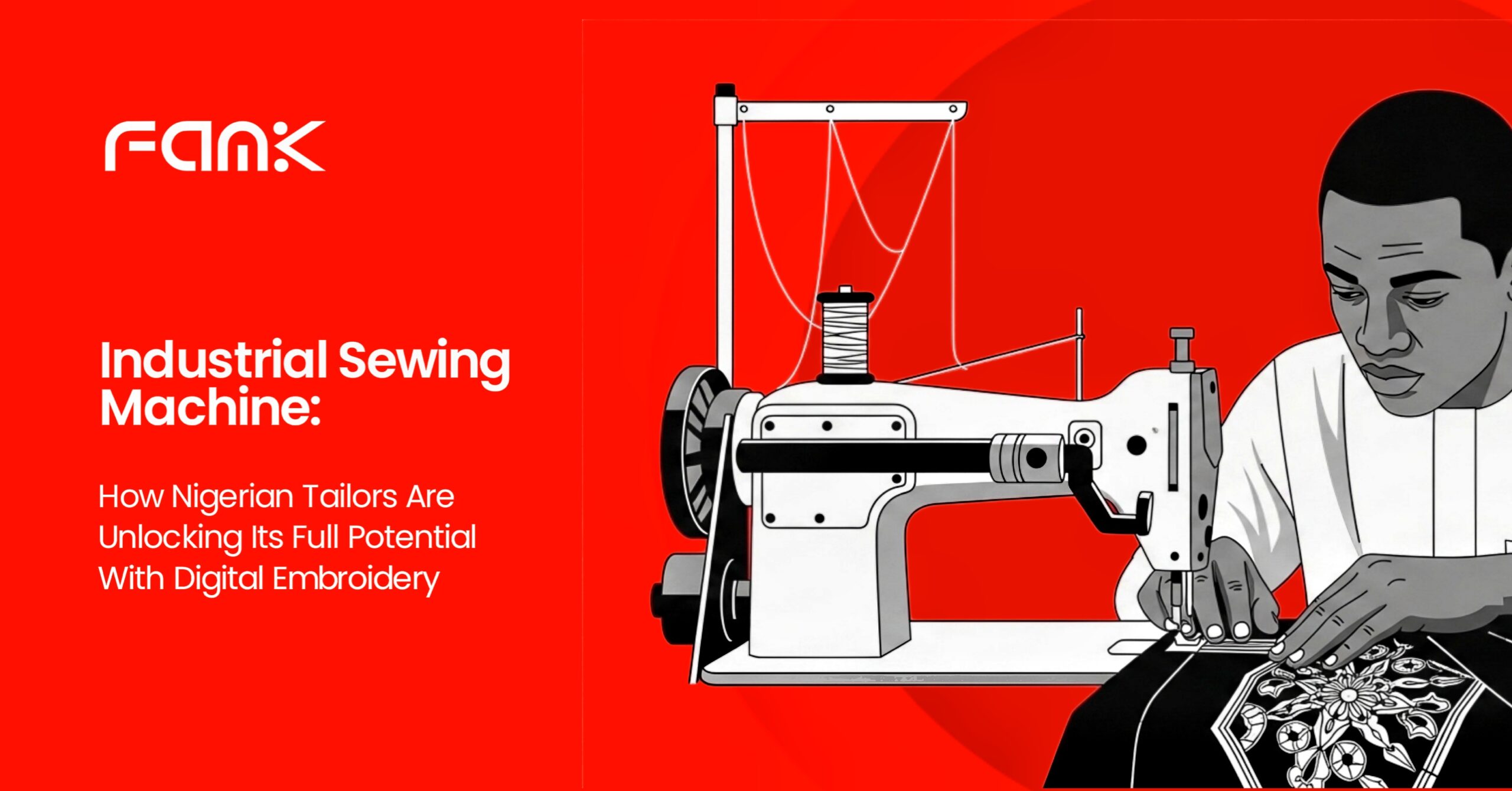
As foundational as the sewing machine itself has been to Nigerian tailoring, one technology has been central to industry production capacity for decades: the industrial sewing machine. Walk into any tailoring workshop in Aba or clothing atelier in Lagos and you’ll find it.
While that won’t change any time soon, more and more Nigerian tailors and fashion entrepreneurs are starting to complement their production with digital embroidery machines. The symbiosis of these two machines is changing what’s possible for small to mid-scale Nigerian fashion businesses.
The Industrial Sewing Machine: Still the Foundation
If you’re not already familiar with how an industrial sewing machine differs from the domestic variety, they’re larger, stronger, faster machines meant for constant use rather than supplemental hobbyist crafting. Industrial machines sew thick African fabrics like damask, aso-oke, denim, and canvas without breaking a sweat. They run for long hours without overheating. They’re built to produce professional-looking stitch work efficiently.
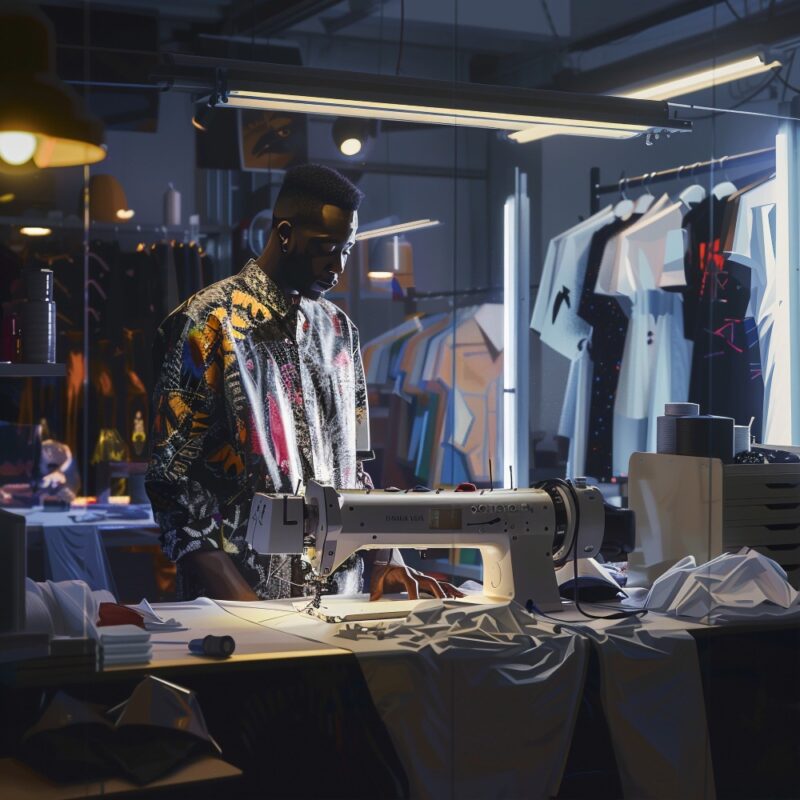
An Industrial sewing machine
More tha that, they’re also what separates an beginner tailor from a professional operation. If you want to start scaling up your tailoring business past odd jobs for family and friends, you need an industrial sewing machine. Everything else is just the icing on that cake.
How Digital Embroidery Completes the Picture
While your industrial machine will handle construction and sewing as usual, digital embroidery allows you to take your creativity (and profits) to the next level.
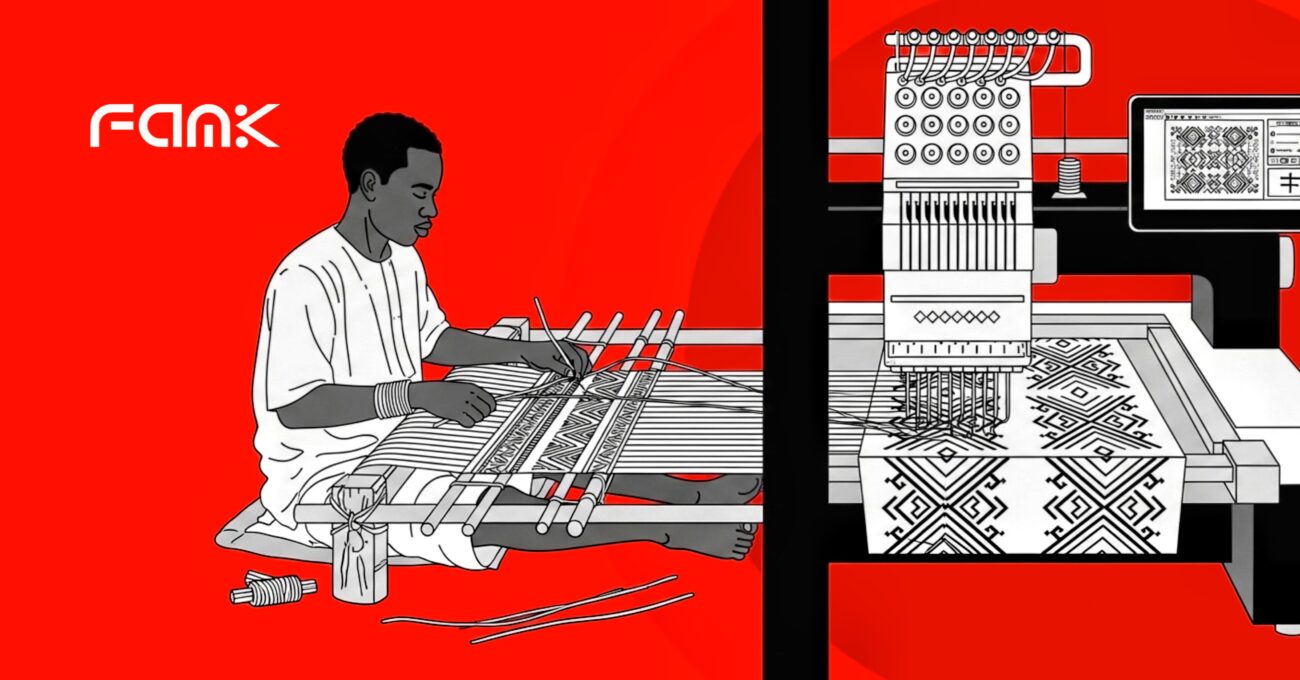
Simply put: if your industrial sewing machine is the brain, think of your embroidery machine as the hands. Digital embroidery allows you to add detailed work to every garment at a speed and precision no team of human hands could ever match.
Load your design onto a digital embroidery machine, and watch it stitch with mathematical precision – same tension, same stitch count per inch, every parameter consistent – every single time. Programming intricate traditional embroidery designs to embellish your agbada, buba, or senator shirts will allow you to create consistent products across multiple garments without spending days embroidering by hand.
The beauty of this combination is that it covers every part of your production process, from cutting & construction to detailing and finishing. For example, you sew and construct your agbada panels on the industrial machine, then move the garment to the embroidery machine for the chest panelling and detailing. Two machines, one complete garment, no outsourcing.
Why Nigerian Tailors Are Making This Combination Work
Nigerian consumers have always placed a premium on embroidery work. Whether it’s on agbada, buba tops, or customized senator wears, you can expect Nigerians to want detailed embroidery work on their garments.
Our love for embroidery is why digital embroidery machines skillfully paired with industrial machines are growing in popularity among Nigerian tailors.
Clients want embroidered garments but they also want quick turnaround and, consistency across tailors. Hand embroidery isn’t impossible but it is time-consuming. The time factor will be the difference in pricing. One embroidered agbada can take days to complete on its own.
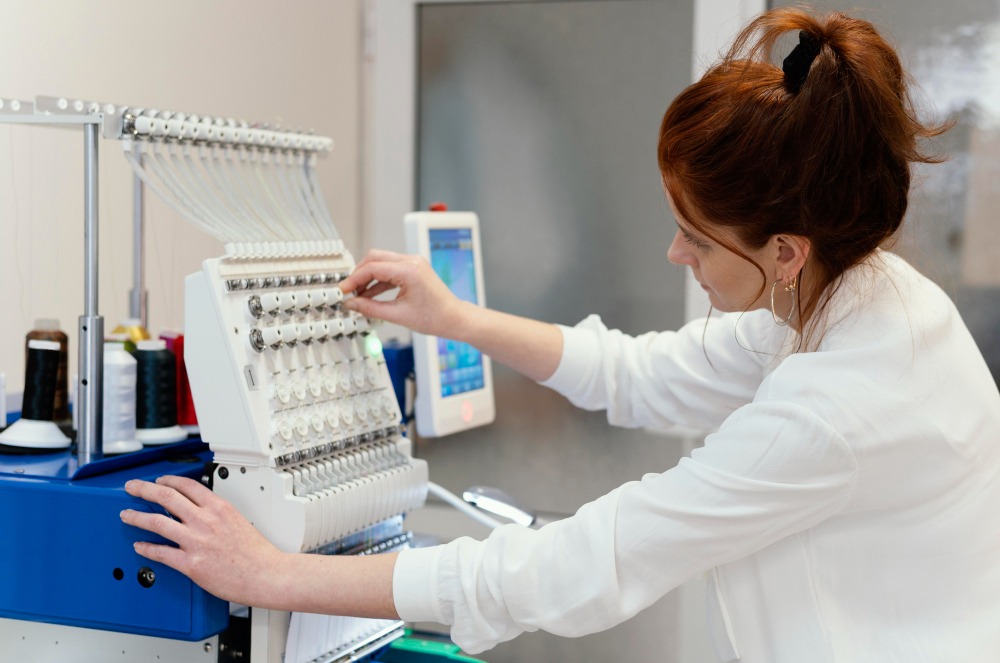
A digital monogram embroidery machine
Digital embroidery bridges that gap. Tailors who invest in it can take on larger orders, promise faster delivery, and charge premium prices, because the quality of the output justifies it.
How Much Does an Industrial Sewing Machine Cost in Nigeria?
If you’ve been shopping around for an industrial sewing machine in Nigeria, you’ve probably noticed this question pops up more than any other. The short answer? It depends.


Just like with anything else, the industrial sewing machine price in Nigeria varies based on brand new vs. used, location, and other factors we’ll get into below.
In general, however, you should expect to pay anywhere from ₦280,000 to ₦500,000 for a new Juki or Jack single needle lockstitch machine. Technically, you can pay as little as ₦150,000 for a tokunbo (fairly used) industrial sewing machine, but they’ll require more maintenance and you should test the machine vigorously before buying. The industrial sewing machine price in Lagos specifically can vary depending on where you look.
If you’re also budgeting for a digital embroidery machine, entry-level machines in Nigeria currently start around ₦850,000. Most Lagos-based sellers offer payment instalments, and the additional revenue from embroidery orders typically covers the cost within the first few months of consistent use.
What This Means for Your Business
Digital embroidery might be the new trend, but there’s a reason everyone’s trying to get their hands on one. Between an industrial sewing machine and a digital embroidery machine, you have everything you need to take your garments from good to great — and increase your bottom line while you’re at it.
The best tailors in Nigeria are the ones who show up with the right tools. If you want to start taking bigger orders and pricing your work at the level it’s worth, you’ll need an industrial machine. Want to start competing with Nigeria’s top-tier tailoring studios? You’ll need to invest in an embroidery machine, too.
Frequently Asked Questions (FAQs)
What is the best industrial sewing machine for Nigerian tailors?
Among tailoring professionals in Nigeria, Juki is by far the most recommended brand for its speed, build quality, nationwide network of spare parts dealers and certified technicians. Currently, Jack is the only close competitor and offers the best value for tailors on a budget.
What is the current price of industrial sewing machine in Nigeria?
Prices for new industrial sewing machines range from ₦280,000 to ₦500,000 in major Nigerian cities as of 2026. This is based on popular Nigerian sewing machine brands such as Juki and Jack. You can find second-hand( Tokunbo ) machines as low as ₦150,000, depending on the condition of the machine and who you buy from.
Can a small tailoring business afford digital embroidery equipment?
Entry-level digital embroidery machines are now widely available in Nigeria, with prices as low as ₦850,000. The majority of sellers in Lagos offer payment installments and the extra profit from customers requesting embroidery work will cover the cost within its first few months of use.