
Blog
Nigerian Male Embroidery Designs: A Visual Guide to Patterns, Fabrics & Styles

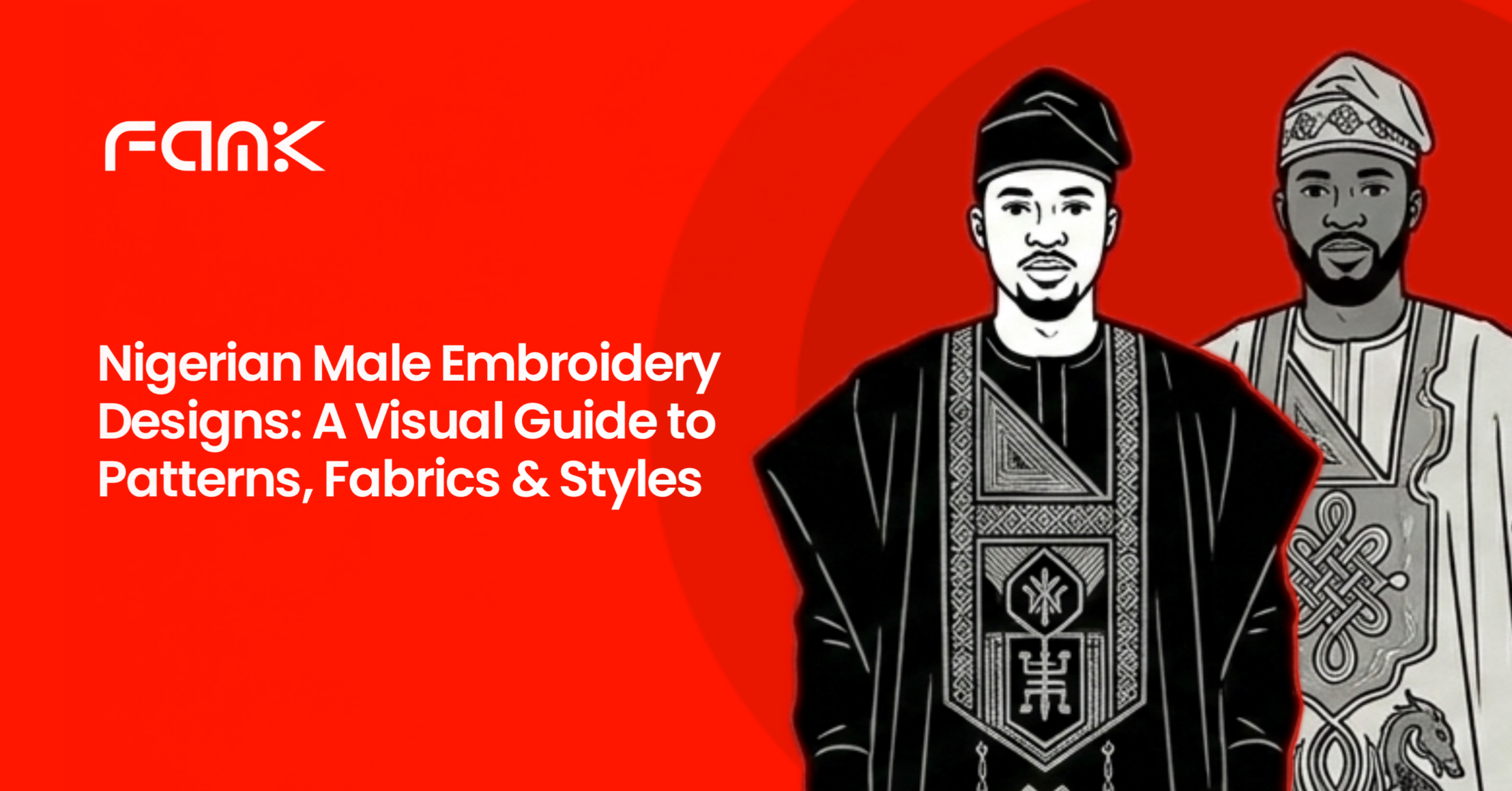
Somewhere between “traditional wear” and “fashion statement,” there’s a category that doesn’t get talked about as clearly as it probably should. Nigerian male embroidery designs aren’t one thing. They’re a whole spread of pattern families, fabric pairings, and regional influences that have been layering on top of each other for generations and most guides online either oversimplify the whole topic or skip straight to product listings without explaining what’s actually being compared.
What Defines Nigerian Male Embroidery Designs as a Category?
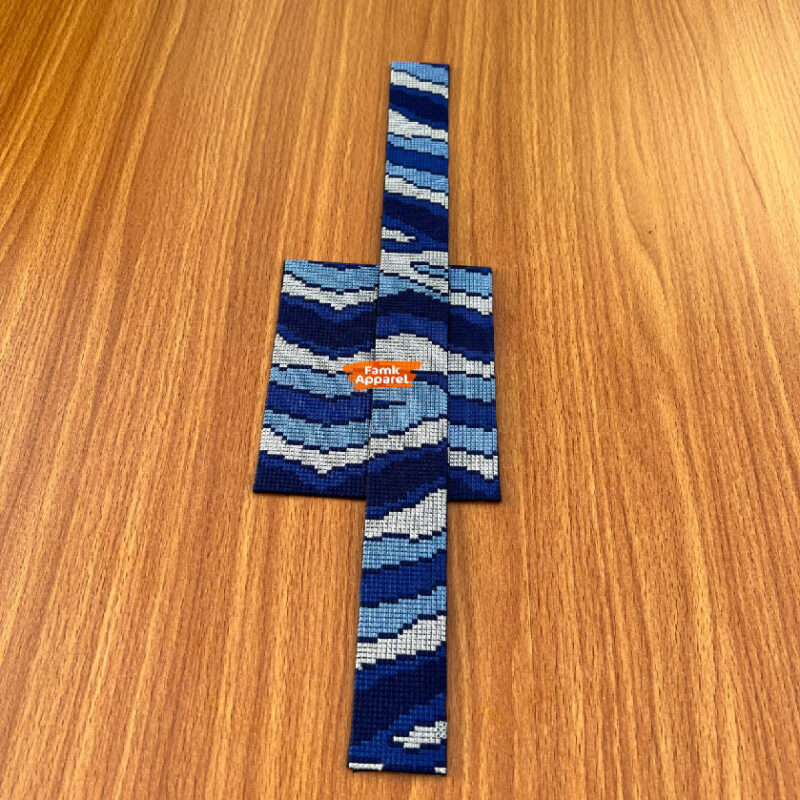
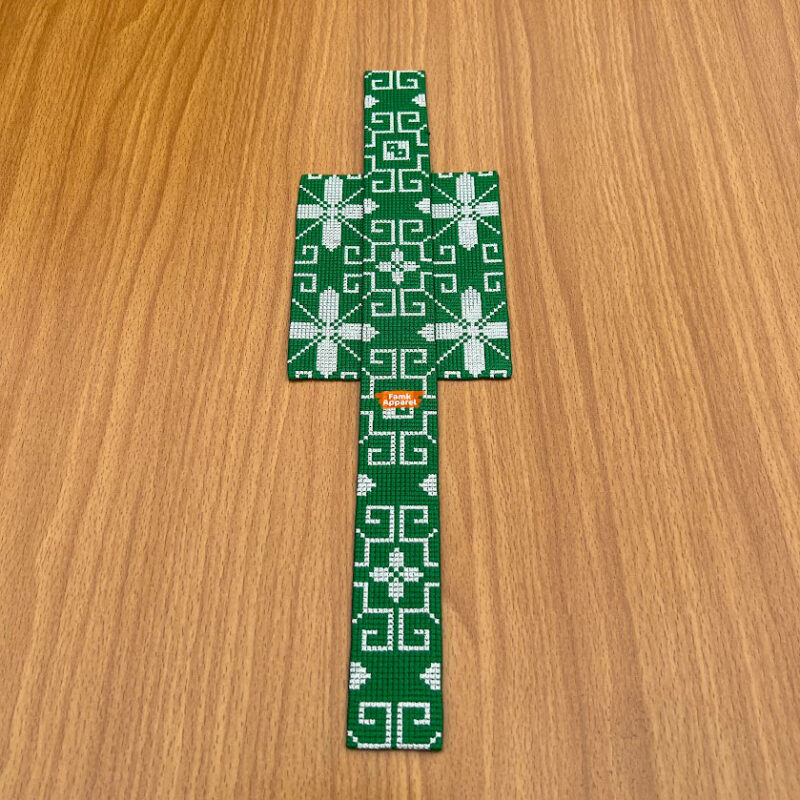
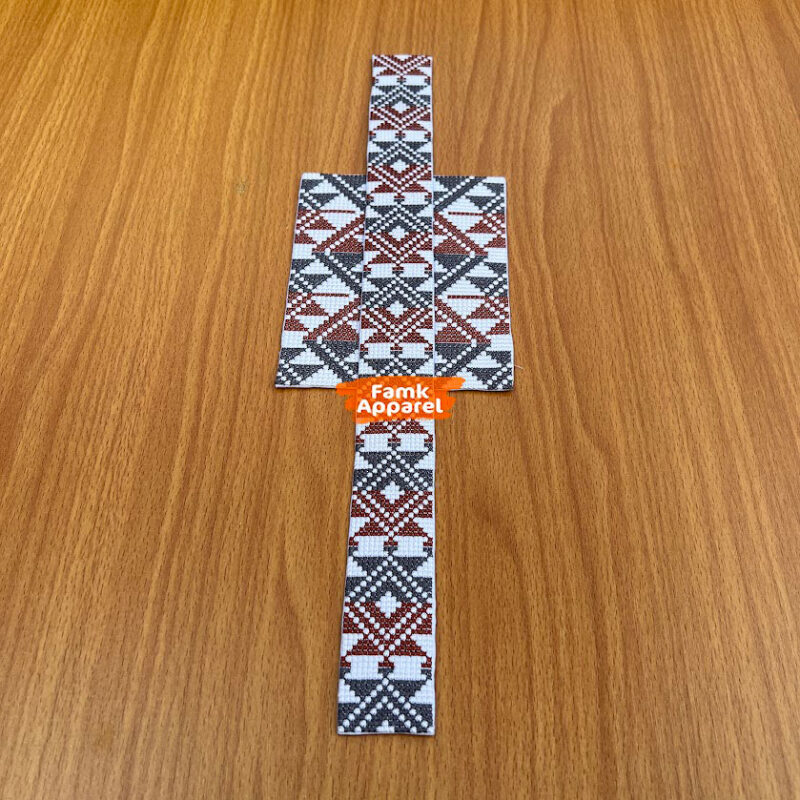
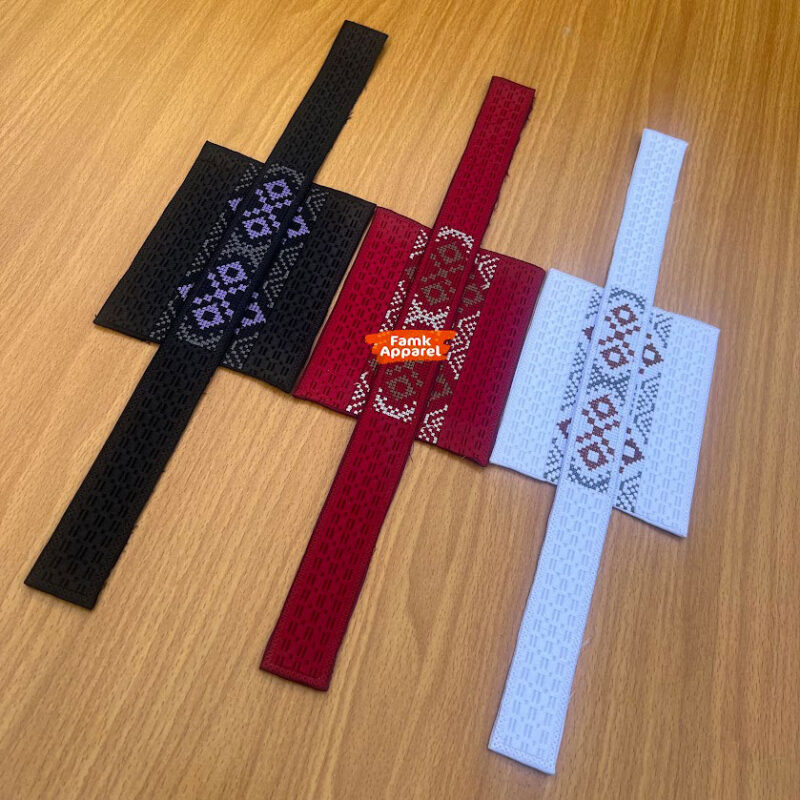
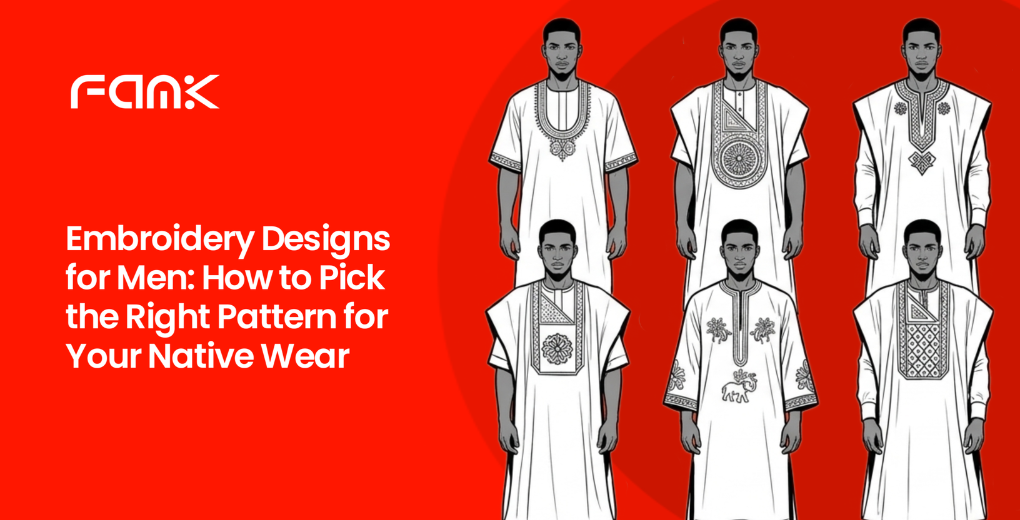
Nigerian male embroidery designs draw from several Nigerian and wider West African textile traditions, with Yoruba and Hausa influences particularly visible across traditional menswear. The designs are commonly adapted to garments such as agbada, kaftan and senator wear, with embroidery often concentrated around the collar, chest, placket and cuffs.
It’s less about a single technique and more about a shared design vocabulary.
Which Fabrics Pair Best With Nigerian Male Embroidery Designs?
Fabric choice isn’t really a separate decision from embroidery density, even though most guides treat them that way. The two move together, and garment purpose is what decides both.
Lightweight cotton and linen cap how much stitching a fabric can carry before it starts to pucker or sag, which is exactly why they suit everyday and semi-formal pieces. Sparser, cleaner patterns hold up well on that base, but push toward dense panel work and the fabric struggles to support it. Wedding-level agbadas, where coverage is meant to be heavy and near-total, need something structurally different, which is where brocade and guinea brocade come in.
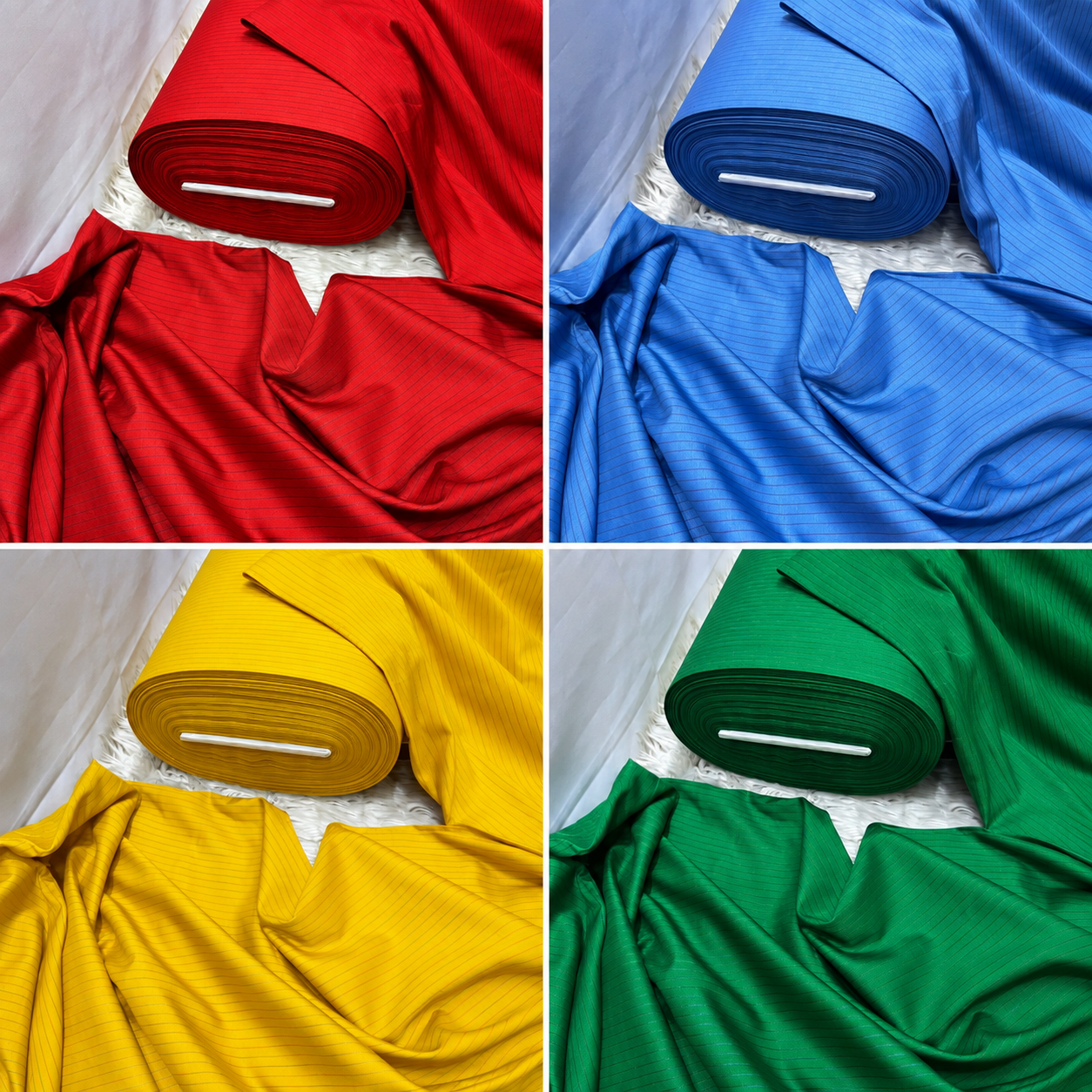
Their weight and body carry dense thread coverage without distorting the drape, so the garment stays visually striking without the embroidery seeming to pull at the fabric underneath it. Ankara-print cotton sits somewhere in between, generally paired with lighter, sparser stitching so the embroidery reads as a companion to the print rather than competing for attention against it.
Fabric, in other words, sets the ceiling for how ambitious the embroidery can get. Occasion decides where on that range a piece should actually land.
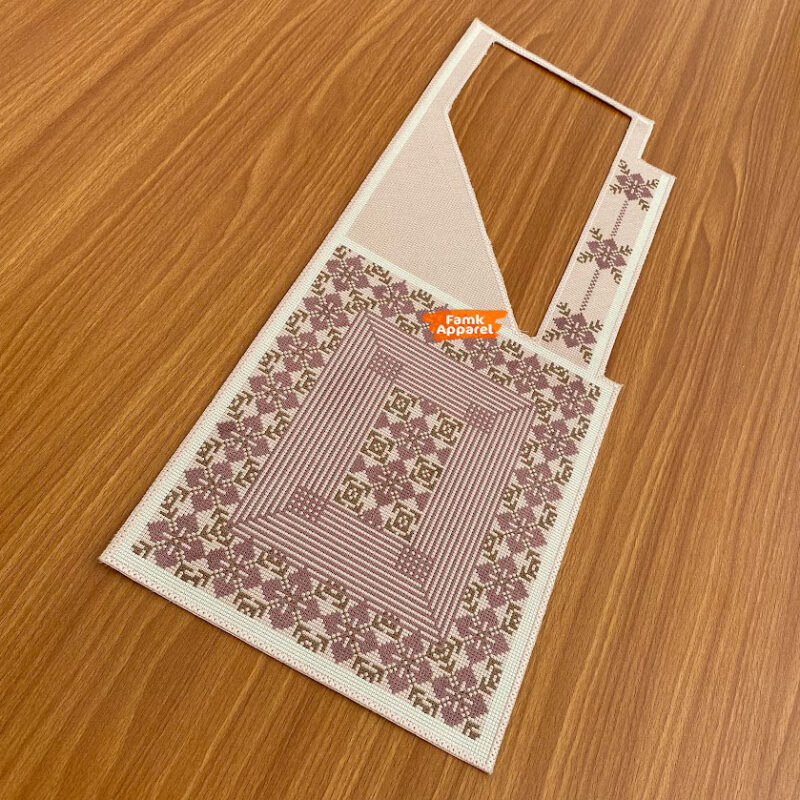
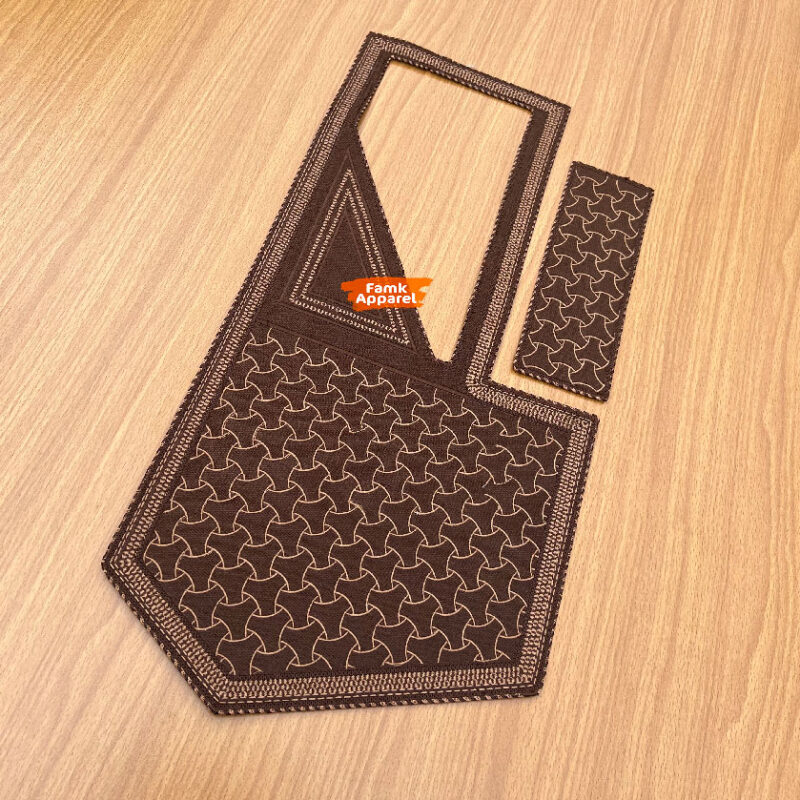
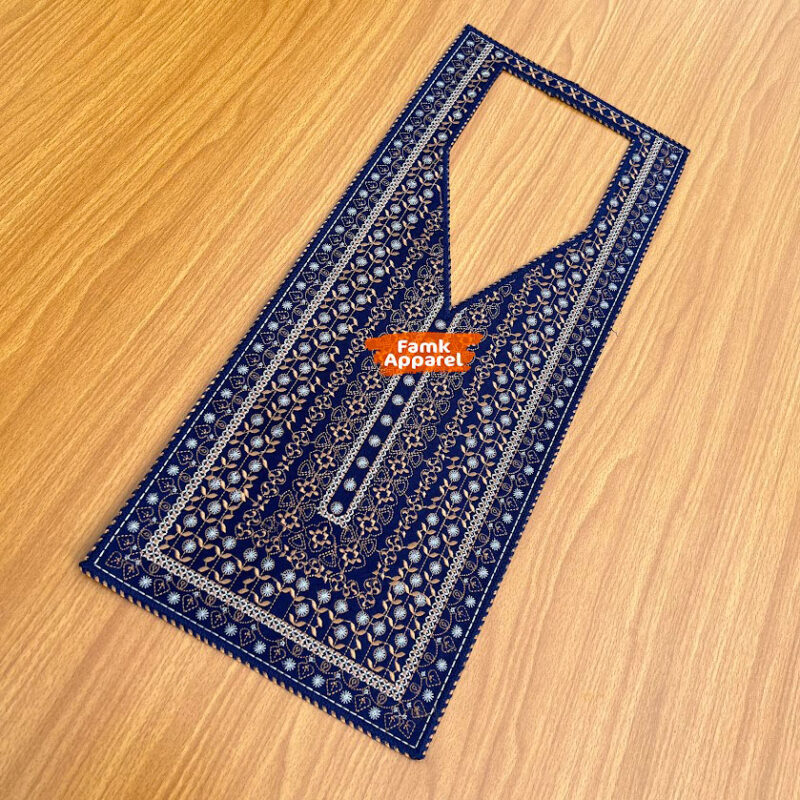
What Are the Main Pattern Categories Within Nigerian Male Embroidery?
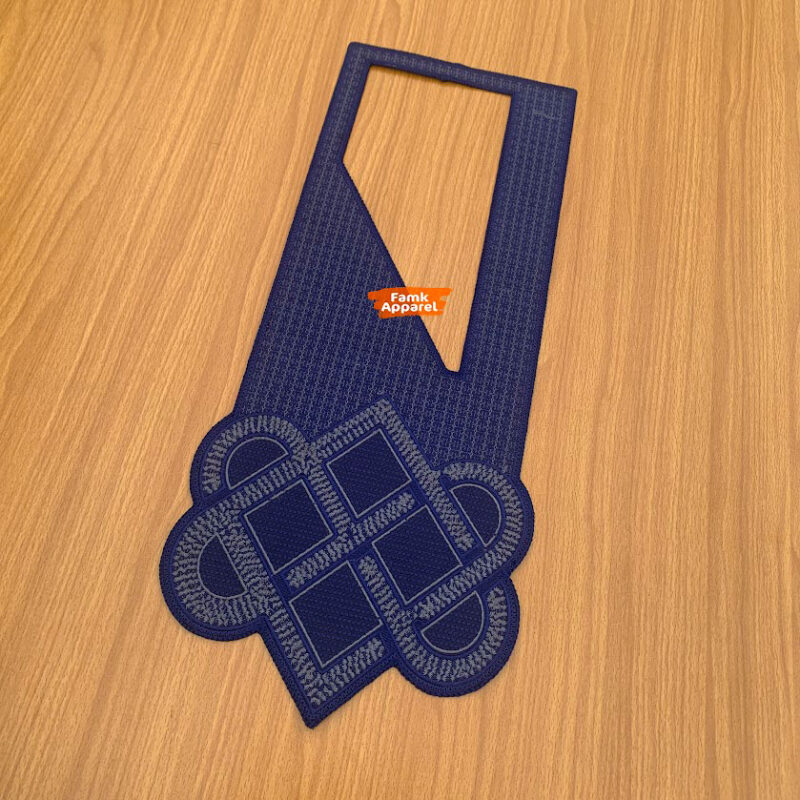
Geometric pattern,. often pulled directly from Ankara print motifs and reworked in thread, form the largest share of male embroidery designs overall, mostly because they’re versatile and relatively efficient to produce. Floral and botanical work, done in restrained, tonal detail rather than bold multicolor sprays, has been gaining ground on semi-formal pieces. Calligraphic and script-based embroidery, frequently used for personalized initials or short phrases, rounds out the third major category and is currently the fastest-growing of the three.
Three broad families cover most of what’s currently being produced, though there’s plenty of overlap at the edges.
| Pattern Family | Common Fabric Choices | Typical Occasion | Design Complexity |
| Geometric / Ankara-inspired | Cotton, Ankara print cotton | Every day, semi-formal | Low–Medium |
| Floral / Botanical | Linen, lightweight cotton | Semi-formal, understated statement | Medium–High |
| Calligraphic / Script | Cotton, brocade | Personalized gifts, weddings | Medium |
How Do Agbada Embroidery Designs Differ From Kaftan Embroidery?
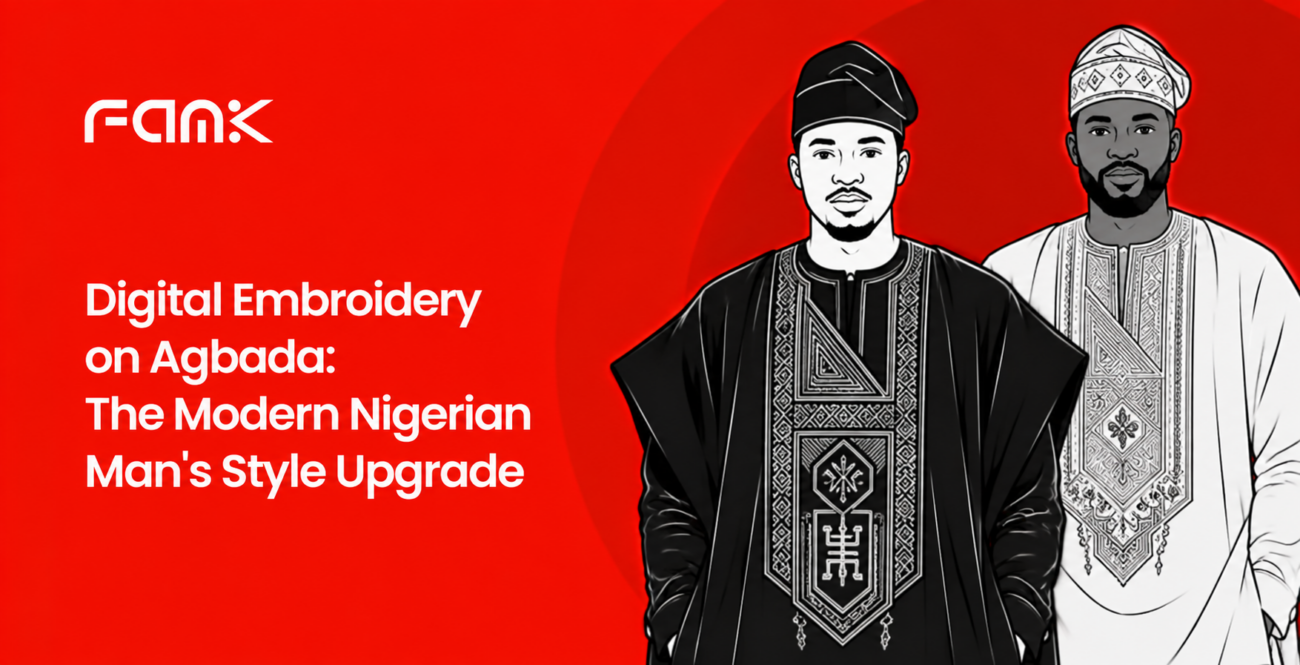
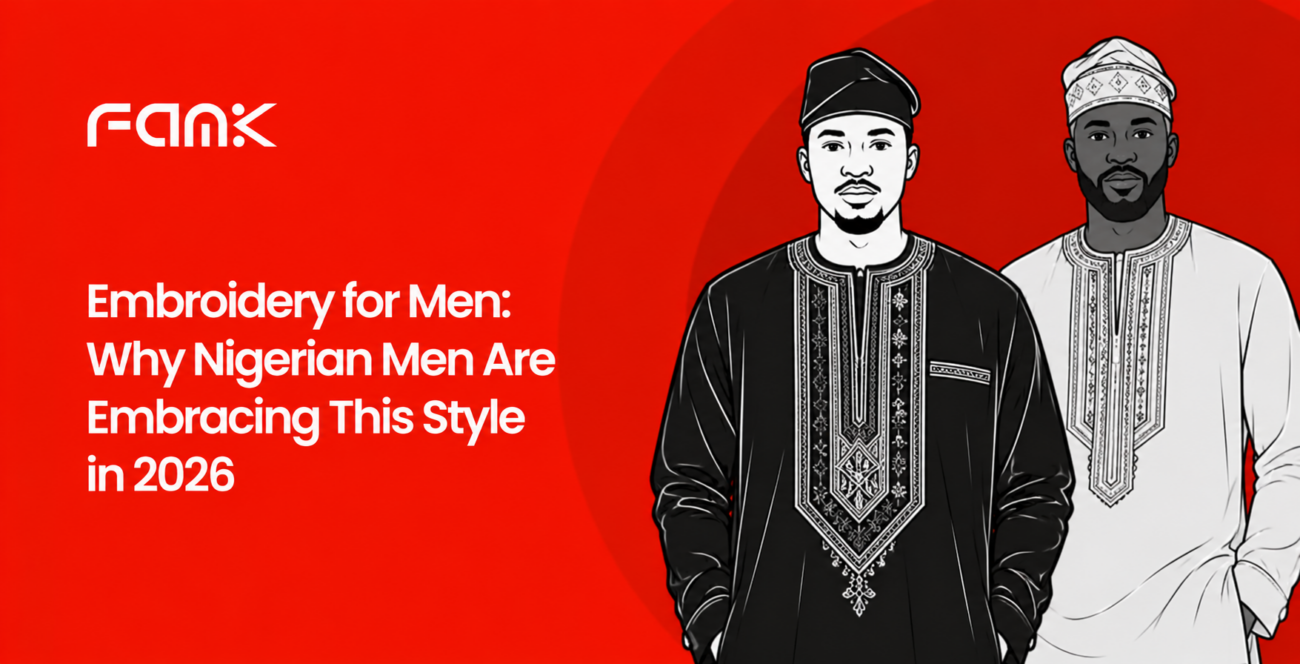
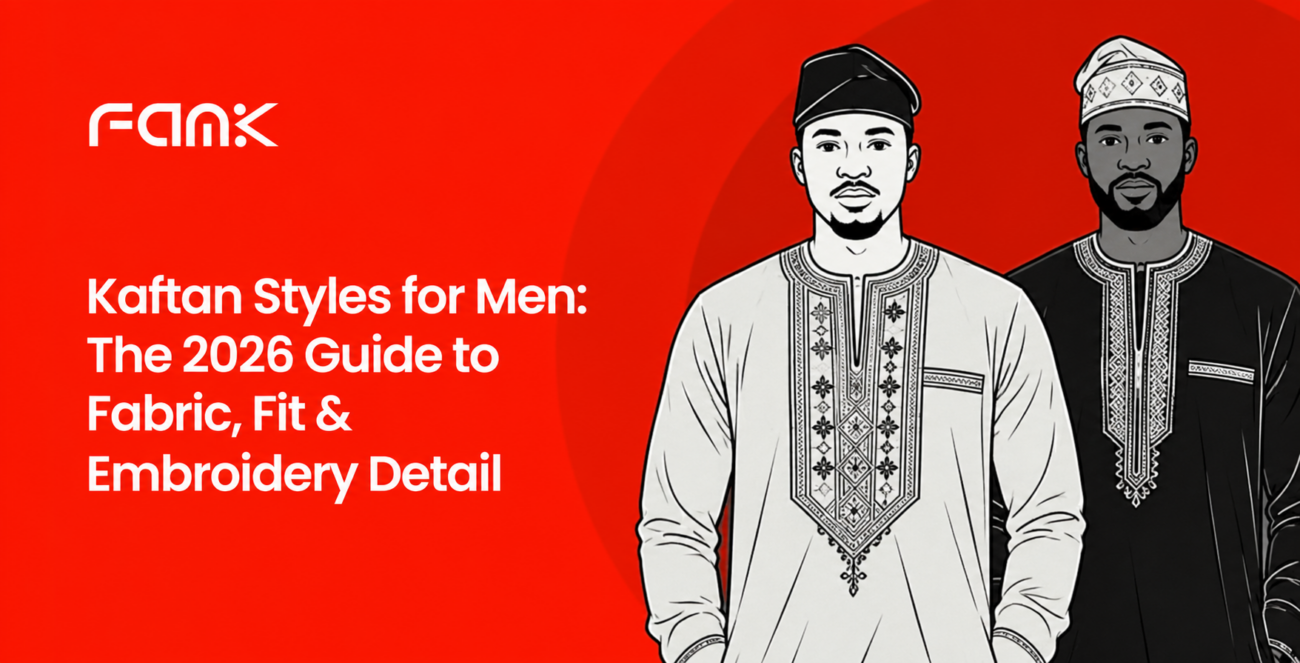
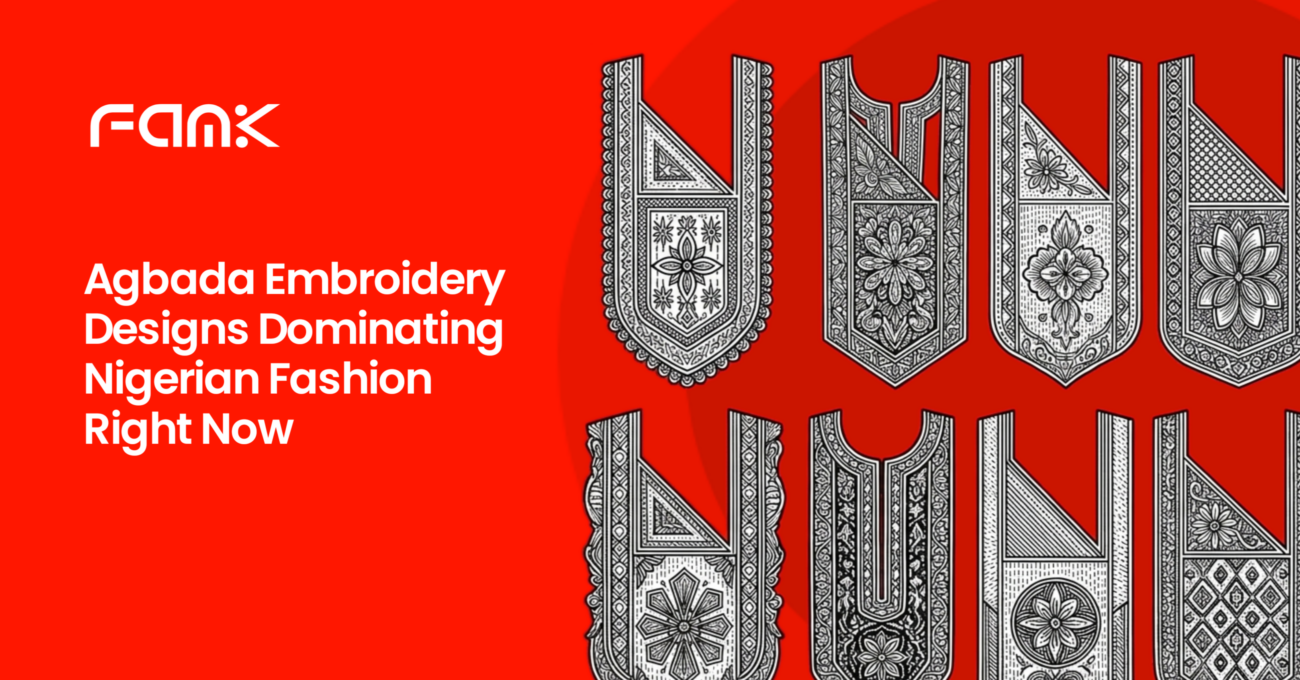
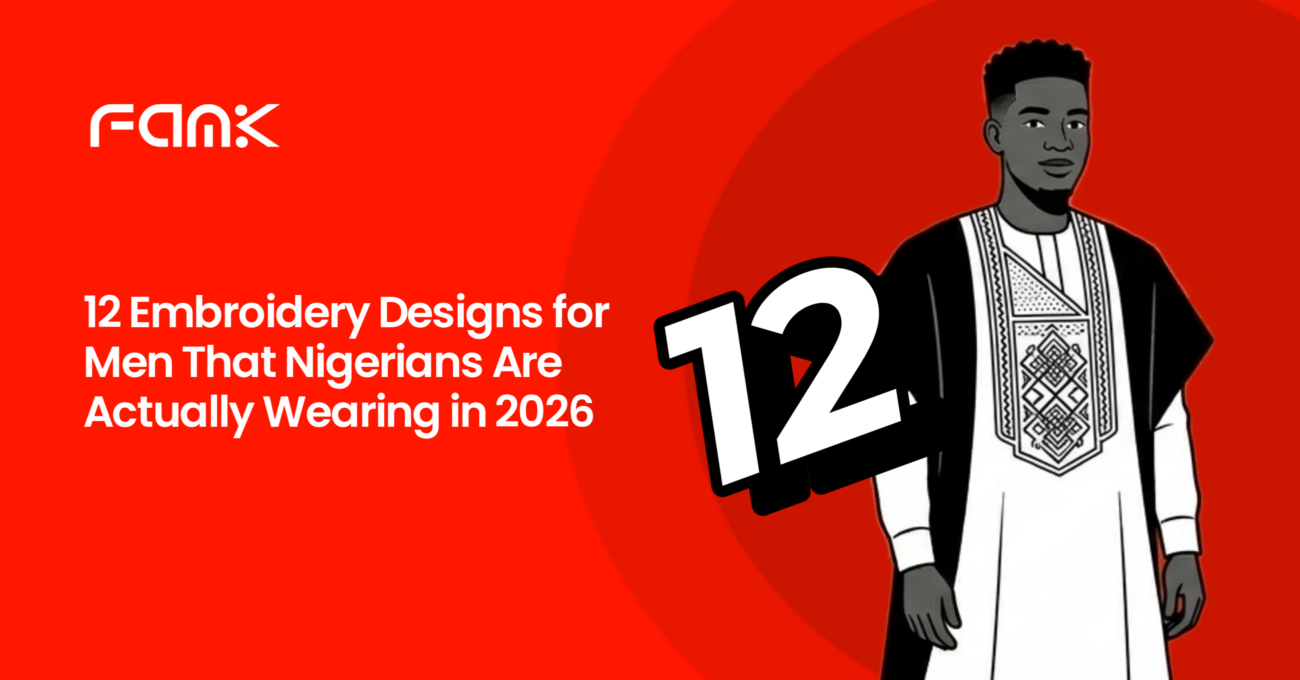
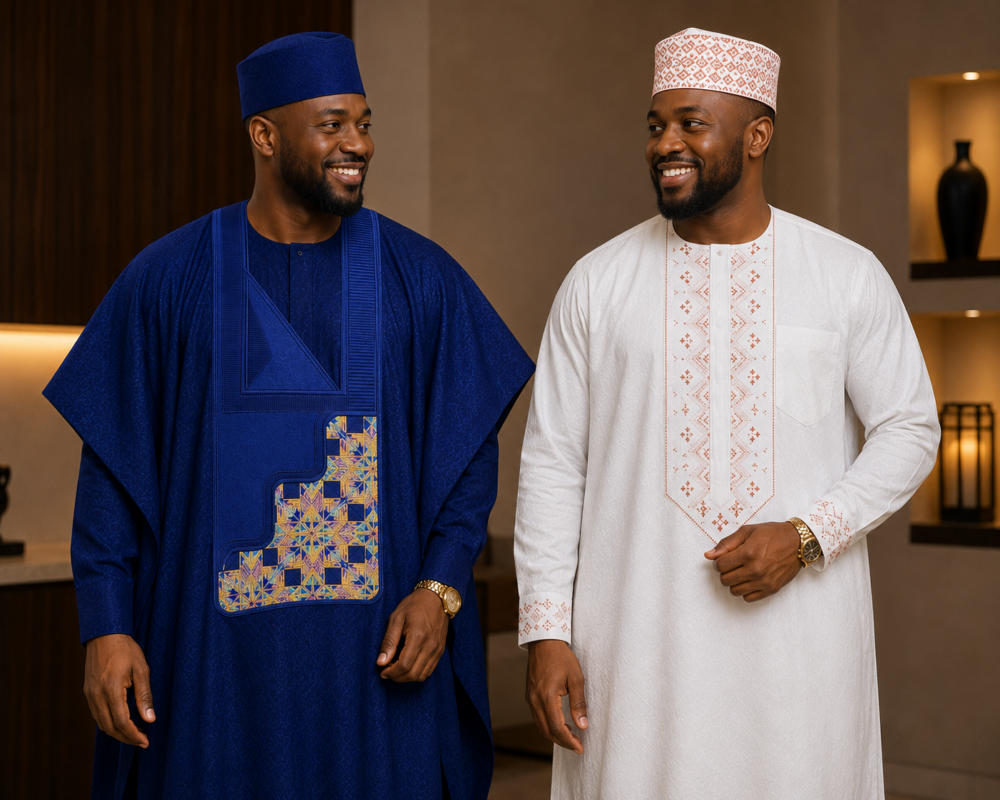
Agbada embroidery designs tend toward larger, bolder chest panels, since agbada’s flowing cut and generous fabric width can support denser, more elaborate work without looking cluttered. Kaftan embroidery, by contrast, usually stays closer to the collar, cuffs, and a narrower center placket, simply because the garment sits closer to the body and has less flat surface area to work with. Neither approach is objectively better. They’re just responding to different fabric geometry.
agbada embroidery designs versus kaftan embroidery
Are There Regional Differences in Nigerian Male Embroidery Designs?
Yes, though the lines have blurred somewhat as designs circulate more freely online. Northern Nigerian embroidery traditions, closely tied to Hausa babban riga garments, lean toward dense, all-over geometric coverage with a long history of hand technique behind it. Southwestern styles, more associated with Yoruba agbada culture, tend to favor panel-based placement with more negative space between motifs.
These aren’t hard rules, plenty of contemporary nigerian male embroidery designs now blend both approaches deliberately, which is part of why “regional style” has become a looser label than it once was.
For readers wanting a broader look at how these traditions have been documented historically, here’s an overview of Nigerian traditional attire that covers the garment side of this in more depth.
Browse FAMK Apparel’s agbada embroidery collection for different trending luxury designs or you can also tell us what design you have and we will make it happen.
What are the most common Nigerian male embroidery designs?
Geometric and Ankara-inspired patterns are the most widely produced nigerian male embroidery designs, largely due to their versatility across occasions and relatively efficient production. Floral and calligraphic designs follow, with calligraphic work growing fastest due to rising demand for personalized initials, names, and short phrases on collars and cuffs.
What fabric works best for agbada embroidery designs?
Brocade and guinea brocade are commonly used for statement-level agbada embroidery designs, since their weight supports dense stitching without sagging. Lighter cotton and linen suit everyday or semi-formal agbada pieces better, offering breathability and a cleaner finish for less elaborate embroidery coverage.
How do Ankara embroidery designs differ from standard embroidery patterns?
Ankara embroidery designs are created to complement or contrast printed Ankara fabric rather than sit on a plain background. This means pattern placement and thread color are chosen specifically in relation to the existing print, which is a different design consideration than embroidery applied to solid-color garments.
Are Nigerian male embroidery designs regionally specific?
To some degree. Northern traditions favor denser, all-over geometric coverage tied to Hausa garment styles, while Southwestern styles often use panel-based placement with more negative space. Contemporary designs increasingly blend both approaches, so regional origin is a looser indicator than it used to be.
Can Nigerian male embroidery designs be customized for weddings or special occasions?
Yes. Most embroidery specialists, including FAMK, offer customization such as personalized initials, family motifs, or adjusted pattern density for wedding or milestone pieces. These typically require a short additional design phase, so requesting well ahead of the event date is recommended.