
Blog
Order Custom Embroidery Designs for Men in Nigeria — Monogram, Agbada & More

There is a version of this that goes badly. You describe what you want, someone nods, takes your money, and three days before the event you are holding a piece of cloth that looks nothing like what you discussed. Thread tension off. Monogram sitting wrong. The design that looked clean in the reference image arrived as something else entirely on the actual fabric.
It happens more than it should. And it happens almost always for the same reason; the digitising was rushed, untested, or done by someone who does not understand how custom embroidery designs for men behave differently on agbada brocade versus kaftan cotton versus lace.
At FAMK Apparel, the process runs differently. This page explains how.
What Can You Actually Order?
The short answer is, if it can be stitched on African native wear, we can digitise it. But let’s be more specific.
Monogram machine embroidery designs are the most requested category. Initials, full names, date combinations, family symbols rendered as letterforms — all of it. Monograms on agbada chest panels, kaftan collars, boubou flaps, and cap fronts. The scale and placement shift by garment. The precision requirement stays constant regardless.
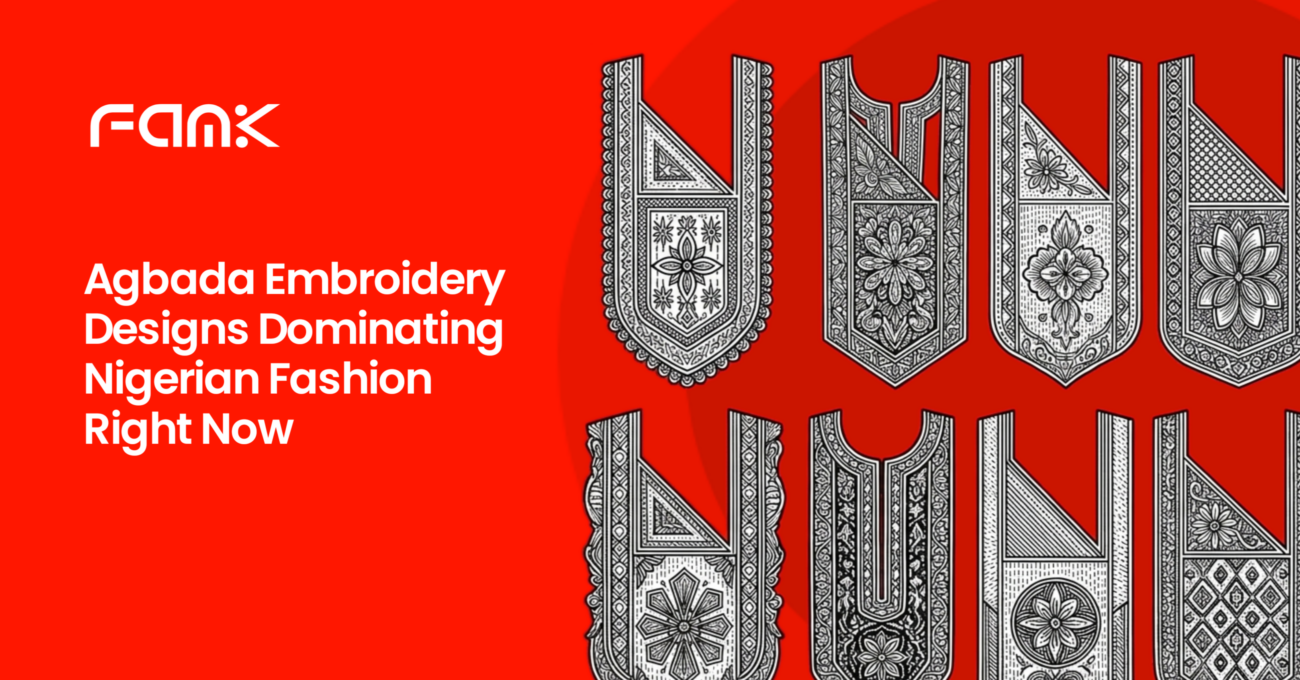
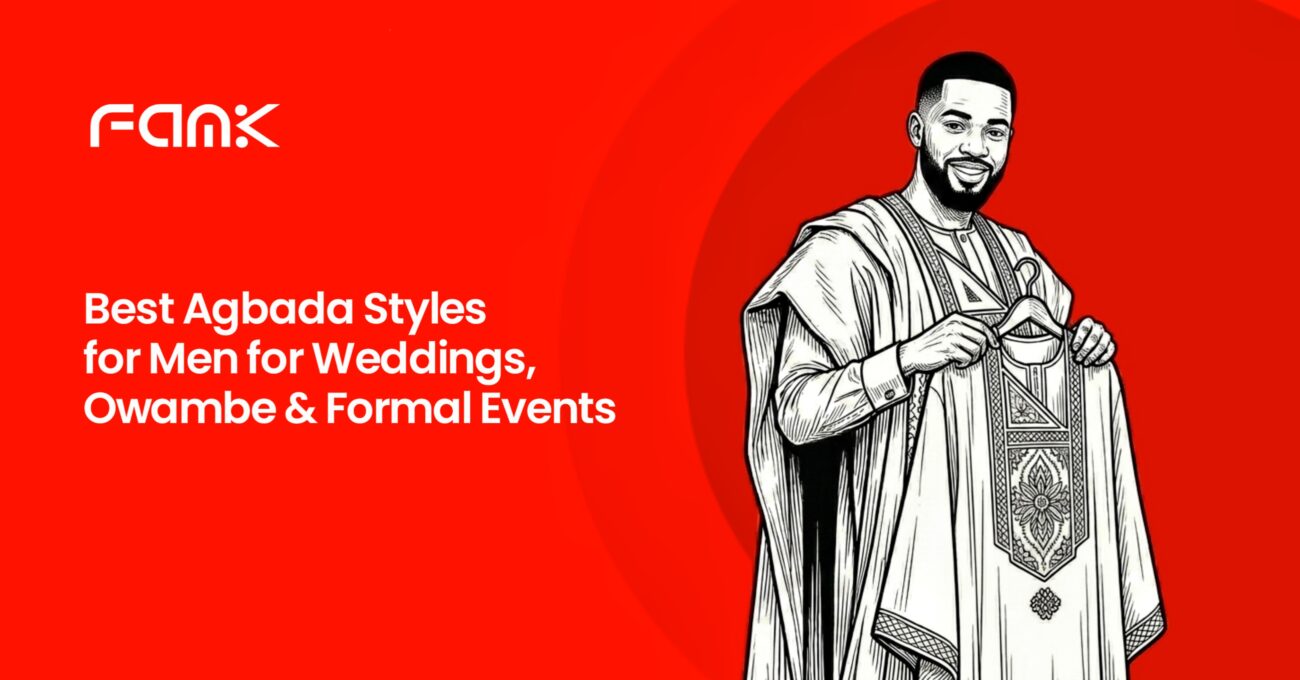
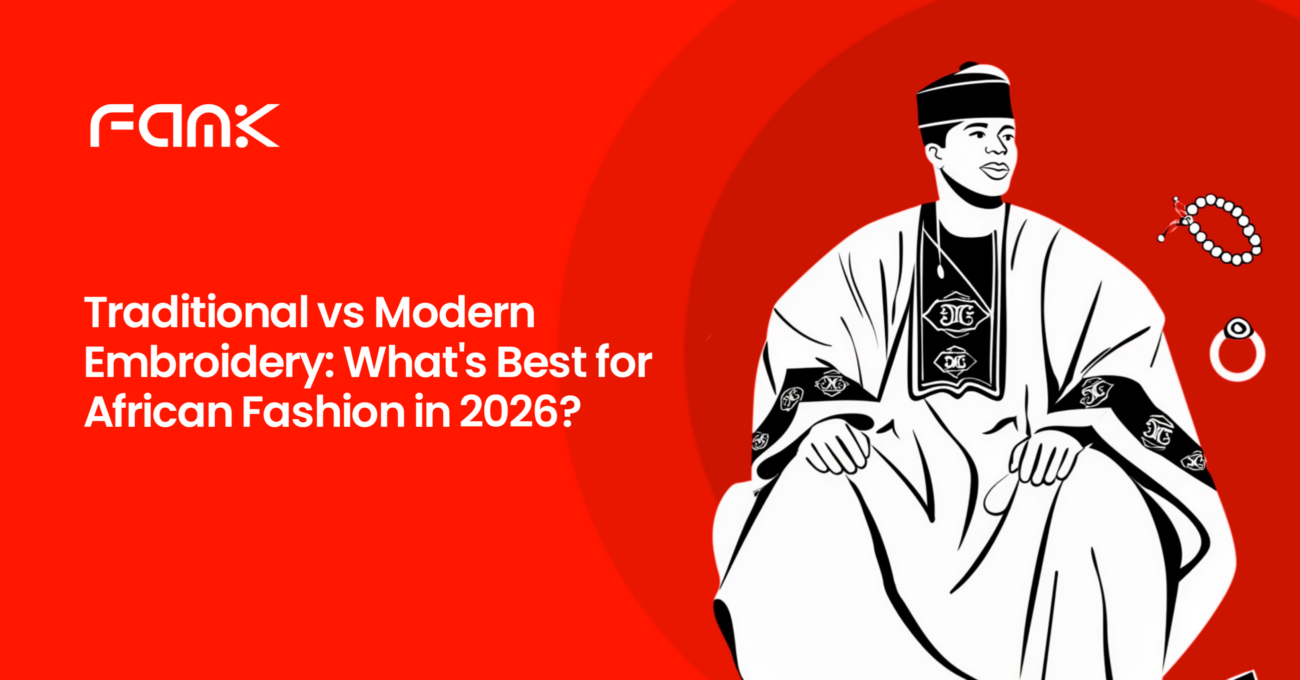
Agbada embroidery designs are where most of our custom work lives. The agbada chest panel is the most visible real estate in Nigerian men’s fashion. What goes there either commands the room or embarrasses the outfit. We treat it accordingly — calibrating stitch density, fill coverage, and thread colour to the specific fabric and occasion before a single machine runs.
Machine embroidery designs for kaftan borders, senator plackets, sleeve cuff accents, pocket motifs, and full panel heritage patterns round out the order categories. Some clients come in with a clear brief. Others arrive with a reference image and a general direction. Both work.
Corporate and branded embroidery like staff uniforms, event Aso-Ebi orders, and branded cap production are also available for fashion brands and clothing businesses operating at volume.
A Quick Look at What Each Order Type Involves
Different garments, different briefs, and different digitising requirements. This table maps the most common order types to what the process actually entails.
| Order Type | Garment | Key Digitizing Consideration | Common Thread Choice |
| Monogram machine embroidery designs | Agbada, kaftan, cap, boubou | Letter scale, satin stitch density, font clarity at small sizes | Gold, silver, white |
| Agbada embroidery designs | Agbada chest panel, sleeve, collar | Wide panel coverage, fill stitch mapping, 3D puff calibration | Gold, silver, navy, red |
| Kaftan border and placket | Senator kaftan, long kaftan | Collar line precision, placket alignment, tonal thread behaviour | Tonal match, white, gold |
| Heritage and cultural motifs | Agbada, boubou, danshiki | Motif scale, repeat pattern accuracy, cultural reference fidelity | Gold, multicolour |
| Corporate and branded | Uniforms, caps, Aso-Ebi apparel | Consistency across volume, logo fidelity at production scale | Brand-specific |
| Machine embroidery designs (custom concept) | Any native wear garment | Artwork assessment, fabric compatibility, underlay selection | Client-specified |
Why Digitising Quality Is the Only Thing That Actually Matters
People spend a lot of time thinking about thread colour and design concepts. Both matter. But neither determines whether the finished garment looks the way it should. Digitising does.
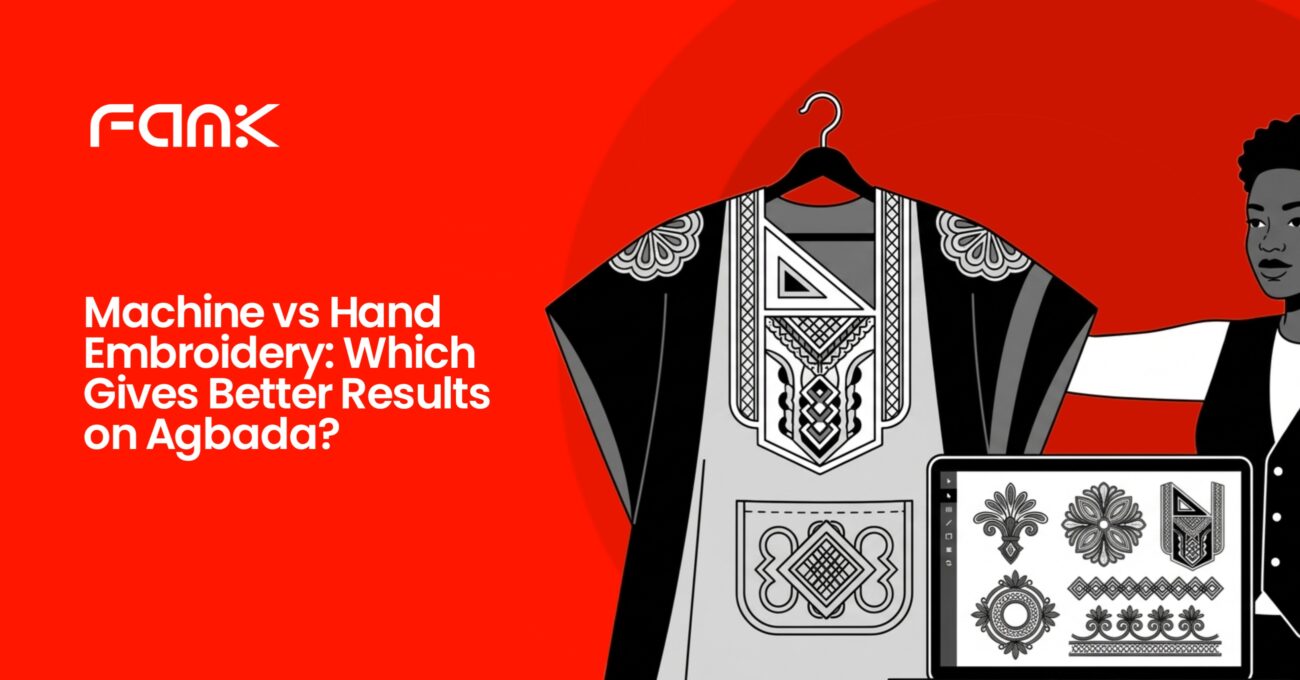
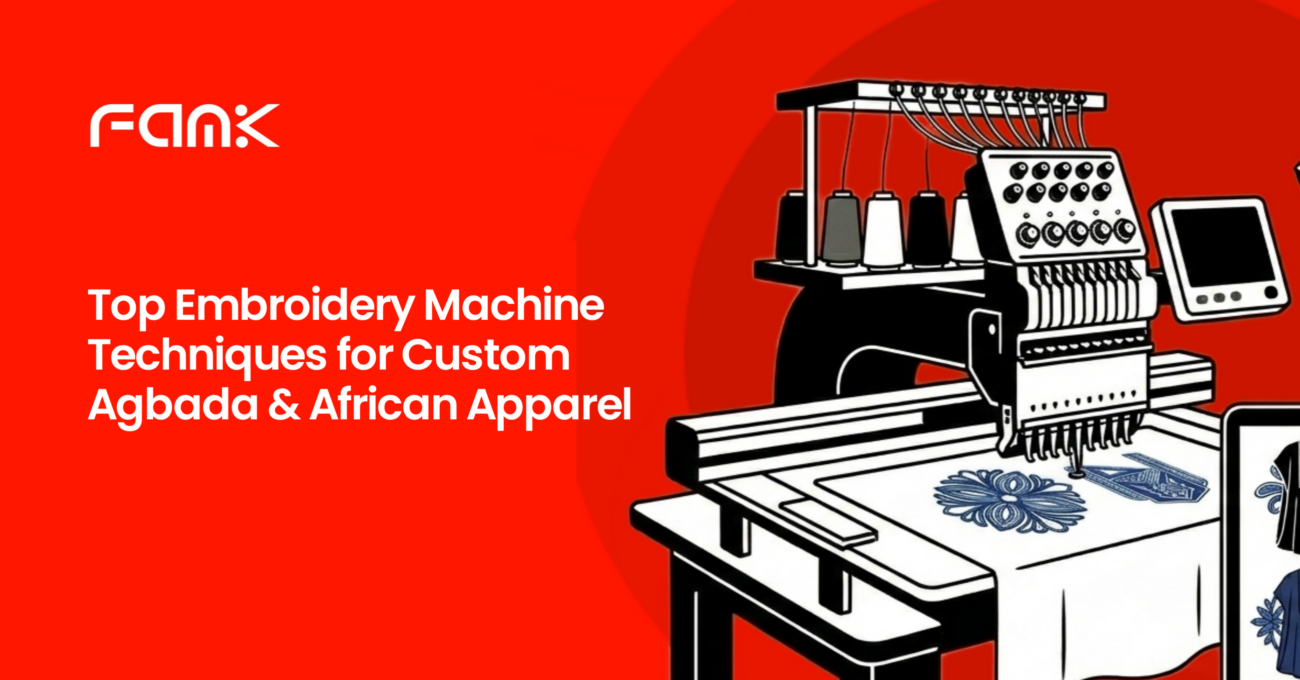
Digitising is the process of converting your artwork, an initial, a logo, a cultural motif, or a sketch into the stitch file that tells the embroidery machine exactly what to do. Stitch type, path, sequence, density, underlay, colour stops, trim commands. Every variable that determines whether the design sits flat, holds its edges, reads clearly at the right scale, and survives washing without degrading.
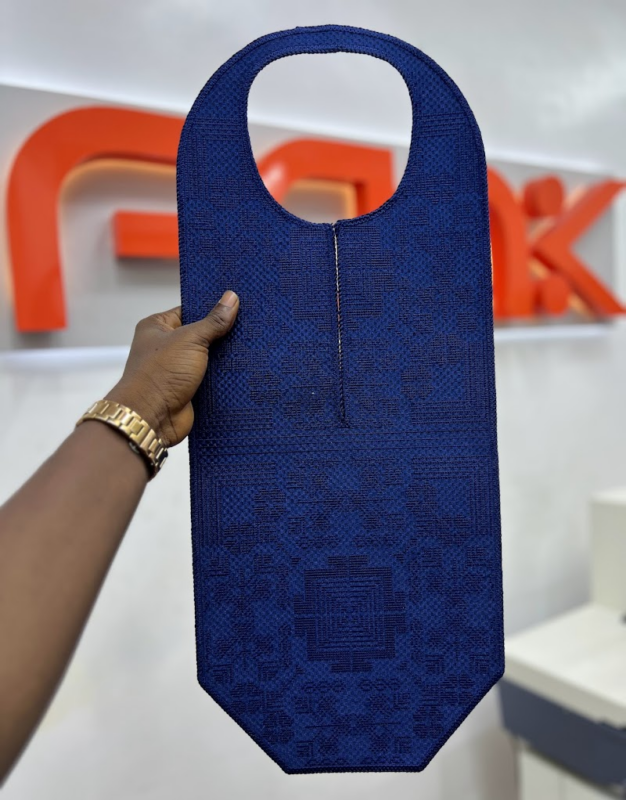
A premium agbada digital embroidery
Bad digitising is invisible until the machine runs. Then it shows up as thread gaps, puckering fabric, blurred edges on lettering, and 3D puff that collapses because the foam density was not matched to the stitch coverage. By that point the garment is already compromised.
Good digitising, according to industry standards documented by the Embroidery Trade Association, requires human assessment of each design rather than automated conversion – evaluating how the specific artwork will behave on the specific fabric before the file is built. That is the standard we work to.

What the FAMK Apparel Process Looks Like
No guesswork, no surprises. Here is the sequence from brief to delivery.
- You share your artwork, concept, or brief — initials, design reference, garment type, fabric name, and occasion
- We assess the design against your fabric weight and garment dimensions
- The stitch file is built — stitch types assigned, paths set, density calibrated, underlay mapped
- A PDF proof is generated showing exact stitch layout, colour placement, and design dimensions on your garment
- You review and approve — or request changes at this stage before anything is stitched
- The final file is delivered in your machine’s required format, ready for production
Step four is the one most providers skip. It is also the step that prevents the scenario described at the top of this page. You see exactly what was built before production begins. Nothing moves forward without your approval.
Who Orders From FAMK Apparel?
Tailors who need reliable digitising for client agbada orders and cannot afford to deliver inconsistent results. Fashion brands building Aso-Ebi collections who need the same design executing identically across 50 or 200 pieces. Individual buyers commissioning a single ceremonial agbada for a wedding or title ceremony. Clothing entrepreneurs adding branded embroidery to a product line.
The brief looks different for each of them. The standard we apply does not.
What to Prepare Before You Order
Coming in with the right information shortens turnaround and reduces revision rounds.
Useful to have ready:
- Your artwork, initials, or design concept in as clear a format as possible
- Garment type and cut (agbada, kaftan, senator, cap, and so on)
- Fabric name and weight if known
- Embroidery placement on the garment
- Thread colour preference or reference
- Your embroidery machine brand and model, which determines the file format needed
- The occasion — this affects scale and stitch density decisions more than most people expect
You do not need all of this perfectly prepared to reach out. But the more context you bring, the faster and more accurately we can build what you are asking for.
How do I order custom agbada embroidery designs from FAMK?
Reach out with your brief — garment type, fabric, design concept or reference, and occasion. We assess the design, build the stitch file, and send you a PDF proof for approval before production. Agbada embroidery designs are calibrated to your specific chest panel dimensions and fabric weight, not built to a generic template.
What is the difference between monogram machine embroidery designs and custom digitizing?
Monogram machine embroidery designs refer specifically to personalised lettering or initial-based designs built into a stitch file. Custom digitizing is the broader process of converting any artwork — a logo, cultural motif, crest, or abstract design — into a machine-readable file. All monogram work at FAMK goes through the same digitizing and PDF proof process as any other custom design.
Can you produce machine embroidery designs for bulk orders?
Yes. Machine embroidery designs for Aso-Ebi orders, branded uniform production, and volume event apparel are part of what we do. The same stitch file that passes your PDF proof approval runs consistently across every piece in the order. Bulk pricing and turnaround timelines are discussed at the brief stage.
What file formats do you deliver?
We deliver in the format required by your specific embroidery machine — .DST for Tajima, .PES for Brother, .JEF for Janome, and other formats as needed. Confirm your machine brand when you submit your brief and we build the file accordingly.
How long does custom digitizing take?
Standard turnaround is 24 to 72 hours depending on design complexity and current order volume. Time-sensitive orders can be discussed at the brief stage. The PDF proof stage adds no significant delay — most clients review and approve within a few hours.