

Blog
What Every Agbada Embroidery Design Communicates About the Man Wearing It

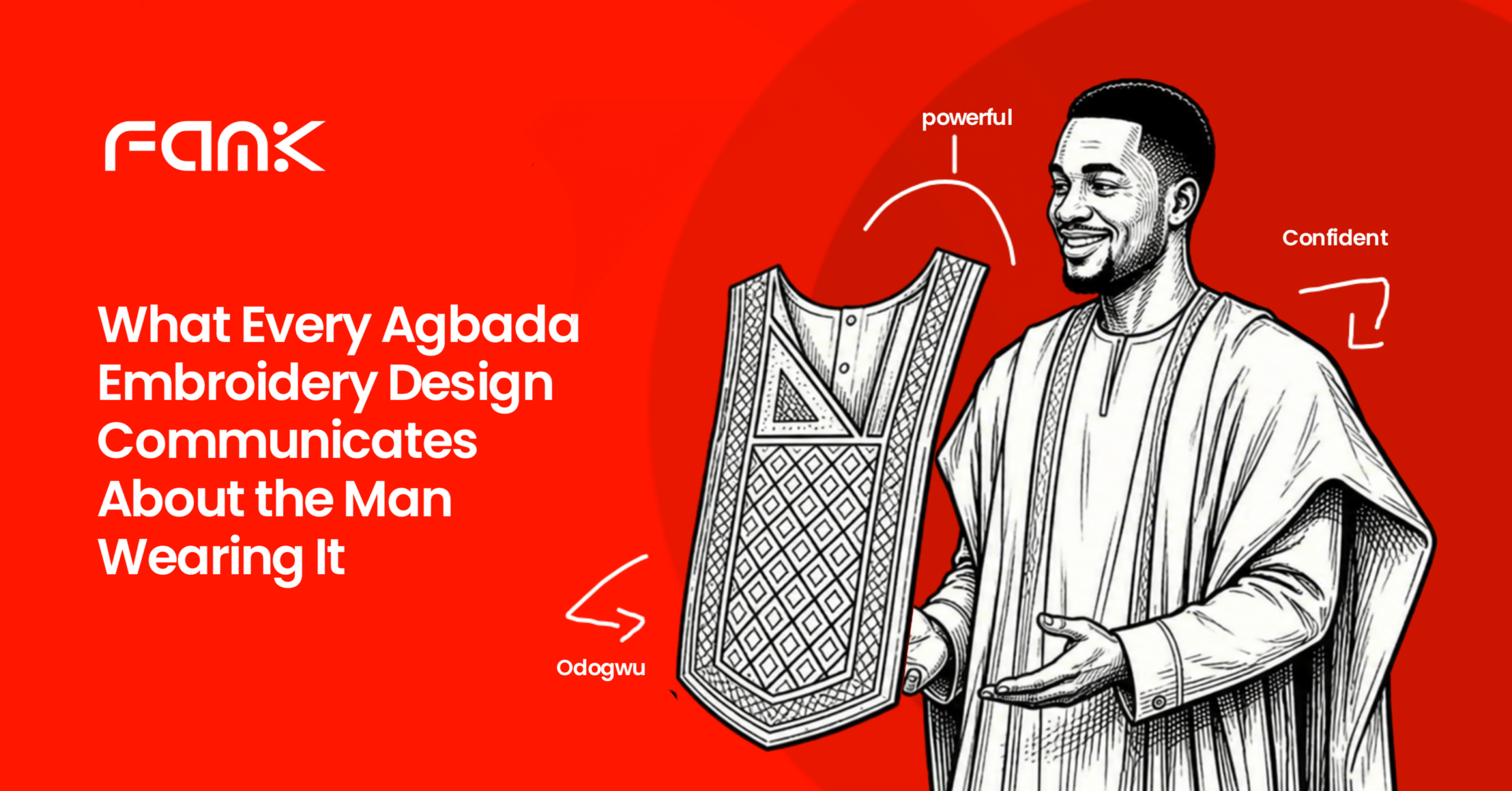
Nobody at an owambe reads a CV. They read the room. And in Nigerian social culture, the room reads ‘agbadas’, specifically, the embroidery. Before a word is exchanged, before anyone crosses the space to greet you, the agbada embroidery design on your chest panel has already communicated something. Status. Occasion awareness. Cultural identity. Whether you put thought into this outfit or just showed up.
The interesting thing is that most men do not consciously design for this. They pick something they like, commission the work, and wear it. But the people around them are reading it, whether it was intentional or not. According to the Smithsonian National Museum of African Art, prestigious dress in West African cultures has historically encoded social information into textile design — embroidery placement, motif selection, and thread weight all function as a legible system of identity markers long before the modern owambe existed.
That system is still running. Here is how to understand what yours is saying.
The Monogram: Personal Identity Made Visible
A male embroidery design built around initials or a personal monogram communicates one thing above everything else: this garment was made for a specific person. Not pulled from a rack. Not borrowed. Commissioned, considered, and personalised.
That distinction matters in Nigerian social spaces where occasion wear carries significant cultural weight. A well-executed monogram on an agbada chest panel—satin stitch, correct scale, and centred—reads as self-awareness. You know who you are. You had the outfit built around that.
Where it goes wrong is scale. A monogram that is too small disappears on a wide chest panel and reads as an afterthought. One that is too large looks aggressive rather than confident. The signal shifts entirely based on execution, which is why digitising quality is inseparable from design intent.
Cultural Motifs: Lineage, Region, and Belonging
Agbada embroidery motifs that evoke certain cultural traditions, like Hausa arabesque borders, Yoruba adire geometry, and royal medallion patterns from West African court clothing, tell you something a monogram cannot: where you’re from and what you’re linked to.
This is not a guilt trip. By 2026, men who commission heritage themes on their agbadas are consciously embedding cultural identity into their public appearance. Specifically, at diaspora occasions where an agbada can be the only one in a room full of Western formal clothing, a heritage pattern has a character that generic needlework simply does not.
The risk, if there is one, is misalignment. If a man turns up at a Yoruba traditional wedding with a Hausa arabesque border pattern, it is not precisely an error, but it is one of those things that will be noticed by informed guests.
Cultural motifs communicate belonging. They work best when the belonging is genuine.
Thread Colour and What It Signals
Gold thread on a deep navy or burgundy agbada is the most widely understood signal in Nigerian occasion wear: formality, status, and occasion awareness. It is so established that deviating from it requires intention. Silver reads slightly cooler, slightly more contemporary. White on white, tonal embroidery reads ‘restraint and confidence’ – the kind of quiet that only works when the fabric and tailoring are doing everything right underneath it.
Red thread is bold. Not wrong, but bold. It signals energy and presence in a way that gold does not. It works at cultural festivals and celebratory events. At a formal traditional wedding, it is a choice that will be noticed and interpreted.
The table below maps common thread colour choices to the signals they tend to send in Nigerian social contexts.


| Thread Colour | Fabric Pairing | Signal Sent | Best Occasion Context |
| Gold | Navy, burgundy, forest green | Status, formality, occasion, authority | Weddings, chieftaincy events, owambe as celebrant |
| Silver | Black, grey, deep blue | Contemporary, understated elegance | Semi-formal events, professional cultural dress |
| White (tonal) | White, cream, pearl | Restraint, confidence, quiet luxury | Thanksgiving services, formal dinners |
| Red | Black, white, ivory | Energy, boldness, cultural celebration | Festivals, milestone celebrations, cultural events |
| Multicolour | Black, white, navy | Pan-African identity, cultural specificity | Diaspora occasions, African fashion events |
Embroidery Placement and the Hierarchy It Creates
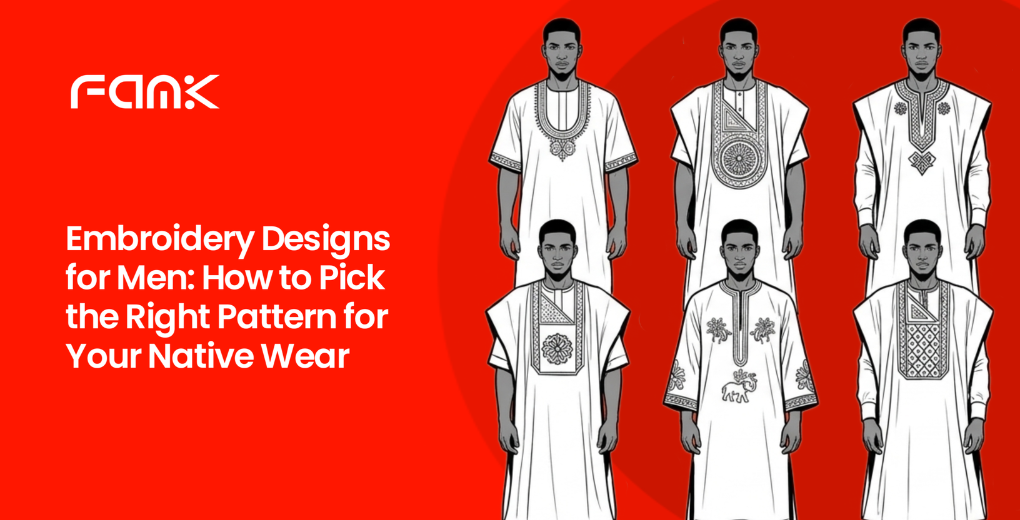
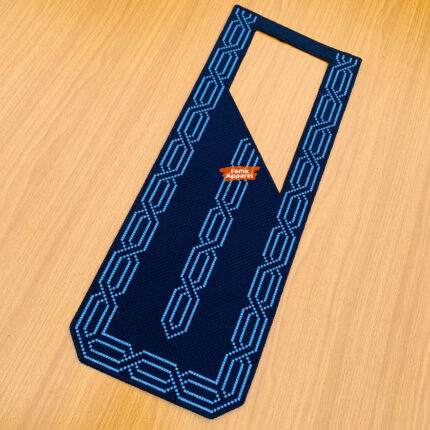
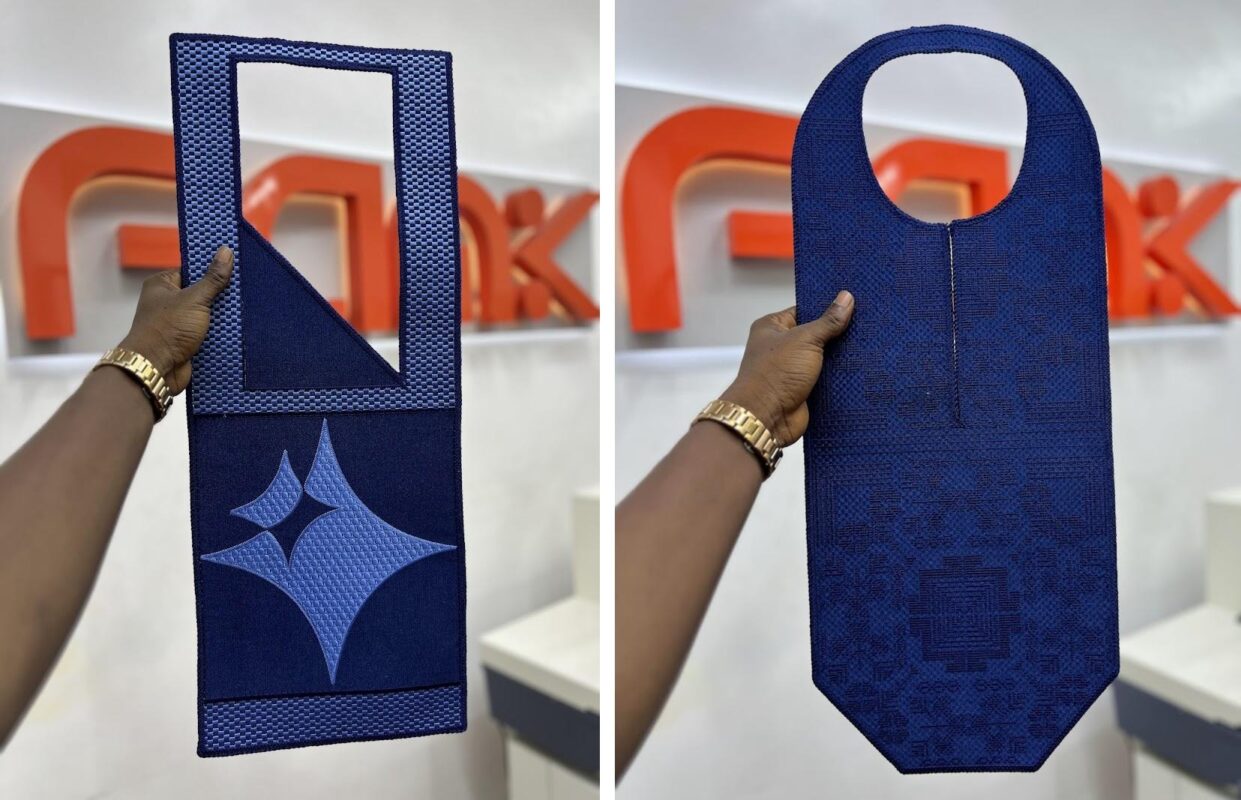
Where the design sits on the garment communicates as much as what the design is. Centre-chest placement on a wide agbada panel is the position of authority. It faces whoever you are speaking to directly. It is where celebrants, hosts, and men of rank place their most significant design work.
Off-centre placement, isolated sleeve work, or embroidery concentrated at the collar with nothing at the chest reads differently. Not lesser, necessarily, but more contemporary, more guest-appropriate, less interested in announcing itself. That can be exactly right depending on the occasion and the role.
Embroidery designs for men placed across the full garment — chest, sleeve, collar, and cuff working as a connected system — communicate investment. Time, cost, and consideration. At high-ceremony events, this is appropriate. At a casual owambe, it can read as trying too hard.
Agbada embroidery designs
What Happens When the Embroidery Is Poorly Executed
This is the part nobody wants to discuss, but it is worth saying directly. A poorly digitised male embroidery design – puckered fabric, gapped thread, and a monogram that lost definition at its actual stitched size – does not communicate anything. It communicates that something went wrong. And in a culture where occasion wear carries real social meaning, that registers.
The design intent and the execution are inseparable in the final read. A man who commissioned a family crest agbada with poor digitising is not wearing his family’s crest. He is wearing a dress that tried to say something and failed partway through.
At FAMK Apparel, we digitise agbada embroidery designs to your specific fabric weight and chest panel dimensions, then send a PDF proof before production begins. What you see in the proof is what gets stitched. The signal your garment sends is one you approved, not one that arrived by accident.
Final Thoughts
Agbada embroidery designs have never been purely decorative. The motifs, the thread colours, the placement, the scale — each element participates in a visual language that Nigerian and West African culture has been refining for centuries. Most men wearing agbadas today are fluent in that language without having studied it. They know what reads right and what feels off, even if they cannot always explain why.
Understanding the system more explicitly just means making better decisions — commissioning embroidery designs on agbada that say what you actually intend, rather than leaving the communication to chance.
What does a monogram on an agbada communicate?
A well-executed monogram on an agbada chest panel signals personal investment — the garment was built for a specific person. Scale and placement determine whether it reads as confident or careless. A correctly sized, precisely digitised male embroidery design communicates intentionality. A poorly executed one communicates the opposite.
Do cultural motifs on agbada embroidery still matter in 2026?
More than ever, particularly for diaspora Nigerian men and buyers attending culturally specific events. Embroidery designs on agbada drawn from Hausa, Yoruba, or broader West African visual traditions communicate lineage and cultural belonging in a way that generic monograms cannot. The specificity is the point.
How does thread colour choice affect what an agbada communicates?
Significantly. Gold signals status and formality in Nigerian occasion wear. Silver reads more contemporary. Tonal white on white communicates quiet confidence. Red signals celebration and energy. Each choice is readable by the people in the room, whether the wearer is conscious of it or not.