
Blog
Kaftan Styles for Men: The 2026 Guide to Fabric, Fit & Embroidery Detail

Kaftan styles for men have quietly become the most versatile item in Nigerian menswear and in 2026, more men are noticing that. They sit somewhere office wear and ceremonial dress rarely meet. Formal enough for a Monday morning meeting. Relaxed enough for a Saturday gathering with no real agenda. And when the occasion calls for it, the fabric and stitching can carry just as much weight as an agbada. Not many garments pull that off. This guide walks through what makes a kaftan worth owning in 2026, fabric first, then fit, then the embroidery choices men are actually asking for.
What Makes a Kaftan Different From an Agbada?
Strip it down and a kaftan is one layer. No outer robe draped over it the way an agbada works. Matching trousers, sure, but the silhouette stays slim, the fabric volume drops, and somehow the whole thing reads less ceremonial without losing its presence.
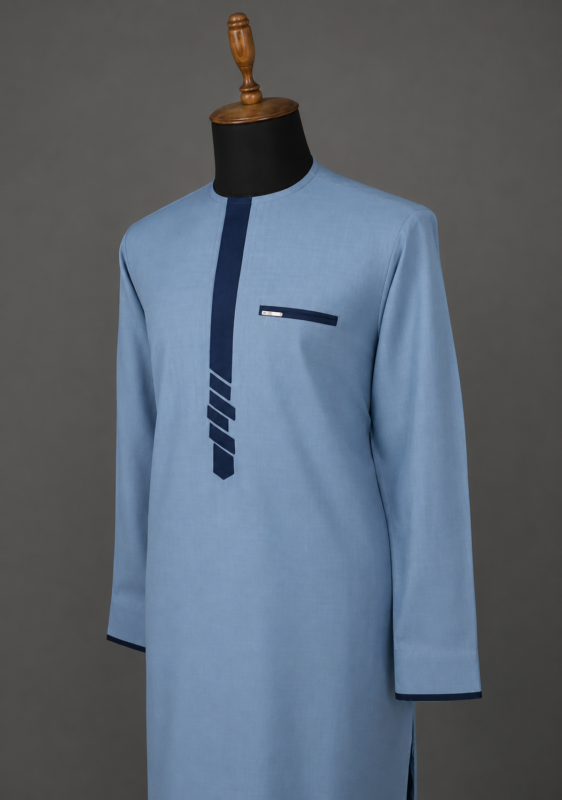
A senator-kaftan style
Why does that matter here? Because it changes how embroidery has to behave. An agbada chest panel has room to breathe across multiple layers. A kaftan doesn’t. Every stitch placement decision on a single visible layer counts for more; there’s simply less fabric to absorb a mistake.
What Are the Most Common Kaftan Styles for Men in 2026?
Three categories dominate. The senator kaftan, the long flowing cut, and something more fitted and contemporary that’s been gaining ground fast.
Senator kaftan styles for men are everywhere right now; offices, religious gatherings and the kind of semi-formal event where you want to look put together without trying too hard. A structured mandarin collar, sometimes stand-up, paired with a fit that sits close without restricting how you move. The name traces back to Nigerian political dress, which tells you something about the level of polish people expect from this cut.
Then there’s the long kaftan style for men — ankle length, looser, more grounded in older Hausa and Yoruba convention. This is the one you reach for at a cultural event or a religious occasion where the moment calls for something with weight behind it.
And the fitted contemporary kaftan? Shorter, knee to mid-calf usually, closer through the body and sleeves. Younger men are driving this one. So are diaspora buyers who want the cultural marker without the volume.
Fabric Choices That Define Kaftan Quality
Here’s the thing about kaftan fabric. It works harder than fabric does on almost any other Nigerian garment. There’s no outer robe hiding it. What you choose is what people see, full stop.
Cotton and linen blends own the senator kaftan space. Crisp, breathable, forgiving enough that embroidery sits clean without puckering under Lagos heat.
For longer, more formal pieces, Guinea brocade and Damask remain the standard, particularly once heavier embroidery enters the picture. Denser weave, better stitch density — which is precisely why tailors and embroidery designers reach for it when the design demands precision.
Lightweight lace and aso-oke blends, meanwhile, have found their way into fitted contemporary cuts. Evening wear especially, where drape and texture carry as much of the look as the stitching does.
The Smithsonian’s research into African textile production actually backs this up — fabric weight and weave density have always dictated which embroidery techniques a garment can realistically support. That principle hasn’t moved much, even with how far digitising technology has come.
Male Kaftan Embroidery Designs Worth Knowing
Scale is really what separates male kaftan embroidery designs from what you’d see on an agbada. Smaller canvas, more visible surface, so precision tends to win over volume.
Most people start at the collar and placket. A clean border running down the front, nothing excessive, just enough to define the garment without overwhelming it.
Chest pocket detail has been picking up steam too — a monogram, maybe a small crest or geometric motif, placed as a single focal point rather than spreading across the whole chest. It reads intentional in a way full coverage sometimes doesn’t.
On long kaftans specifically, cuff and hem accents tend to finish things off. A subtle border at the sleeve and hemline, tying back to the collar work without competing for attention.
Full panel motifs are rarer on kaftans, though they’re showing up more in 2026 among men who want their kaftan to carry agbada-level visual weight. Tricky territory, honestly — the tighter, more visible single layer means digitising has to be near-flawless or the whole effect collapses.
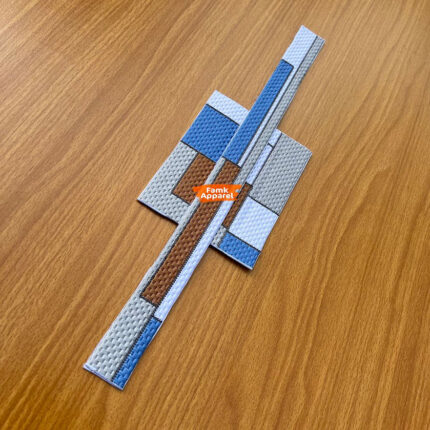
A digitally embroidered kaftan style for men
What Are Nigerians Actually Wearing Right Now?
If you’re tracking the latest male kaftan designs in Nigeria, the pattern is fairly clear. Senator kaftans with tonal collar and placket embroidery dominate office and semi-formal demand — single thread colour, understated, professional. For events and religious occasions, it’s the long kaftan in Guinea brocade with a chest pocket monogram pulling ahead, cream, navy, and forest green leading the colour requests.
| Style | Best Fabric | Common Embroidery | Best Occasion |
| Senator kaftan | Cotton-linen blend | Collar and placket border | Office, semi-formal events |
| Long kaftan | Guinea brocade, Damask | Chest pocket monogram, full panel | Religious occasions, cultural events |
| Fitted contemporary kaftan | Lace, Aso-Oke blend | Minimalist collar detail | Evening wear, diaspora occasions |
Final Thoughts
What’s happening with kaftan styles for men in 2026 says something bigger about Nigerian fashion generally. Men want one wardrobe that moves between formal and cultural without forcing a choice. A senator kaftan style for men for the office Monday, a long kaftan style for men for a religious occasion that weekend, same closet, no contradiction.
If you’re thinking through male kaftan embroidery designs for something upcoming, get the fabric and fit right first. Embroidery follows from there, not the other way around. At FAMK Apparel, we digitise kaftan embroidery to your fabric’s exact dimensions and weight, and you’ll see a PDF proof before a single stitch goes down.
What is the difference between a senator kaftan and a regular kaftan?
A senator kaftan style for men comes with a structured mandarin or stand-up collar and a slim, tailored fit, originally tied to Nigerian political and professional dress. A regular or traditional kaftan tends to sit looser, with less structured collar work.
What embroidery works best on a kaftan?
Generally, male kaftan embroidery designs land best concentrated at the collar, placket, and chest pocket rather than spread across the whole garment. The single-layer construction rewards precise, well-placed detail over dense full-panel coverage — there’s just less room for the design to breathe.
What are the latest male kaftan designs in Nigeria for 2026?
The latest male kaftan designs in Nigeria lean toward senator kaftans with tonal collar embroidery for professional settings, and long kaftans in Guinea brocade with chest pocket monograms for cultural and religious occasions. Fitted contemporary cuts with minimalist detailing are the fastest-growing category among younger and diaspora buyers.