

Blog
5 Agbada Embroidery Mistakes That Can Ruin Your Outfit

A well-designed agbada embroidery can transform a traditional outfit into a statement of elegance, status and attention to detail. However, even expensive fabric can look poorly finished when the embroidery is badly planned or executed.
The most common agbada embroidery mistakes involve thread weight, design placement, colour selection, stabilisation and overcrowding. These problems can affect the way the fabric hangs, distort the embroidery and make an otherwise beautiful agbada outfit look unbalanced.
This matters even more for weddings, chieftaincy ceremonies, naming ceremonies and other important Nigerian occasions where the agbada is often one of the most noticeable parts of the outfit.
Whether you are a tailor, fashion designer or someone commissioning a custom agbada, understanding these mistakes can help you achieve a cleaner and more sophisticated result.
1. Using the Wrong Thread Weight for the Fabric
Using the wrong embroidery thread weight can cause puckering, distortion and poor visibility on the fabric. The thread must be suitable for the weight and density of the agbada material to produce a clean and balanced design.
A heavy thread on lightweight fabric can pull the material and create unwanted puckering. Conversely, a very thin thread on a heavy fabric such as brocade or damask may disappear visually and fail to give the design the definition it needs.
Agbada fabrics vary considerably in weight and texture. Lightweight materials require different embroidery considerations from heavier fabrics.
Professional embroiderers should test the thread and stitch combination on a sample of the actual fabric before working on the finished garment. This helps determine whether the thread tension, density and weight are appropriate.
A simple test can prevent expensive problems later, including warped fabric, uneven stitching and poor garment drape.
How do you choose the right embroidery thread for an agbada?
Choose an embroidery thread based on the fabric’s weight, texture, colour and the density of the design. Test the thread on a sample of the actual agbada fabric before production. This helps prevent puckering, distortion and embroidery that either overwhelms or disappears into the material.
2. Placing the Embroidery in the Wrong Position
Incorrect embroidery placement can make an agbada design look unbalanced, even when the embroidery itself is beautifully produced. The position of the design should work with the garment’s structure rather than compete with it.
Common placement problems include positioning a chest-panel design too high or too low, creating inconsistent designs across pocket flaps, or allowing embroidery to extend into areas where the fabric moves and folds frequently.
This is particularly important with modern agbada embroidery designs that use geometric patterns, repeated motifs or symmetrical arrangements. Even a small alignment error can make the finished design look uneven.
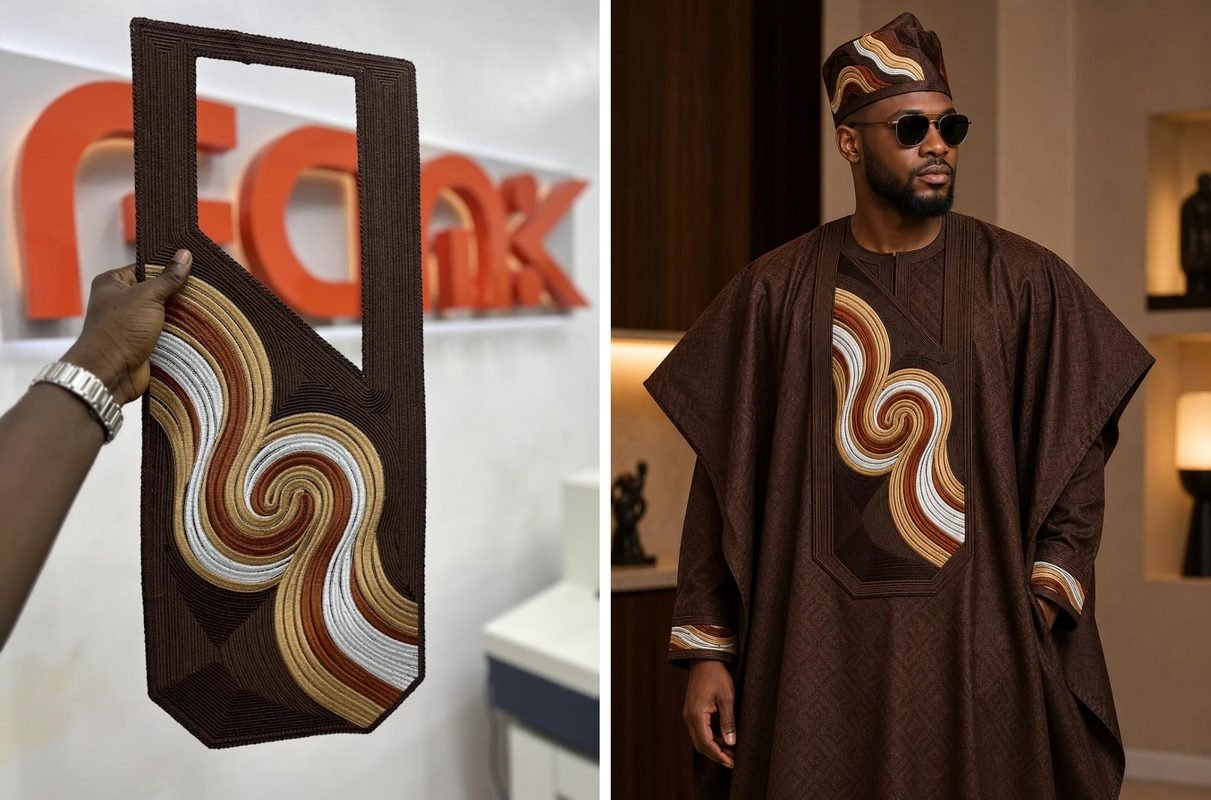
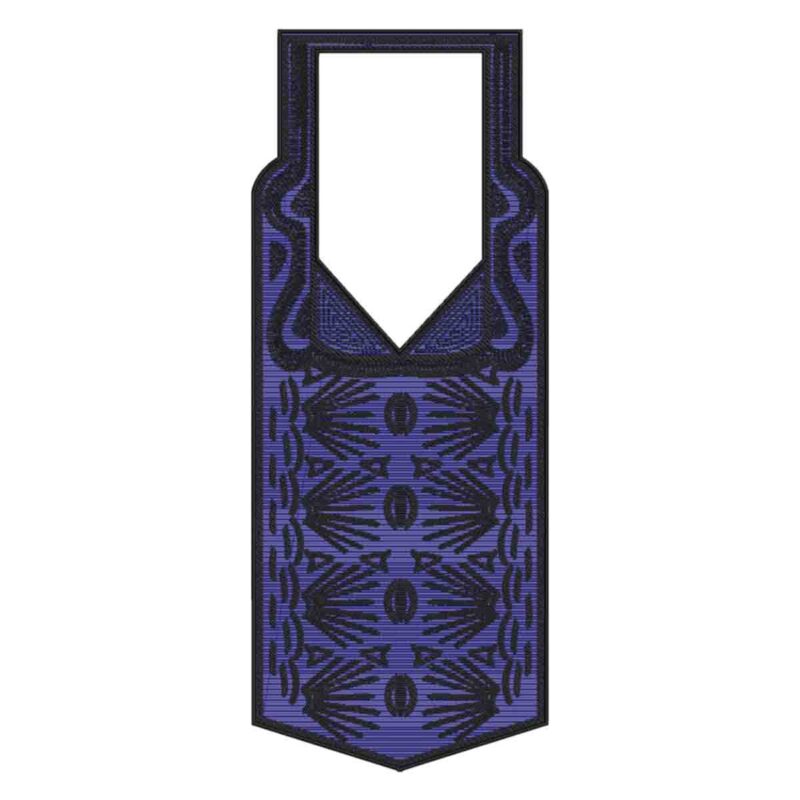
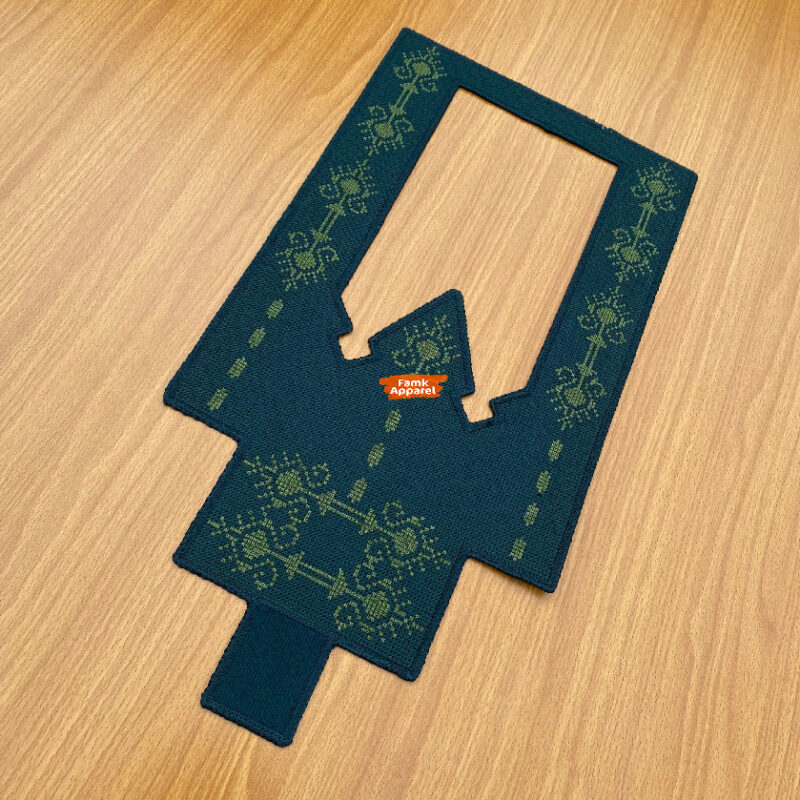
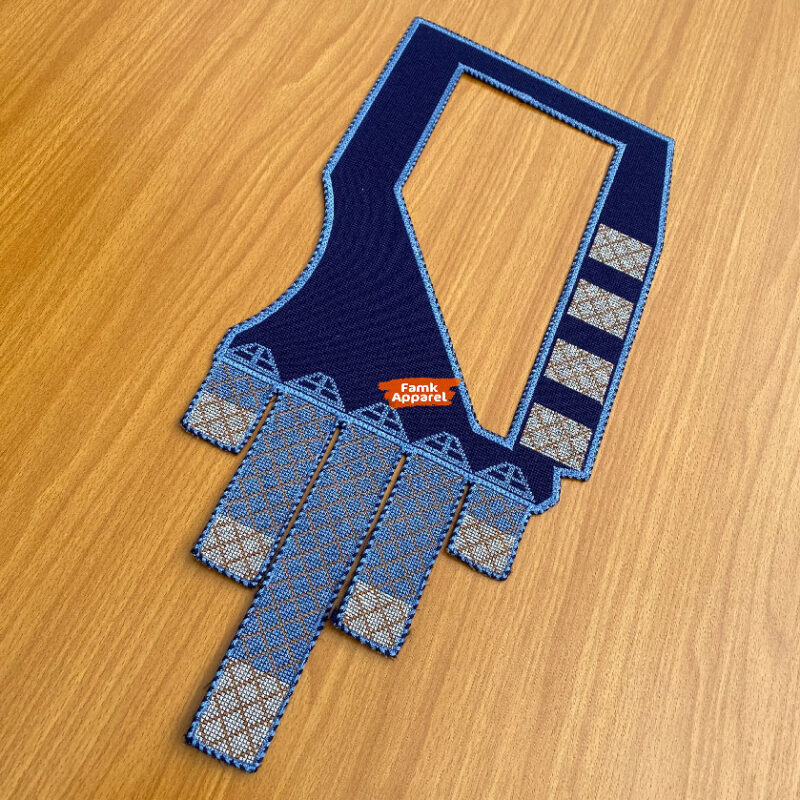
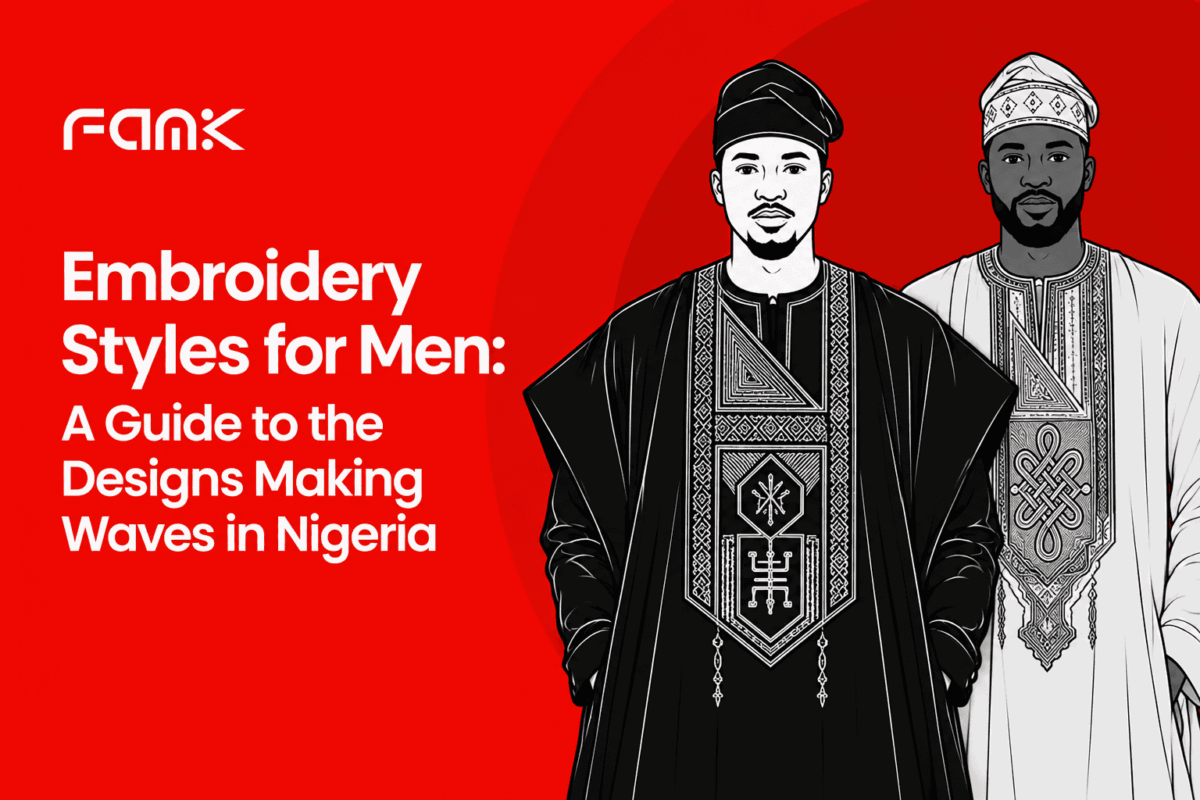
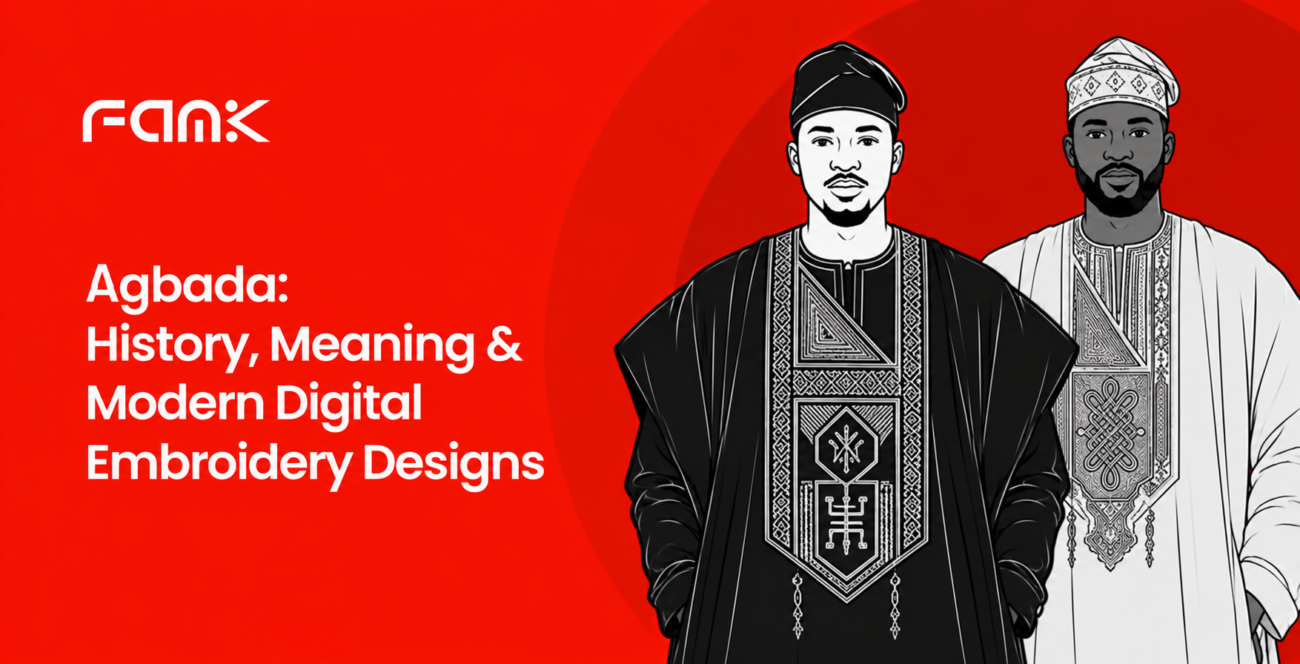
An agbada embroidery cape and a full agbada
The main embroidery should generally work with the visual structure of the garment, including the shoulders, chest and overall silhouette. The design should enhance the wearer rather than distract from the outfit.
Before stitching, the embroiderer should therefore consider the garment’s measurements, panel dimensions, seam lines and how the fabric will fall when worn.
Where should embroidery be placed on an agbada?
Agbada embroidery should be positioned according to the garment’s chest panels, seams, proportions and overall silhouette. The design should complement the wearer’s upper body without interfering with areas that move or fold heavily. Accurate placement is especially important for symmetrical and geometric embroidery designs.
3. Choosing Colours That Clash With the Fabric
Colour can determine whether embroidery looks refined or overwhelming. Even an excellent design can lose its visual appeal when the embroidery thread clashes with the agbada fabric.
For example, gold thread can create a luxurious appearance against darker colours such as deep purple, navy or black. Silver can work particularly well with darker or cooler fabrics, while a thread that is too similar to the base fabric may lose definition.
The goal is not always to create the strongest possible contrast. Good embroidery designs for agbada should consider harmony, contrast and the overall purpose of the outfit.
Colour selection should also be tested under different lighting conditions. Thread can look different under artificial shop lighting compared with natural daylight or the lighting used at an evening event.
For this reason, it is better to view the embroidery thread against the actual fabric before production rather than relying only on how the colours appear on a screen or under indoor lighting.
How do you choose embroidery colours for an agbada?
Choose embroidery colours that complement the agbada fabric while providing enough contrast for the design to remain visible. Consider the fabric colour, event setting and lighting conditions. Testing different thread colours directly against the fabric before embroidery can help prevent a combination that looks different from what you expected.
4. Using Inadequate Stabilisation and Distorting the Design
Yes, stabilisation is important because it helps keep the fabric stable during embroidery and supports clean, consistent stitching. Without sufficient stabilisation, the fabric can shift and the embroidery pattern may become distorted.
An embroidery stabilizer provides support behind the fabric during the stitching process. This is especially important when the design has a high stitch density or contains detailed curves and repeated patterns.
Without proper stabilisation, several problems can occur. Curves may become jagged, outlines may shift and repeated motifs may no longer align correctly.
The choice and amount of stabilisation should depend on the fabric and embroidery design. Too little support may allow excessive movement, while inappropriate stabilisation can also affect the finished appearance.
Wash-away stabilisers require particular care during finishing. Removing or cleaning them incorrectly can affect the final appearance of the embroidery.
For premium agbada embroidery, stabilisation should therefore be treated as part of the design and production process, not as an afterthought.
Why is stabilizer important for agbada embroidery?
Stabilizer helps prevent the fabric from shifting during embroidery, which supports cleaner outlines, more consistent stitch tension and better pattern alignment. The appropriate stabilizer depends on the fabric and design. Using too little support can cause puckering and distortion, especially with detailed or densely stitched agbada embroidery.
5. Overcrowding the Design With Too Much Embroidery
Too much embroidery can make an agbada look busy rather than luxurious. A strong design uses embroidery strategically, leaving enough fabric visible to create balance and visual breathing room.
This is one of the most overlooked agbada embroidery mistakes. Designers may be tempted to fill the chest, sleeves, pockets and lower sections with competing patterns because more embroidery can appear more elaborate.
However, complexity does not automatically create elegance.
Negative space—the areas intentionally left without embroidery—can help important elements of the design stand out. When every part of an agbada contains detailed patterns, the individual elements can compete for attention.
This is particularly important when working with detailed African embroidery designs or geometric motifs. A design that looks impressive when viewed closely may become visually confusing when seen from a distance.
The goal should be balance. Carefully placed embroidery can communicate luxury and craftsmanship without overwhelming the garment.
How much embroidery is too much on an agbada?
There is no fixed amount of embroidery that is automatically too much. The design becomes excessive when multiple patterns compete for attention or leave little visual space around important elements. A balanced agbada should combine detailed embroidery with enough unembroidered fabric to maintain a clean and sophisticated appearance.
How Can You Avoid Agbada Embroidery Mistakes?
Before starting, check the fabric weight, thread type, design density, colour combination, stabilisation and placement. A test sample can also reveal problems before they affect the finished garment.
The easiest way to avoid agbada embroidery mistakes is to plan the embroidery before production rather than trying to correct problems after stitching begins.
For custom Nigerian agbada designs, the embroiderer and tailor should also consider how the design will look when the garment is fully assembled and worn. A pattern that looks good on a flat piece of fabric may appear different once it becomes part of the complete agbada.
Good embroidery is therefore not simply about producing more stitches. It is about making the fabric, thread, colour, placement and design work together.
Traditional Craft Meets Digital Embroidery
Modern digital embroidery gives designers greater control over repeated patterns, alignment and intricate details. This can be particularly useful for agbada designs that require consistent motifs or precise positioning.
However, technology does not remove the need for good design decisions. Digital embroidery still requires the correct thread, fabric preparation, stabilisation, colour selection and placement.
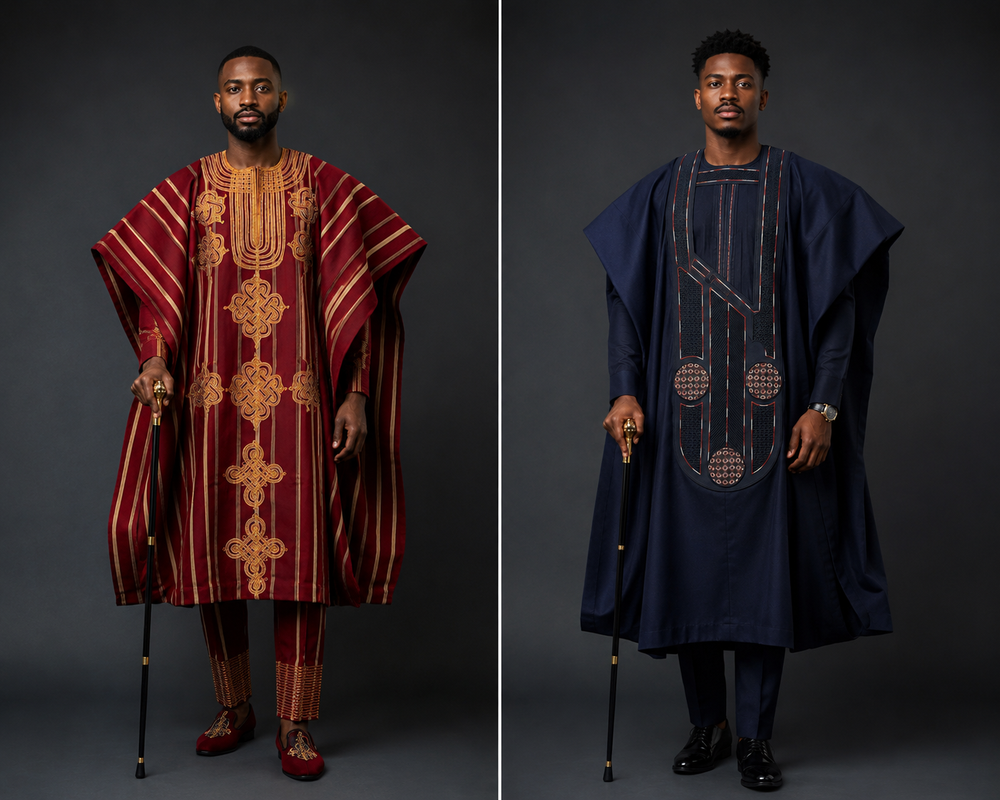
traditionally embroidered agbada vs. modern agbada design
The machine can reproduce a digitised design accurately, but the quality of the final agbada still depends on how well the design has been prepared for the specific fabric.
For Nigerian fashion designers and tailors, combining traditional understanding of agbada styling with modern embroidery technology can create garments that feel culturally familiar while offering a more precise finish.
What Should You Check Before Embroidering an Agbada?
Before embroidery begins, check these five areas:
- Fabric: Is the material suitable for the planned embroidery density?
- Thread: Does the thread weight and colour complement the fabric?
- Placement: Is the design correctly positioned on the chest, sleeves or other panels?
- Stabilisation: Does the fabric have enough support to prevent movement and distortion?
- Design balance: Is there enough negative space to prevent the agbada from looking overcrowded?
These checks can prevent many of the most common problems before they become visible on the finished garment.
Frequently Asked Questions About Agbada Embroidery
What are the most common agbada embroidery mistakes?
The five most common agbada embroidery mistakes are using the wrong thread weight, poor design placement, unsuitable colour combinations, inadequate stabilisation and overcrowding the design. Each can affect the garment’s appearance, structure or balance. Testing the embroidery on the actual fabric before production can help identify and prevent these problems.
Does agbada fabric need stabilizer for embroidery?
Yes, agbada fabric may require stabilisation to keep it stable during embroidery and reduce distortion. The appropriate stabilizer depends on the fabric and design. Insufficient support can contribute to puckering, uneven outlines and misaligned patterns. The embroidery setup should therefore be tested on a fabric sample before working on the completed agbada.
What makes a good agbada embroidery design?
A good agbada embroidery design balances detail, placement, colour and negative space. It should complement the garment’s structure rather than overwhelm it. The design should also be suitable for the fabric and intended occasion. Precise alignment and consistent stitching are particularly important when using geometric, repeated or highly detailed patterns.
Is digital embroidery good for agbada?
Yes, digital embroidery can be effective for agbada because it allows detailed patterns to be reproduced with consistent positioning and stitching. However, good results still depend on proper digitisation, fabric preparation, thread selection and stabilisation. Digital technology improves production precision, but it does not replace good design planning and embroidery expertise.
Where should embroidery go on an agbada?
Embroidery is commonly designed around prominent areas such as the chest panels, sleeves and other structured sections of the agbada. The exact placement should depend on the garment’s proportions and design. The embroidery should enhance the silhouette and remain clear when worn rather than extending excessively into areas where movement can distort it.
Final Thoughts
Avoiding agbada embroidery mistakes starts with understanding that beautiful embroidery is about more than the pattern itself. Thread weight, placement, colour, stabilisation and design density all influence how the finished garment looks and feels.
For a Nigerian agbada, the best result comes from balancing traditional elegance with careful modern production. A well-planned agbada embroidery design should complement the fabric, fit the garment’s structure and give the wearer a polished appearance without becoming visually overwhelming.
At FAMK Apparel, we understand that the details matter. From digital embroidery and thread selection to precise placement and balanced design, every element should work together to create an agbada that communicates distinction.
For your next ceremonial garment, explore FAMK Apparel’s embroidery work and create a design that is made to complement—not compete with—your agbada.