

Blog
Machine vs Hand Embroidery: Which Gives Better Results on Agbada?

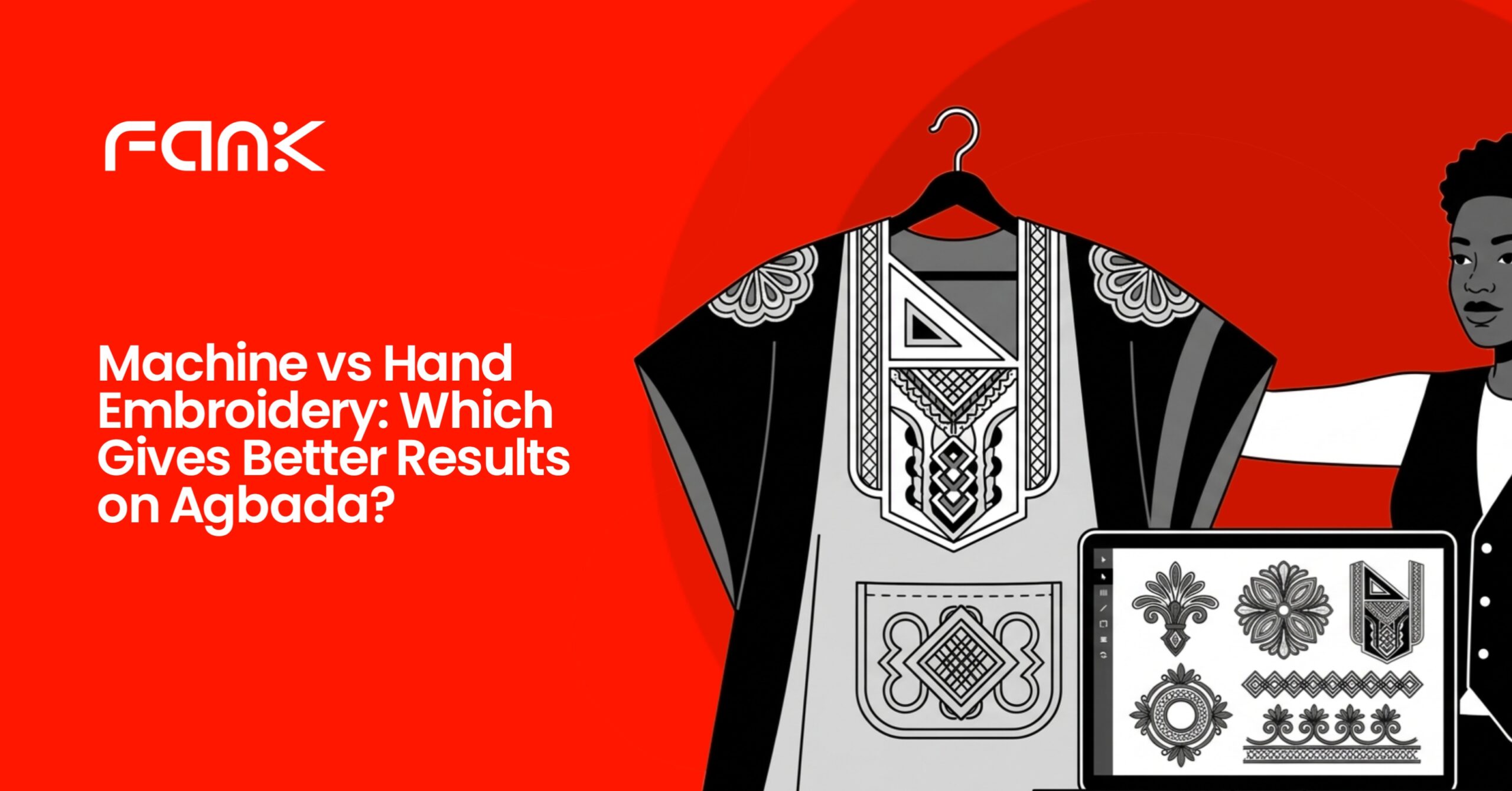
Every tailor, clothing brand, and fashion-conscious Nigerian man will one day be faced with this question. Hand embroidery has decades of cultural weight behind it. The embroidery machine has the speed, consistency and scalability that no artisan can match alone. With agbada for men—you can see the chest panel, the sleeve coverage and the overall finish from across the room—choosing between the two has real consequences. This piece gives a balanced view and doesn’t sugarcoat the trade-offs.
What is Hand Embroidery and How Do You Do it On Agbada?
Hand embroidery is a form of needlework that is embroidered directly onto fabric by a skilled artisan using a needle, thread and years of experience in their craft. No digital file, no machine command. The pattern is in the artisan’s muscle memory and hands.
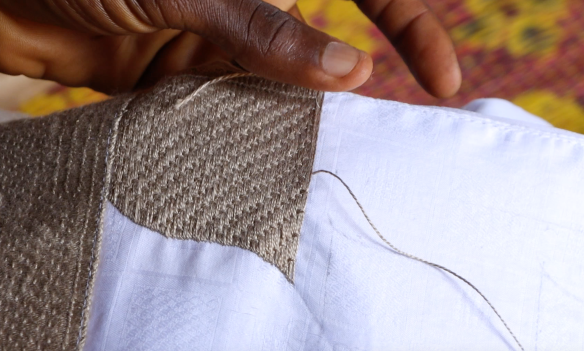
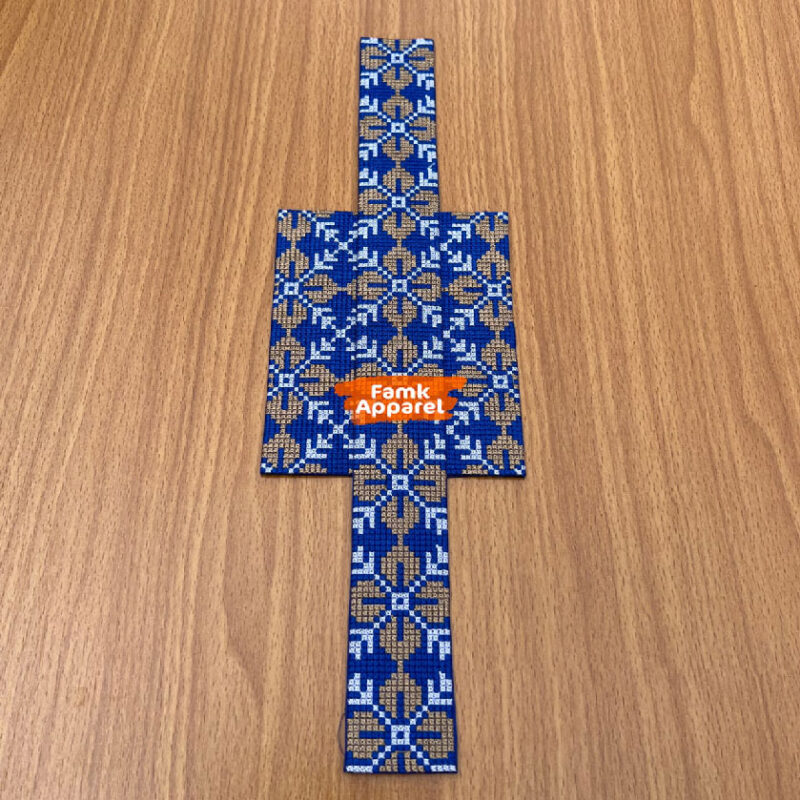
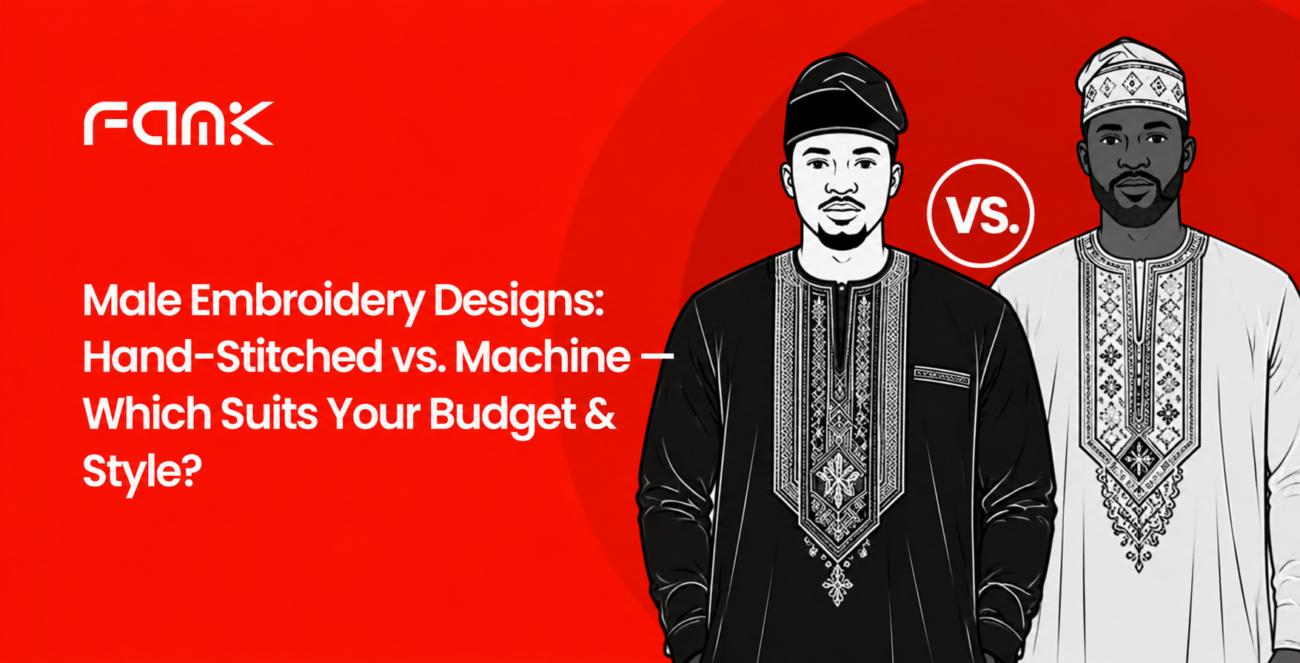
An embroidery design made by hand
Men’s traditional hand embroidery on agbada typically adorns the chest panel, collar border and front opening. In the Hausa tailoring tradition, for example, master embroiderers would spend several days working on a single agbada—applying dense arabesque patterns with a precision that reflected both skill and social investment. The finished garment was more than clothing. It was an announcement.
A hand embroidery machine is a hybrid of the two and is also known as a freehand or hand-guided embroidery machine. It allows the operator to manually guide the path of the needle rather than following a fully automated stitch file. The result is similar to the variation of handwork but gives a little more speed and consistency than pure hand stitching.
What Does a Machine Embroidery Process Look Like on Agbada?
An embroidery machine reads a digitised stitch file and executes the design automatically—stitch type, path, density, thread colour and trim commands are all pre-programmed. The operator places the fabric in the hoop, selects the file, and the machine does the rest.
For men’s agbada, this means a chest panel monogram or heritage pattern can be stitched with consistent density across every single piece in an order—whether that order is one garment or 200. The machine does not get tired, does not relax its tension in the middle of a design, and does not flinch on the fourteenth agbada like a human hand would.
At FAMK Apparel we digitise your design, adjust it to your specific fabric weight and garment measurements, and send you a PDF proof before production begins. What you see in the proof is exactly what is stitched.
Quality Comparison: Which Actually Looks Better?
This is where the honest answer gets uncomfortable for both sides.
There is nothing better than hand embroidery. A master artisan working on a single ceremonial agbada produces texture, depth and variation that no machine replicates precisely. The minor imperfections are not flaws; they are evidence of human craft and in heritage and in luxury markets that evidence has real monetary value.
But hand embroidery at an average level—which is far more common than master-level work—is inconsistent, slower to complete and has thread tension issues on heavier agbada fabrics like Guinea brocade and damask. It is harder in 2026 to find a truly skilled hand embroidery artisan in Nigeria than it was two decades ago. Fewer young artisans are entering hand embroidery as a trade, and the gap left by retiring master craftspeople is not being filled at the same rate.
Poorly digitised machine embroidery is just as problematic. If a file is poorly digitised, you’ll get puckering, thread gaps, and flat designs that lose detail when they’re small. The machine does what it is told. If the file is wrong, then the output will be wrong no matter how costly the machine is.
But machine embroidery with strong digitising is consistently better than average hand embroidery on agbada production. Stitch density is uniform, edges are crisp, and the design is identical on each piece.
Speed, Cost, and Scalability
Here the comparison quickly ends for volume-producing brands and tailors.
Depending on the complexity of the design, hand embroidery on a detailed agbada chest panel can take one to four days per garment. The timeline is not commercially viable for a 50-piece aso-ebi order.
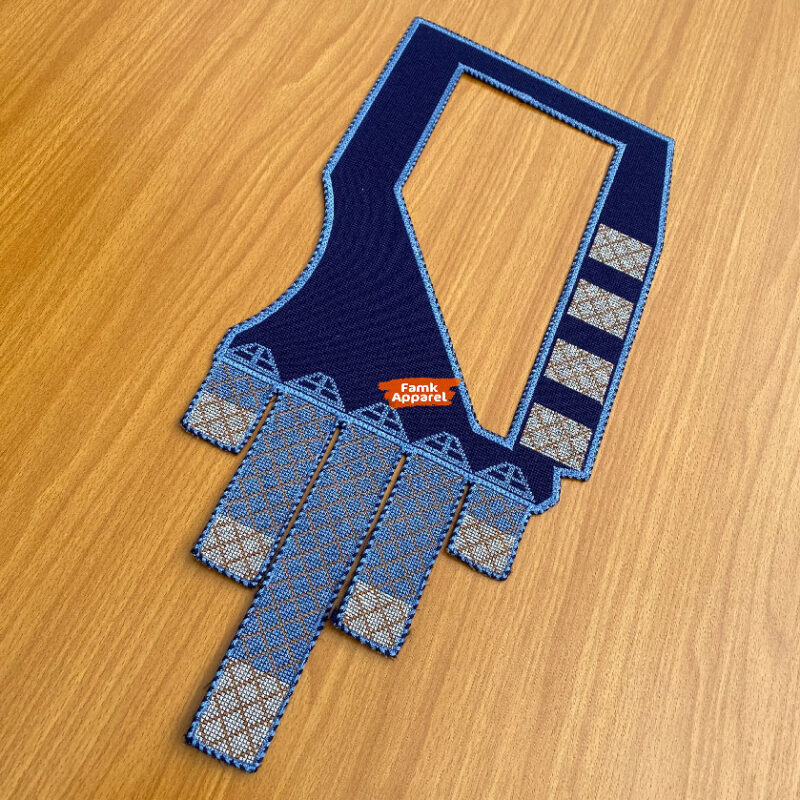
A good digitised chest panel can be done on an embroidery machine in less than an hour. A multi-head machine can run the same design on many garments at the same time. For bulk orders—coordinated Aso-ebi agbadas, branded kaftans and uniform production—machine embroidery is the only commercially viable option.
Cost per unit tends to favour machine production at scale. Because of the amount of time involved, hand embroidery commands a higher per-piece price. That premium is justified for custom luxury pieces. For volume production, it makes the numbers unfeasible for most Nigerian fashion labels.
Which Method is Right for Your Agbada?
It all depends on what you’re making and who you’re making it for.
If you are commissioning a single ceremonial agbada, where you’re paying for the artisan craft, go for hand embroidery. A luxury bespoke piece or a heritage item with collector value. What you are paying for is the time, the singularity, and the irreplaceable quality of human touch.
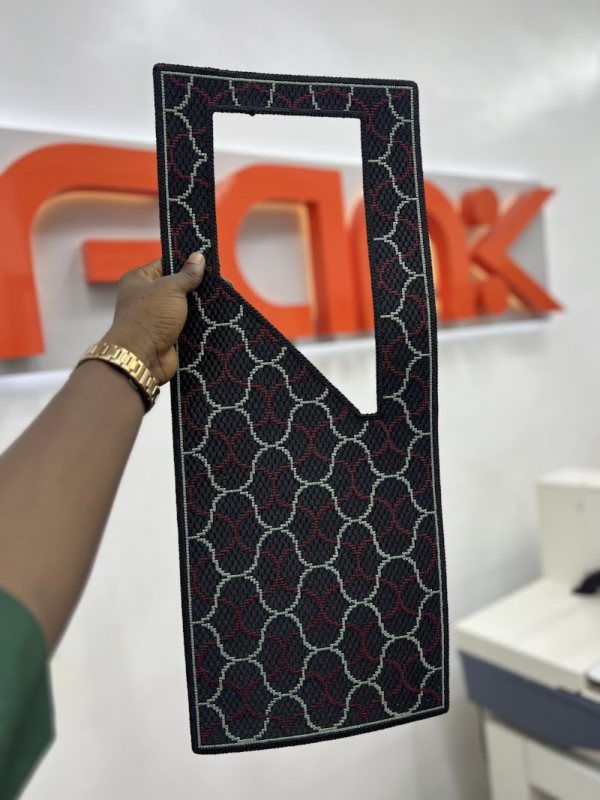
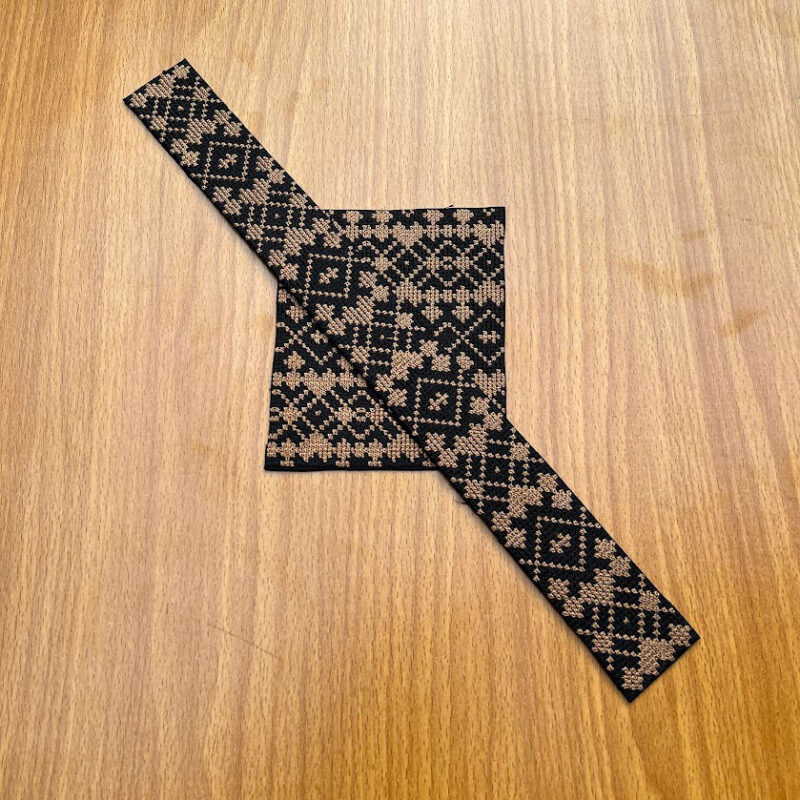
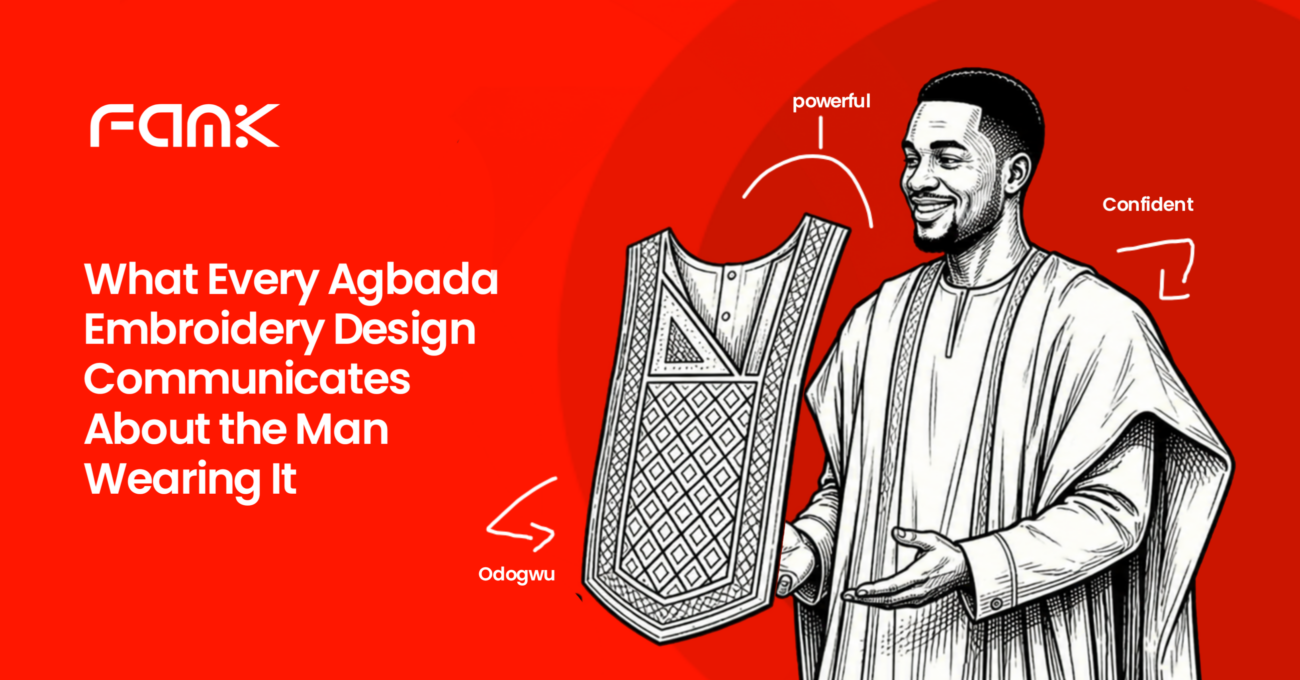
An agbada cape made by an embroidery machine
Use machine embroidery if you are producing for an event, have an aso-ebi order, are building a fashion brand or need uniformity over several agbada for men. For any significant volume a skilled digitising partner and a well-calibrated embroidery machine will give cleaner results quicker and cheaper per unit than hand production.
For most Nigerian tailors and fashion brands in 2026, the practical answer is machine embroidery, not because hand embroidery is inferior, but because the production demands of the market have moved beyond what can be sustained with hand stitching alone.
Frequently Asked Questions
Which is better, hand embroidery or machine embroidery?
Neither method is universally better — they serve different purposes. Hand embroidery at master level produces cultural depth and individuality that no machine replicates precisely. Machine embroidery with strong digitising consistently outperforms average hand work on consistency, speed, and cost per unit at volume. The better question is not which is better overall, but which is better for your specific garment, order size, and budget.
Is hand embroidery making a comeback?
Hand embroidery has not gone away; it has always been a part of high-end fashion, custom sewing, and formal wear. How it is placed is what is changing now. Digital embroidery and machine production are making fashion faster and more industrial. As a result, hand embroidery is becoming more of a luxury skill and less of a common way to make clothes.
Is embroidery a local craft practised in Nigeria?
Yes, embroidery has been a skill in Nigeria for a long time. It has been done for many generations in many places, but it is especially important in Northern and Southwestern Nigeria as part of traditional dress. Nigerian artists used needles and thread to make intricate patterns on fabrics like aso-oke, damask, and cotton.
Can machine embroidery replicate traditional Hausa and Yoruba agbada patterns accurately?
Yes — with skilled digitising. Hausa arabesque borders, Yoruba geometric motifs and royal medallion designs can all be translated into stitch files that reproduce the visual language of the original hand-stitched work faithfully. What the machine cannot replicate is the craft process itself — the days of human labour and the minor variations that make each hand-stitched piece unique. For brands and buyers who need the pattern rather than the provenance, machine digitising delivers accurate results consistently.