
Blog
Male Embroidery Designs for Weddings, Owambe & Corporate Events in Nigeria

There is an unspoken dress code operating at every Nigerian social event. Not the one written on the invitation, the other one. The one communicated entirely through fabric, embroidery, and how much thought a man visibly put into showing up. Male embroidery designs participate in that code whether the wearer intends them to or not. A 3D puff monogram that commands a wedding reception reads as trying too hard at a Friday corporate aso-ebi. A minimalist kaftan collar stitch that works perfectly at a formal office event looks underwhelming at an owambe where the celebrant is wearing full gold chest coverage.
The occasion decides the brief. Everything else follows.
Wedding Embroidery: The Highest Stakes Category
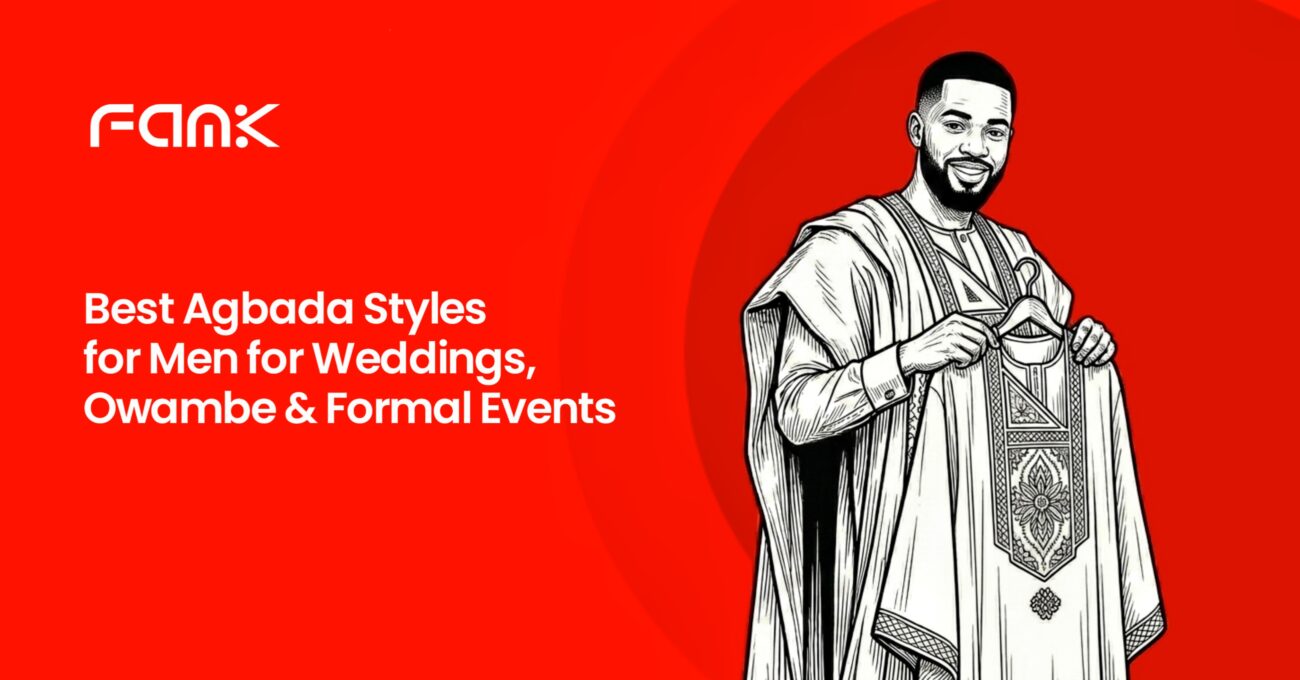
Weddings are where Nigerian male embroidery designs face the most scrutiny. Guests notice. Photographs last. And the hierarchy between groom, family, and guests is largely communicated through embroidery scale and coverage, not just fabric colour.
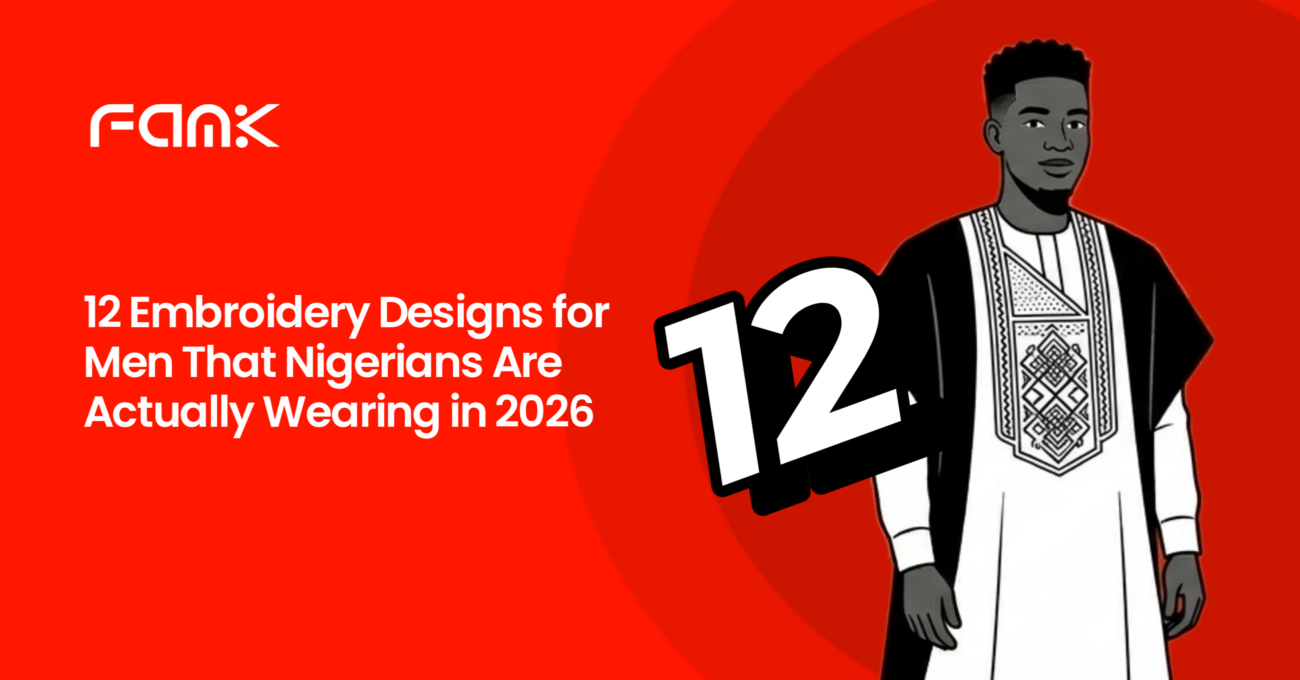
For the groom, full chest panel coverage is the baseline expectation. A 3D puff monogram combining initials with the wedding date on a white or cream agbada is the most requested commission in this category. The raised stitching reads in photographs the way flat satin stitch does not, which matters when the images are circulating on Instagram the following week.
For male family members, fathers, brothers, and uncles coordinating aso-ebi, the brief shifts toward heavy but not competitive. Gold arabesque borders, royal medallion designs, or full-sleeve heritage patterns on matching fabric. Enough coverage to signal their role. Not so much that they pull focus.
Wedding guests sit at the other end of this scale. A clean agbada embroidery design centred on the chest, a monogram, or a simple geometric motif is appropriate and intentional. More than that starts to read as misunderstanding the room.
Owambe: Where Embroidery Does the Most Work
If weddings have a hierarchy, owambes have a competition. Not an explicit one. But the best-dressed conversations happen here, and Nigerian male embroidery designs are usually what the conversation is actually about.
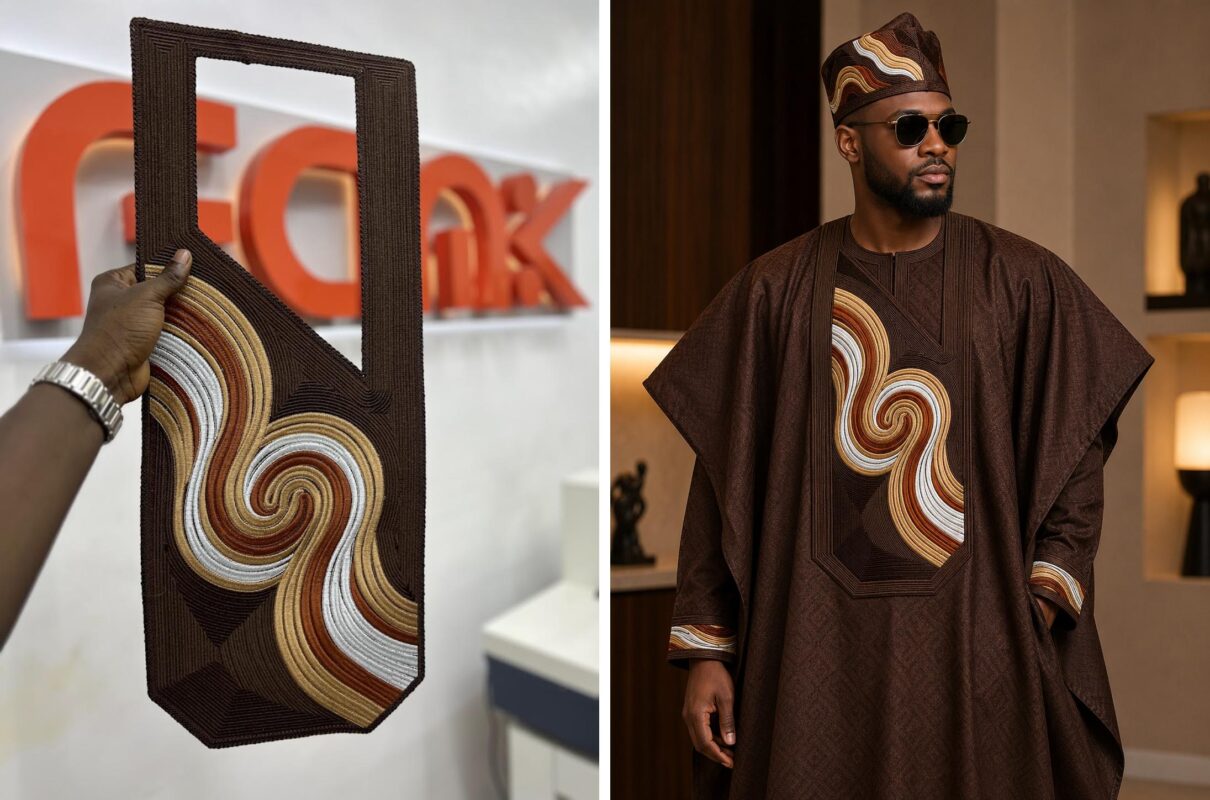
Celebrants and hosts should not be subtle. This is the occasion where a royal gold chest panel, a layered motif system running from collar to cuff, or a family crest commission makes complete sense. The embroidery is part of what marks you as the reason people gathered. Restraint at your own owambe is a missed opportunity.
Embroidery designs
For guests, the calculation is different and slightly more interesting. You want to look considered without upstaging the host. A bold monogram on a deep navy or burgundy agbada sits in the right range, present, intentional, but not announcing itself above the room’s focal point. Tonal embroidery, where thread colour matches fabric rather than contrasts it, is growing among owambe guests in 2026 precisely because it reads sophisticated without competing.
Corporate and Professional Events: The Underestimated Category
This one gets less attention than it deserves. Corporate cultural events—aso-ebi Fridays, company anniversary celebrations, and professional association dinners—have a dress code logic that sits between formal and native, and most men either overdress or underdress it.
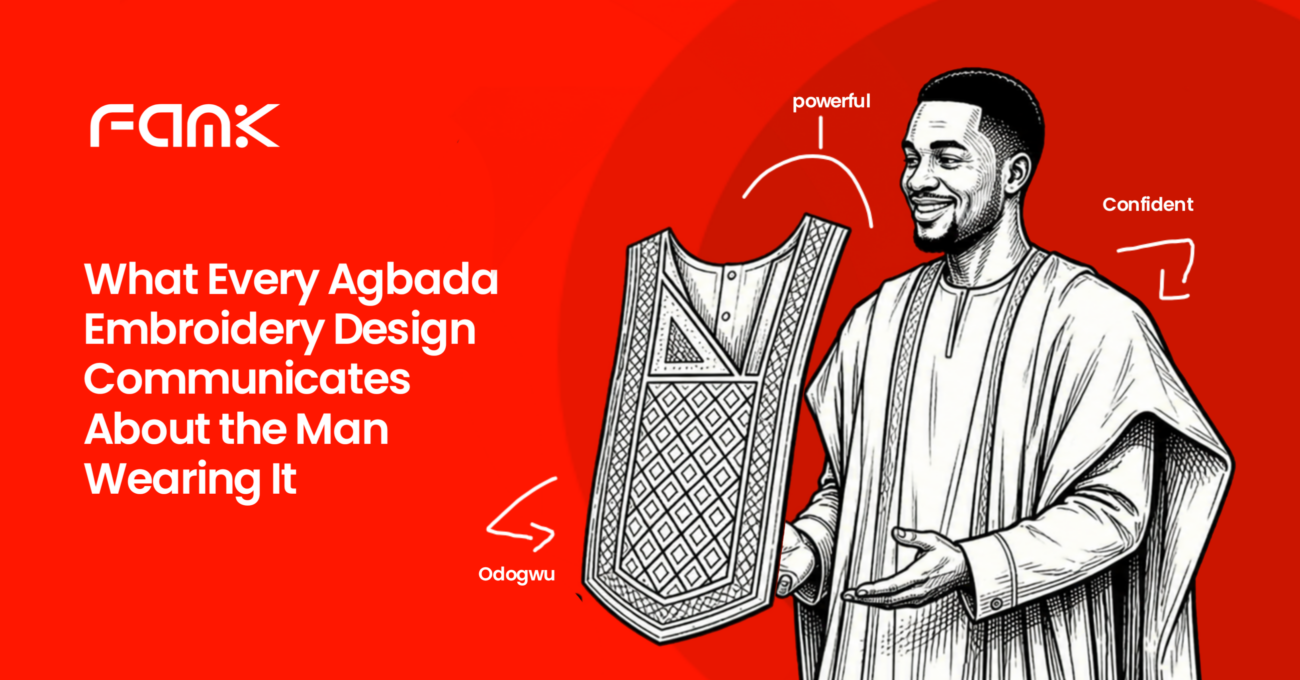
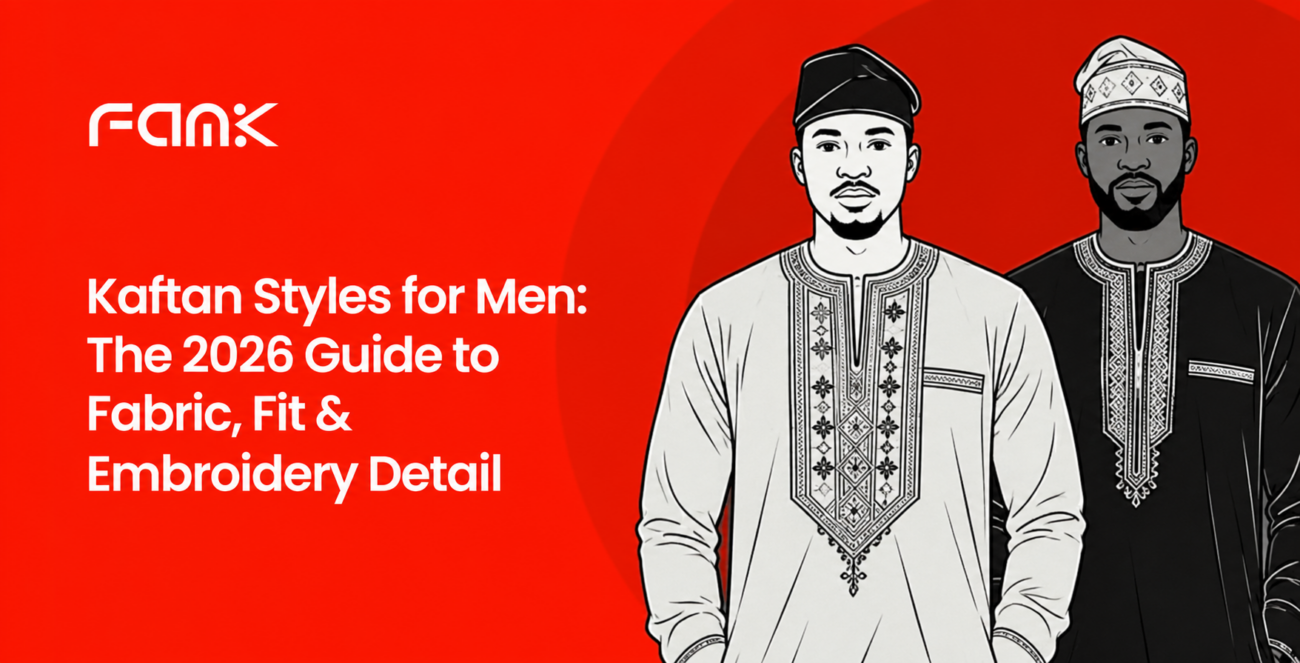
Kaftan embroidery designs own this category. A senator kaftan with a clean collar and placket border work in a tonal or single-colour thread hits exactly the right note. Cultural presence without ceremonial weight. The garment reads as intentional and professional without borrowing the visual language of an owambe.
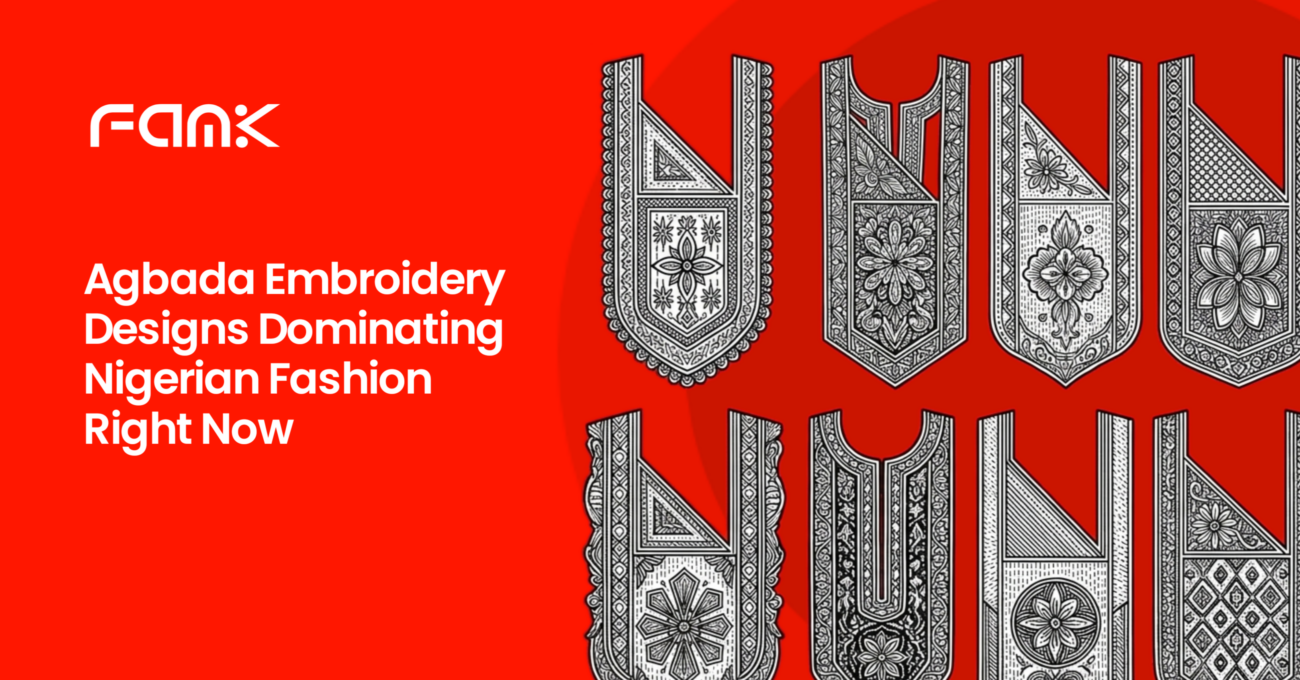
Agbada embroidery designs can work in corporate settings, but scale matters enormously. A minimalist agbada with border-only stitching and no chest panel monogram is appropriate. A full gold 3D puff chest panel is not, unless the event is specifically a high-ceremony cultural occasion rather than a corporate gathering with a native wear dress code.
| Occasion | Recommended Design | Coverage Level | Thread Choice |
| Wedding — groom | 3D puff monogram, date combination | Full chest panel | Gold, silver on white or cream |
| Wedding — family | Arabesque border, heritage pattern | Chest and sleeve | Gold on coordinating Aso-Ebi fabric |
| Wedding — guest | Clean monogram, simple motif | Chest panel only | Gold or silver |
| Owambe — celebrant | Royal medallion, layered motif system | Full garment | Gold, multicolour |
| Owambe — guest | Bold monogram, tonal embroidery | Chest panel | Tonal or gold |
| Corporate event | Senator kaftan collar and placket | Border only | Tonal, white, single colour |
Final Thoughts
Male embroidery designs are occasion-specific in a way that most buying guides do not acknowledge directly enough. The same design brief that produces an appropriate wedding guest agbada produces an underdressed owambe look. The coverage level that works for a corporate senator’s kaftan would be invisible at a traditional wedding.
Getting this right does not require deep expertise. It requires knowing your role at the event, your relationship to the host or occasion, and what level of visual presence is appropriate for both. Brief your digitizing partner with that context, not just the design concept and the result takes care of itself.
At FAMK Apparel, we ask about the occasion before we ask about the design. It shapes every decision that follows. We digitize Nigerian male embroidery designs for your specific garment and fabric, send a PDF proof for your approval, and nothing goes to production until you confirm it is right.
What agbada embroidery designs are appropriate for a wedding guest?
A clean monogram or simple geometric motif centred on the chest panel is the right range. Agbada embroidery designs for wedding guests should signal intentionality without competing with the groom’s or host family’s coverage level. Gold or silver thread on a well-chosen fabric is sufficient.
What can I embroider for a man?
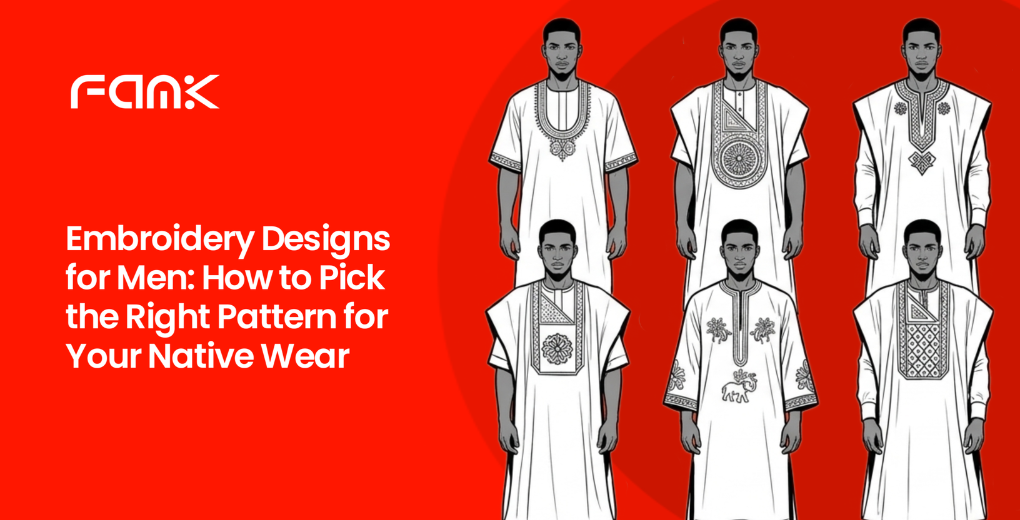
Almost anything worn as Nigerian native wear is a viable canvas, from agbadas, kaftans, senator suits, boubous, danshikis, and caps. The most requested designs for men are monograms on agbada chest panels, arabesque and heritage borders, royal medallion motifs, and logo or brand marks. Placement and scale shift by garment, but the options are broader than most people initially assume.
What are the latest embroidery trends?
In 2026, the strongest trends are layered motif systems that connect across collar, chest, and cuff rather than sitting on the chest panel alone; tonal embroidery where thread matches fabric colour for a textured, understated effect; and text-based designs using full words, family names, or cultural phrases rather than initials only.